
9 September 2026

These days, going on adventures in the mountains has become quite popular among young people. They tend to make spontaneous plans to go "hiking" on weekends, or sometimes when they hear about some “treks” like Valley of Flowers, they get quite excited to know more about it. In fact, when they see a documentary of a guy roped to a cliff face in the snow calling himself a "mountaineer”, all they think is, “Oh, he is climbing on a mountain, just one with more altitude”.
And that’s exactly where they go wrong, considering all three types of adventure to be the same. Though a few years back, I also made the same mistake. But here’s the truth: hiking, trekking, and mountaineering are three completely different beasts.
That’s because each of them requires a completely different approach to climbing. From mindset to gear, shoes, and other essentials, everything about these climbing journeys sets them apart from one another. And these are exactly the kind of differences you will want to know if you don’t want to mess up your trip.
So let's talk about it, like I'm sitting across from you with a cup of chai, breaking down everything that I once wished someone had told me before my first trial. Like, what’s the main difference between hiking and trekking, where does mountaineering fit in all this, what gear actually matters, and exactly how to start each one without hurting yourself or your wallet.

Among these three types of adventures, hiking can be considered quite an easy one as compared to the others. Basically, hiking is just walking, a long and good one. It might take a few hours, or maybe a full day too, on a trail that has already been marked by someone, but with some decent shoes and an adequate water bottle, you will get to enjoy a perfect view of greenery and breathe fresh air in no time. That’s exactly what “hiking” is all about.
Speaking of hiking, I remember feeling that I was going on some epic adventure, and it was such an amazing experience that it didn't even take a lot of time, as our hike was easily completed by evening. After that experience, I realised the true beauty of hiking, which lies in walking through nature and having a mental reset without taking your entire weekend.
Some of the best things about hiking are -
So, if you've never done any of this before, believe it or not, hiking will be a good start for you.

Now, moving forward, after hiking, the next level of climbing is called trekking. Where your walk won’t end by evening or the next day. To reach your destination, it will take days, sometimes weeks too, and the route? It will be filled with beautiful remote villages, with changing landscapes, and altitudes that make you breathe differently.
See, trekking is not just a longer version of hiking. It is basically a completely different experience, where you will be carrying things like sleeping bags, cloth layers, snacks, and maybe a water filter on your back. Apart from this, you will also get to witness the mesmerizing altitude and unpredictable mountain weather, but then you will also have to deal with times when your legs will almost give up and won’t cooperate anymore.
Now, there are a few things that you should know before you start making plans to go on trekking, which are -
All these factors are where the true difference between hiking and trekking lies. It’s not just the distance, but everything from your fitness to your fear.

Now, after hiking and trekking comes climbing, where trekking meets the world of technical climbing. Where you won’t just be walking on the trails; you will be climbing up a mountain with the help of ropes, an ice axe, and crampons. And if the terrain is more difficult than normal, then sometimes you will need to use oxygen tanks too, while using the right skills.
In this climbing journey, you will face glaciers, vertical rock faces, snowfields that hide crevasses, and a summit point where the air will feel so thin that you might feel like your body has started shutting down if you're not acclimatized.
So, basically mountaineering isn’t really the next level of trekking. It is basically a completely different sport of mountain climbing that includes a lot of walking. Mountaineering is mostly done on peaks like Mt. Everest or Kilimanjaro, where your physical endurance, technical rope skills, and other skills will be truly tested, and you will understand the true difference between life and death.
Now, things that make mountaineering different from trekking and hiking are -
So, basically, if you felt that the time you did trekking was intense, then trust me, mountaineering? It is like an older sibling of trekking that is tougher and will demand more than just physical fitness from your body.
To know among hiking, trekking, and mountaineering which one is right for you. It’s important that not only you understand the complete difference between them properly, but you also need to ask yourself which one you feel is right for you.
So, before picking anyone among them just think about things like -
See, almost every mountaineer begins their journey with a random thought of going on a hike to explore the mountains. And with time, as they keep gaining more experience, their preference for different levels of hiking and different levels of trekking keeps evolving. One day leading them to the moment when they prepare themself to go mountaineering.
Till now, you have been introduced to all three types of adventures, and what is the main difference between them. But now, it’s your turn to understand “how the journey of every big adventure truly begins”. The very first and most obvious thing to do is to “Google as many things as possible about all three adventures”.
After doing so, now comes the real, your no-nonsense starting guide to hiking, trekking, and mountaineering.


|
Things To Remember
|

Now, you are aware of which among the three will be the best for you, and what is the right way to begin preparing for them as a beginner. It’s time that you must learn what are the basic or necessary fitness requirements to do a Himalayan trek.
The most interesting thing about fitness is that to do hiking or trekking or even mountaineering, you don’t need to have an athlete-level of fitness. You just need to have the right level of physical fitness for .
Speaking of it, your hiking fitness should be good enough that you can walk for hours without getting exhausted. So, for that, all you need to do is go on regular walks, do light jogging, and climb some stairs daily; with all the right preparation, you will be all set to go on a hike.
Now comes Trekking fitness, it is a completely different level of climbing as compared to hiking. To go on a trek, having proper legs and back core is non-negotiable, as you will need to have enough strength to survive multiple days on repeat. So, three months prior to going on a trek, start training with a weighted pack on your back, and trust me, you will see the effect during your trek.
Lastly, comes mountaineering fitness, which requires full-body strength, strong grip strength for rope work, proper core stability to maintain balance on unstable terrain, and cardiovascular endurance that can handle thin air. All these things simply mean that you need to have proper strength training with altitude simulation, instead of doing more walking.

After maintaining your physical strength and gaining the knowledge to begin trekking. Now, it's time for you to learn about all the essential gear that you will need to make your hiking/trekking/mountaineering journey smooth and special.
First comes the Hiking gear they are usually quite simple, such as -
Then comes the Trekking gear, which includes some more technical gear to make the journey smoother, like -
At last comes the Mountaineering gear, which includes quite a huge amount of technical gear for mountaineering; the trekker remains quite dependent on these gears, which are -
So, these were the main essential gear that all three types of adventure rely on according to their requirement. Now, let’s take an in-depth look at the most important gear without which no trekking, hiking, or mountaineering is possible.

To walk on those uncertain, long terrain having just good stamina is not enough. To make sure that your trekking goes smoothly, wearing a good pair and the right pair of shoes is very important.
Meaning? Well, whether it’s hiking, trekking, or even mountaineering, all three types of climbing demand different kinds of shoes. Because the terrain of all three of them is quite different from each other.
So, to make sure you don’t end up wearing the wrong kind of shoes on your journey. Here are the proper differences between each of them, and to make your packing easier, I have also mentioned the features you will need to look for while purchasing or renting them.
So, from now on, whenever people argue with you about trekking shoes and hiking shoes. Make sure that you remember these things: hiking shoes are built for comfort on short outings, and trekking shoes are built for survival on long ones. One wrong choice and you might end up with a painful trip.
Read our expert guide to choosing the best trekking shoes.
After shoes, now let’s talk about boots, which are opted by trekkers a lot.
Wearing boots basically means taking your walking journey a little further. Now, as for hiking boots, they are usually mid-cut and are made to be moderately supportive; they are a good choice to pick for hikes or a single overnight. As for trekking boots, they are usually stiffer, higher, always more water-resistant, and are made to handle heavier packs over rougher, longer routes.
If your trip crosses two days or touches real altitude, trekking boots win the trekking boots vs hiking boots debate every time. Don't gamble your ankles on the wrong pair.

Safety while traveling anywhere is very important. And if you are going on hiking/trekking /mountaineering, then safety becomes non - negotiable. So, here are some lessons that I learned the hard way.
Committing mistakes while traveling is a “bound to happen” thing. I remember making a lot of mistakes myself. But to make sure that you don’t go through any kind of similar trouble. Below, I have listed all the possible mistakes that you might commit as a beginner. So, take a look and try to make your experience a mistake-free one.

Every mountaineer you've ever admired started with a hike that probably felt small at the time. That's not a discouraging fact; it's an encouraging one.
At the end of the day, hiking, trekking, and mountaineering aren't competing against each other, they're just different chapters of the same story. Hiking teaches you to fall in love with the outdoors. Trekking teaches you to endure it. Mountaineering teaches you to respect it completely.
Wherever you're standing on that spectrum right now, even if it's "I've never done any of this," the trail's waiting. Start small, learn as you go, and trust me: the mountains genuinely aren't going anywhere. Lace up and go find out where your first step takes you.
The main difference between all three of them is that hiking is mainly a short walk that you will take on an established trail. Trekking is more of a longer walk that demands more effort from a trekker. Lastly, comes mountaineering which is basically a combination of trekking and technical climbing.
Yes, absolutely. A person can begin with trekking, but even in trekking they should first do the easy, beginner-friendly trek, and then gradually progress towards the longer and more challenging route.
Hiking is usually shorter and less demanding as compared to trekking. As for it being easier? It completely depends on the terrain, the distance, the elevation you will be gaining, and of course the weather conditions.
Yes, to do mountaineering apart from having years of experience in trekking. You will also need to have physical conditioning with some skills like rope work, climbing technique, navigation, and proper knowledge of handling specialized equipment.
Before you go on any kind of hike, try walking on a short, well-marked, popular trail so that you will have an idea of what you will be encountering while hiking. Then you also need to have suitable footwear and all the basic essentials with you.
Basic hiking requires essentials such as proper footwear, water, and navigation tools. Trekking may require a backpack, trekking poles, and camping gear, while mountaineering requires specialized climbing and safety equipment.
9 September 2026

Trek updates, stories & mountain insights.
Tips and insights for every trekker.
19 Oct 2026

18 Oct 2026
17 Oct 2026
16 Oct 2026
15 Oct 2026
14 Oct 2026
13 Oct 2026
12 Oct 2026
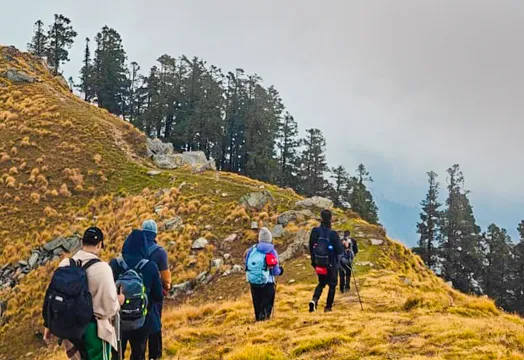
11 Oct 2026
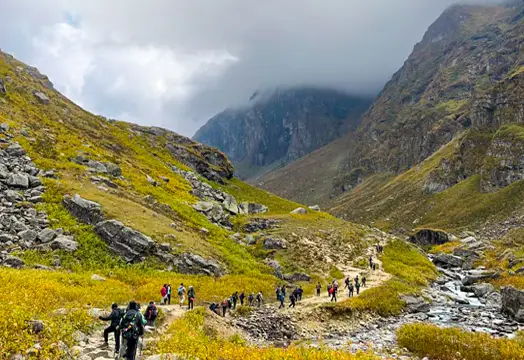
10 Oct 2026
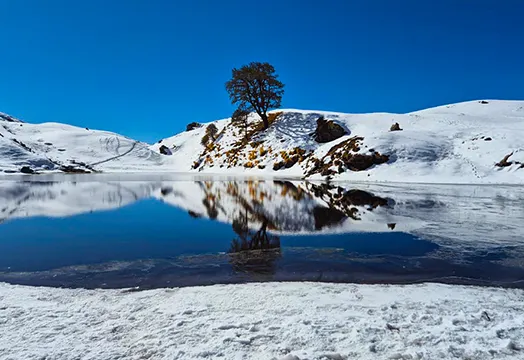
Winter is almost here, and you're still planning on following the same routine. Sitting in a blanket, sipping on hot tea, and binge-watching your favorite movies.
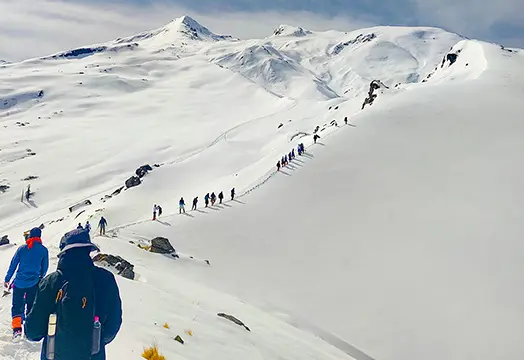
Every season in the Himalayas has its own way of showing off the mountains, but winter reveals a different side of them, one that feels like a whole new world.
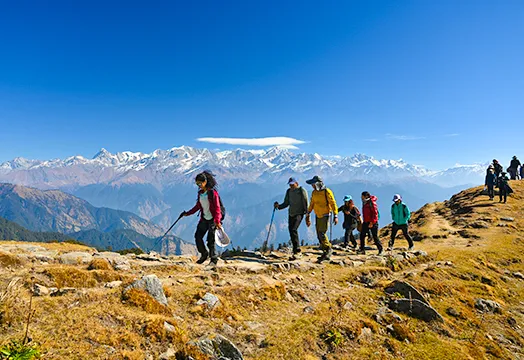
As monsoon season comes to an end, it washes away all the dust and haze that remains in the valleys throughout the summer, and then?
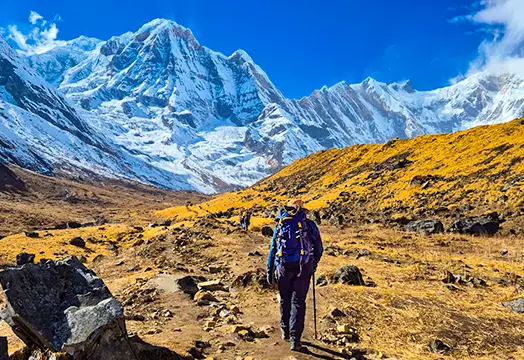
Located in north-central Nepal's Gandaki Province, Annapurna is the world's 10th highest and one of the most challenging mountains on the planet. Its height rises to 26,545 feet. Yet reaching Annapurna base camp is a far more accessible adventure, drawing trekkers from around the world every single season.
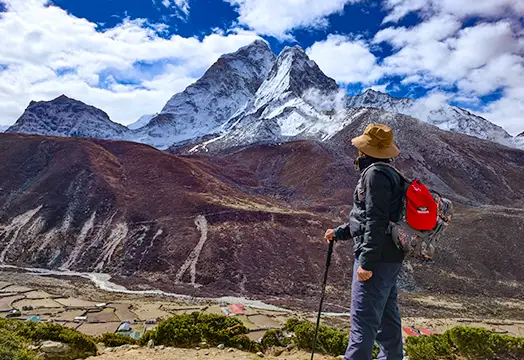
What does it feel like to stand on a trail where the mountain before you is worshipped as a goddess? For most of us, it's an adventure. But for the local communities who live in its shadow, it's something closer to faith. That mountain is Everest.

Over the last few decades, trekking has driven a profound shift: rural economies and local communities are reaping direct and indirect benefits.

Hiking teaches you to fall in love with the outdoors. Trekking teaches you to endure it. Mountaineering teaches you to respect it completely.

There are only a handful of Himalayan regions that hold profound spiritual significance as well as immense natural beauty. The Gaumukh Tapovan trek is one such destination that wonderfully combines adventure, divinity, and extraordinary Himalayan beauty.

What if a trek could leave you with more questions than answers? What if, after days of trekking, you reach a lake filled with centuries-old human skeletons?

Every year, every season reveals a new side of the Himalayan range. Be it trails covered in colourful rhododendrons or trails transformed into a lush green paradise, each season offers some of the most mesmerizing views of the Himalayas.