
24 September 2026
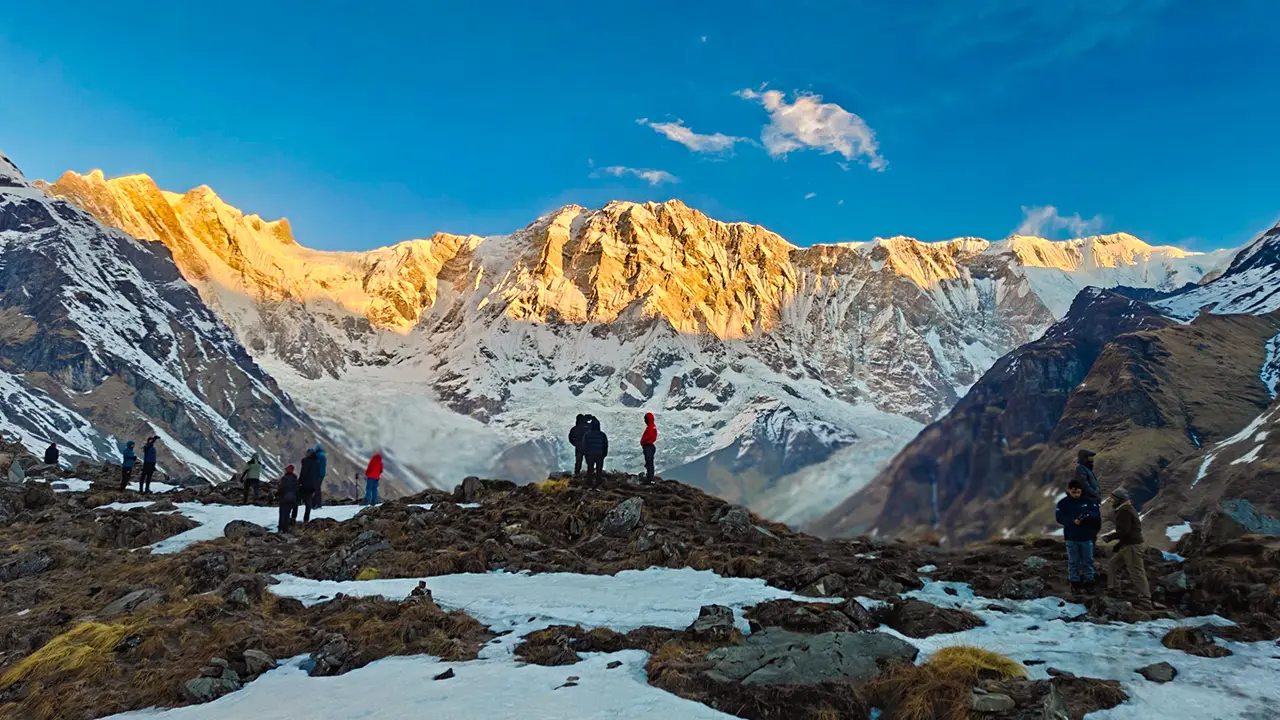
For a long time, the mountains were simply my escape from city life. Their beauty kept drawing me back, but with every visit, I began to realize there was much more to them than what meets the eye. They taught me humility. No matter how strong we believe we are, the mountains remind us of something far greater. They sustain life, yet they also have the power to take it away.
Perhaps that is what makes them so meaningful to the people who live among them. For locals in Nepal, the mountains are not merely landscapes; they are sacred providers. And that is where Annapurna stands: the Goddess of Abundance, the one who provides nourishment.
Located in north-central Nepal's Gandaki Province, Annapurna is the world's 10th highest and one of the most challenging mountains on the planet. Its height rises to 26,545 feet. Yet reaching Annapurna base camp is a far more accessible adventure, drawing trekkers from around the world every single season. Before following that trail, though, there is a story worth knowing, how Annapurna got its name, who first stood on its summit, why it is counted among the world's most dangerous 8000ers, and what actually awaits those who walk toward its base. Let's begin where the story began: with the mountain itself.
The name Annapurna comes from the Hindu goddess of the same name. In Sanskrit, it combines the words "Anna," meaning food, and "Purna," meaning filled, together forming "Goddess of Nourishment" or "Goddess of Food." The name is not decorative. Countless streams flow down the slopes of the Annapurna massif and feed the agricultural fields and pastures in the valleys below, sustaining both the land and the people who farm it. For the Gurung communities who live in her shadow, Annapurna has long been considered their sole provider, the source of food, well-being, and prosperity.
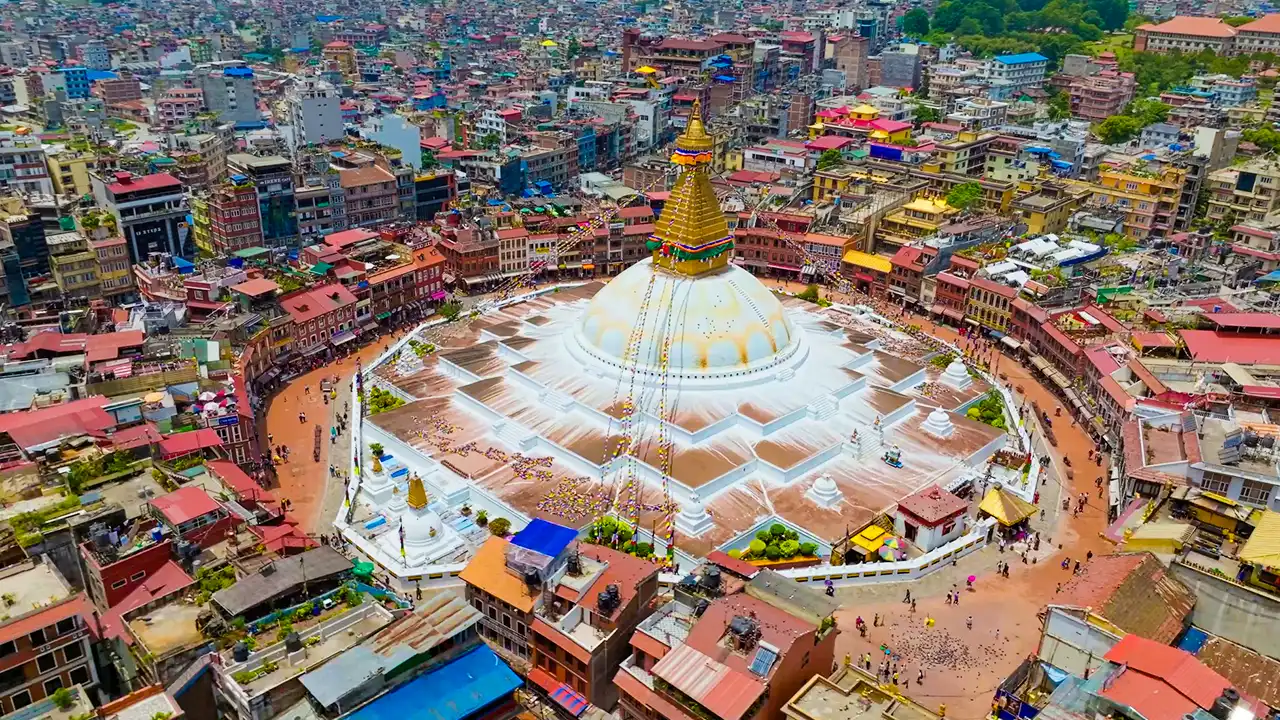
The Story of Goddess Annapurna: According to legend, Annapurna is an incarnation of Parvati. Once, Lord Shiva argued that the material world, including food, was merely an illusion, or maya. Parvati was deeply offended by this and disappeared to prove that physical sustenance was essential to existence. Her absence brought famine across the land. Realizing his error, Shiva understood that even the deepest spiritual pursuit needs physical energy to sustain it, and he begged his wife for food. Parvati reappeared as Annapurna and fed him with her own hand, using a golden ladle.
The Temple in Kathmandu: Annapurna is not worshipped only as a mountain. A temple dedicated to her stands in Kathmandu's Asan Bazaar. Unusually, she is not represented by an idol or statue but by a silver bowl or grain measure filled with food and rice, a quiet, powerful symbol of what she is believed to provide.
Machapuchare, the fishtail-shaped peak that watches over the Annapurna Sanctuary, has never officially been summited, and it isn't for lack of attempts. The mountain has simply never been permitted a full ascent, out of respect for the local belief that its summit is sacred and holy. Out of deference to this belief, the Nepal government formally banned climbing on Machapuchare, and the peak remains untouched to this day, its true summit still unclaimed by any climber.
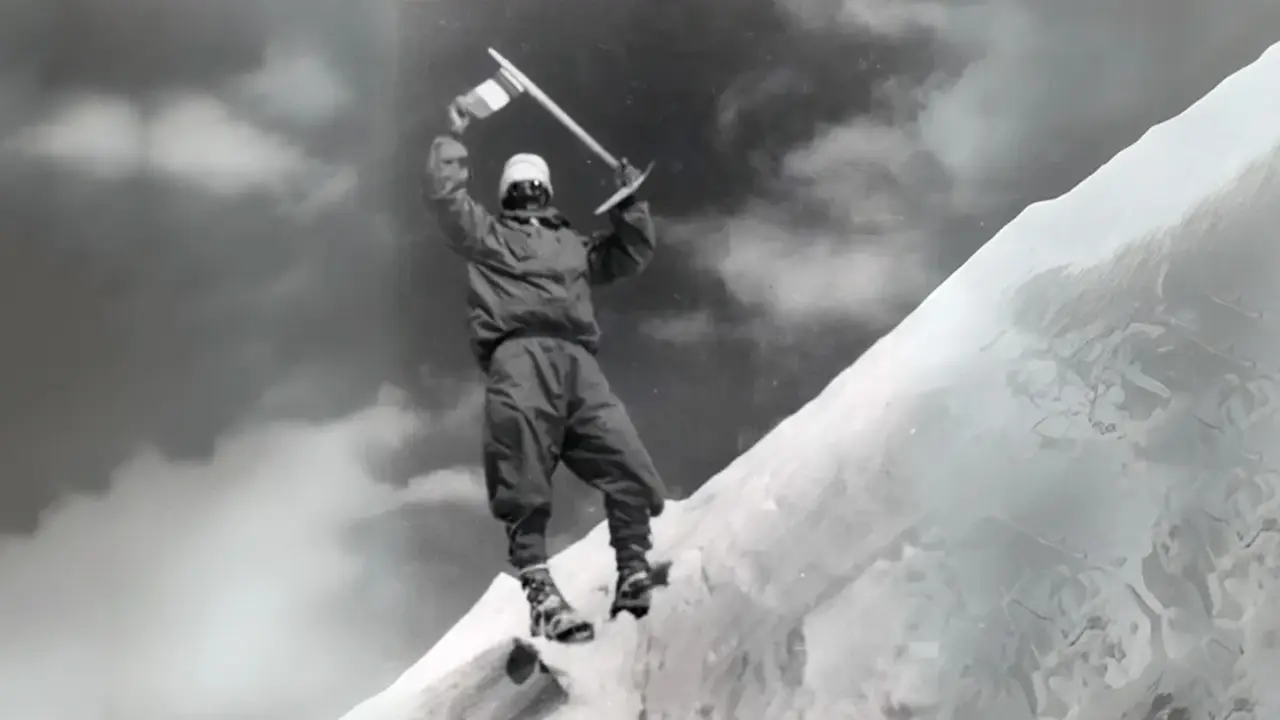
Annapurna 1 holds a rare place in mountaineering history: it was the first 8000-metre peak ever climbed, and it remains among the most challenging, with the highest fatality-to-summit ratio.
June 3, 1950: The First 8000er in History:
French climbers Maurice Herzog and Louis Lachenal reached the summit of Annapurna, becoming the first climbers in history to stand atop any peak higher than 8,000 metres, three years before Everest was climbed. The victory came at a brutal cost; both men suffered severe frostbite during the descent, and Herzog lost most of his fingers and toes.
1970: The South Face Ascent:
Two decades later, a British expedition led by Chris Bonington set out to climb Annapurna by a route nobody had dared attempt: its sheer, 3,000-metre South Face. On 27 May 1970, Don Whillans and Dougal Haston reached the summit of Annapurna I after using rock-climbing techniques and fixed ropes to force a route up the steep South Face. The climb is widely regarded as the moment big-wall climbing arrived in the Himalaya, opening the door to a new era of technical high-altitude mountaineering. The triumph was tempered by tragedy, climber Ian Clough was killed by an ice avalanche below Camp II as the expedition was preparing to leave the mountain.
1978: The American Women's Ascent:
In October 1978, the American Women's Himalayan Expedition, led by Arlene Blum, placed the first women, and the first Americans, on Annapurna's summit. On October 15, Vera Komarkova and Irene Miller, climbing alongside Sherpas Chewang Rinjing and Mingma Tshering, reached the 8,091-metre summit via the Dutch Rib. The expedition's motto, "A Woman's Place Is On Top," became one of mountaineering's most quoted lines. Tragically, a second summit team, Alison Chadwick-Onyszkiewicz and Vera Watson, died during the descent.
1988: A New Line on the South Face:
A decade later, Polish climbers pushed the South Face story further, opening a fresh route up the wall to reach Annapurna's East Summit, a climb that later mountaineers, including Slovenian solo climber Tomaž Humar, would study and reference in their own attempts on the face. Annapurna's South Face has continued to draw the world's most accomplished alpinists ever since, and it remains one of the most feared walls in the Himalaya.
These stories are part of why the trek to Annapurna Base Camp carries such weight. You are not just walking to a viewpoint; you are walking to the foot of a wall that has defined entire eras of mountaineering.
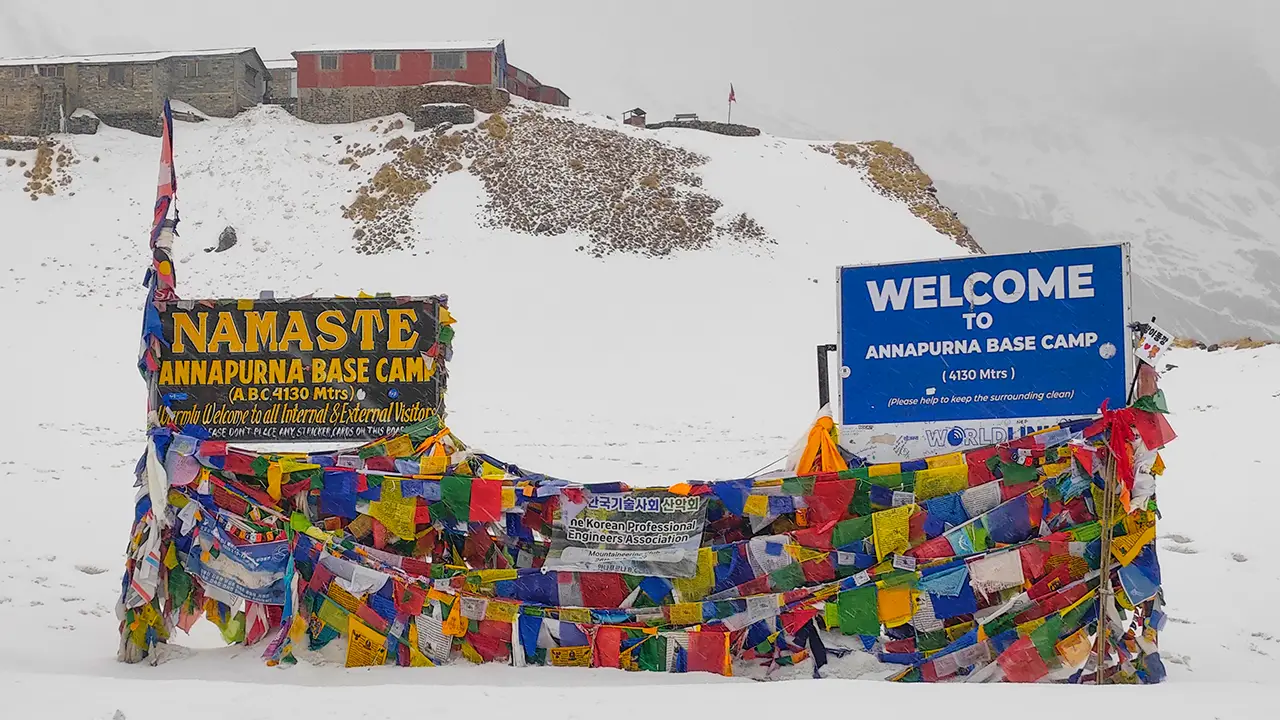
Located at an altitude of roughly 13,550 ft (4,130 m), Annapurna Base Camp is one of the most sought-after and widely talked-about treks in the world. Covering close to 70 km over 9 days, the Annapurna Base Camp trek distance and duration make it a moderate to difficult trek, challenging in places, but genuinely achievable for beginners who show up with decent physical fitness and a reasonable amount of preparation. The route carries you deep into the Annapurna Sanctuary, a glacial basin ringed by giants, which holds as much spiritual significance for the Gurung people as it does scenic value for trekkers.
Trekkers who want to know the actual Annapurna Base Camp trek height, distance, and difficulty level will find fairly consistent numbers: the trail covers around 60–70 km round trip from the trailhead near Pokhara, gaining and losing several thousand feet of elevation each day as it winds through the mid-hills before climbing steeply into the Sanctuary. The trek is graded moderate to difficult, not technical, since no climbing gear is required, but demanding enough on the legs and lungs that a base level of fitness matters. Altitude sickness is a genuine consideration on the final approach to Base Camp, so a gradual pace and proper hydration go a long way.
Read our detailed guide to altitude sickness, including symptoms, prevention, and treatment.
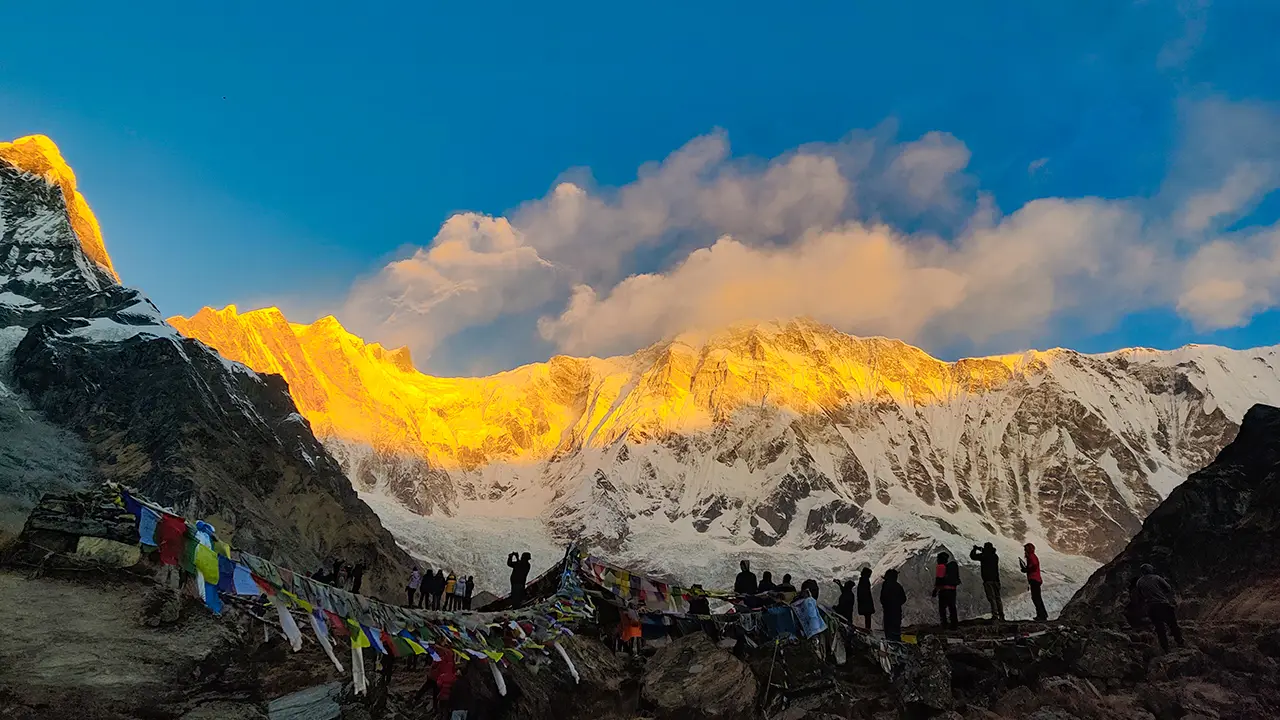
Annapurna Sanctuary: A vast, amphitheatre-like glacial basin surrounded by some of the highest peaks on Earth, held sacred by local communities and considered by many trekkers to be one of the most dramatic mountain settings anywhere in the world.
Machapuchare: The Iconic fishtail-shaped peak that has never been officially summited, not because it can't be, but because it has never been allowed, out of respect for its sacred status. It is clearly visible from Machapuchare Base Camp.
Sunrise at Base Camp: Watching sunrise break over the base camp of the world's 10th-highest mountain is, for many trekkers, the single most anticipated moment of the entire journey.
Mountain Views: From Annapurna Base Camp itself, trekkers are surrounded by Annapurna I, Annapurna South, Hiunchuli, and the unclimbed Machapuchare, a rare 360-degree panorama.
Gurung Villages: The villages along the route are highlights in their own right. Ghandruk, roughly 50 km from Pokhara and the first major village on the trail, is often the place trekkers remember most fondly. Chhomrong, Dovan, and Bamboo each add their own character to the journey through the Annapurna region.
Once you reach the base of Annapurna, surrounded by peaks that have tested and humbled some of the finest climbers in mountaineering history, you understand why so many trekkers count this walk among the defining experiences of their lives. It is not simply a trail through the Himalaya, it is a walk into the heart of a mountain the Gurung people have called their provider for generations, and a chance to stand, however briefly, in the lap of the Goddess of Abundance.
Moderate to difficult: steep stone staircases, long daily hiking hours, and altitude gain to 13,550 ft, but no technical climbing skills or gear required at all.
Generally safe with a guide; main risks are altitude sickness and sometimes slippery trails. Proper acclimatization, hydration, and pacing minimize these risks significantly.
Yes, with good fitness and preparation. It's considered one of the beginner-friendly Himalayan treks, though daily walking hours and altitude still demand real physical readiness.
Spring (April–May) and autumn (September–November) are best, with clear skies, stable weather, blooming rhododendrons in spring, and the sharpest mountain views in autumn.
Annapurna Base Camp Trek roughly covers 60–70 km round trip from the trailhead near Pokhara. It typically covers 7–9 days depending on the itinerary and pace.
24 September 2026

Trek updates, stories & mountain insights.
Tips and insights for every trekker.
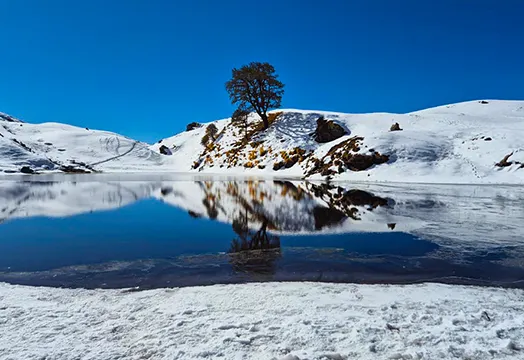

Winter is almost here, and you're still planning on following the same routine. Sitting in a blanket, sipping on hot tea, and binge-watching your favorite movies.
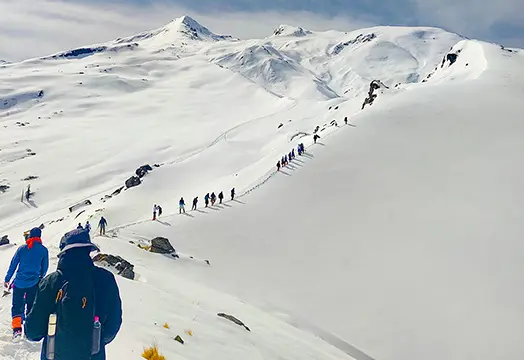
Every season in the Himalayas has its own way of showing off the mountains, but winter reveals a different side of them, one that feels like a whole new world.
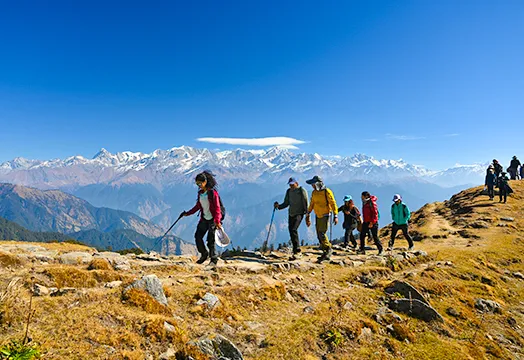
As monsoon season comes to an end, it washes away all the dust and haze that remains in the valleys throughout the summer, and then?
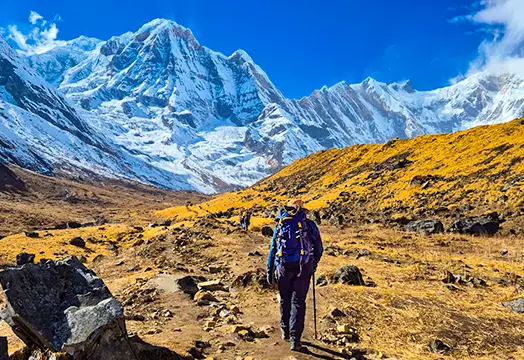
Located in north-central Nepal's Gandaki Province, Annapurna is the world's 10th highest and one of the most challenging mountains on the planet. Its height rises to 26,545 feet. Yet reaching Annapurna base camp is a far more accessible adventure, drawing trekkers from around the world every single season.
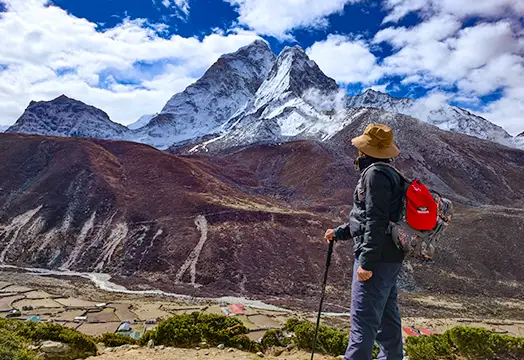
What does it feel like to stand on a trail where the mountain before you is worshipped as a goddess? For most of us, it's an adventure. But for the local communities who live in its shadow, it's something closer to faith. That mountain is Everest.

Over the last few decades, trekking has driven a profound shift: rural economies and local communities are reaping direct and indirect benefits.

Hiking teaches you to fall in love with the outdoors. Trekking teaches you to endure it. Mountaineering teaches you to respect it completely.

There are only a handful of Himalayan regions that hold profound spiritual significance as well as immense natural beauty. The Gaumukh Tapovan trek is one such destination that wonderfully combines adventure, divinity, and extraordinary Himalayan beauty.

What if a trek could leave you with more questions than answers? What if, after days of trekking, you reach a lake filled with centuries-old human skeletons?

Every year, every season reveals a new side of the Himalayan range. Be it trails covered in colourful rhododendrons or trails transformed into a lush green paradise, each season offers some of the most mesmerizing views of the Himalayas.
14 Oct 2026
13 Oct 2026
12 Oct 2026
11 Oct 2026
10 Oct 2026
09 Oct 2026
08 Oct 2026
07 Oct 2026
06 Oct 2026
05 Oct 2026