
6 January 2026

There is one question that every trek leader asks their trekkers when they first meet them: Do they really understand the importance of trekking shoes for their trek?
And usually, trekkers answer that they protect their feet, which is true. But do trekking shoes really help your feet in just “protection” and nothing else? Well, that is exactly what our trek leader (Sudhanshu Tomar) is going to enlighten us all about.
First and foremost, it's essential to understand that trekking shoes are the foundation of a good trekking experience. If you are not carrying good quality shoes, then no matter how confident, strong, or motivated you are. You are bound to slip or slow down while walking on your trek.
And as someone who has spent years climbing up and down the Himalayan trail several times. There is one thing that he said with complete certainty: The right trekking shoes can make or break your trek.
See, when you are on a trek. It’s your feet that are working constantly from climbing on the uneven path, crossing the snow-patched areas, and enduring all the long walking hours day after day.
This struggle makes the trekking shoes not just some trekking accessory but the most essential thing that lays down the trekker's foundation of walking and deciding whether their trek is going to be a good experience for them or not.
I mean, these shoes will help you in protecting your feet from cold, they will keep you stable as you walk on the uneven terrain, prevent injuries, and help you enjoy the journey instead of just enduring it.
So, without any further ado, let’s dive deep into this trekking shoes guide, which has been framed with the help of our trekking shoes expert (Name), who has been working with Trek The Himalayas for the last decade.
Among all the gears that are necessary for trekking, shoes are considered the most crucial ones. Trekking shoes are like petrol/diesel, without them there is no point in having a car.
Similarly, if you went on some trek, that too without good trekking shoes that are not equipped with features that can support you in the mountains in any possible situation, then it’s pointless to go on a trek.
Always remember that trekking shoes play a pivotal role in enhancing your trekking experience. They are the one that ensures that your feet remain safe, comfortable, and pain-free while being on the trek. Having a good pair of shoes gives you reassurance as well as encouragement to tackle even the uneven terrain.
While even thinking of planning to do a trek, you all put lots of thought into different things, like which place you should pick to do the trek, what you will need while being on the trek, where you should purchase all the necessary things, or rent them, and so on.
Hence, this article will enlighten you about everything you must know about a trekking shoe. From the structure formation of those shoes to their types, and things they should keep in mind about the shoes, it has it all.

Carrying the right gear while being on the trek is very important for every trekker, and in today’s time, various options of every gear are available in the market. To choose and figure out which option is best among all is quite a task.
So, to make your trekking shoes purchase easier and to be able to differentiate between which one is best and most suitable to pick among all. I’m listing out all the types of trekking shoes that are available. Apart from that, our trek leader will be recommending ‘The Trekking Shoes’ which will check all the boxes of most of the trek's requirements, as well as be a perfect fit for every season.
Now, speaking of all these shoes, each one has its own specialty, but not all of them can be worn on every trek. But since trekking shoes are a one-time investment, it’s better to purchase one that has it all.
| Low - Ankle Hiking Shoes | Mid - Ankle Trekking Shoes | High - Ankle Trekking Shoes |
PROS
|
PROS
|
PROS
|
CONS
|
CONS
|
CONS
|
Among the three prominent types of trekking shoes. The one that our trekking leaders recommend to buy, irrespective of the season they choose to trek, is the “High ankle shoes”.
Because with the help of High- ankle trekking shoes, you will be able to prevent your feet from getting any injury, enhance the stability of your feet as you trek forward, and lastly, it will increase your confidence too.
Now, let's also take a look at all the features in a high - ankle trekking shoe that a trekking leader has suggested to all trekkers. That they must purchase or rent (if they want to) a pair of trekking shoes that are equipped with certain specific features.

This is for every trekking lover; they must keep in mind that trekking shoes aren't just shoes that you are bound to wear while being on a trek. The trekking shoes are that one piece of gear that will be your most trusted companion on the trail.
Since mountain terrains are completely unpredictable and uneven at times. You must choose the right one for your journey. He further stated that “As a trek leader, there have been times when they have witnessed a trekker enjoying their journey only because they didn’t encounter any problem or injury related to their foot while walking on the trail.”
So, let’s take a look at the key features that you, as a trekker, must keep in mind while picking the best trekking shoes for your Himalayan trek journey.
So, make sure that you wear them 2 or 3 weeks before your trek to make your feet comfortable in them.
Apart from that, there must be at least point 5 or 1 inch gap between your shoes and the fingers of your feet to have enough room for their movements.
In this way, with your shoes equipped with a good, high-quality sole, you will be making sure that there is maximum friction between your shoes and the ground, which can help you while you are coming from the summit point in controlling and watching your step.
Hence, always make sure that you pick the shoes that are specifically made for trekking rather than hiking. The deeper the grip, the lower the chances of you slipping or falling while walking, especially on the early morning icy trails or post-rain slippery sections.
So, it is necessary that your trekking shoes be waterproof. So, even if the trail is wet or covered with snow patches, your feet will remain safe and dry in snow, rain, or a slushy trail.
Now that the waterproof feature is covered in the shoes, it’s time for the breathability feature in your shoes. Having breathability is very important in shoes, as if shoes have enough room to have breathable membranes in them, then it will allow all the sweat of the feet to escape, preventing any kind of dampness inside the shoes or blisters or cold feet that can not only damage your feet but also might become a problem for you while being on the trek.
To be comfortable in your trekking shoes and not have any kind of stiffness in them, the midsole of your trekking shoes must be of highly favorable quality, and that will not only support your long hours of walking, but it will also protect your feet from any sharp rocks on the trail. Apart from that, it will provide a cushion-like surface to your feet that will prevent any pain from occurring in your feet.
Just remember that a well-cushioned yet firm sole will ensure all-day comfort while you are facing challenges on the Himalayan trails.
Therefore, while purchasing or renting out, remember to look for shoes that are light in weight but also don’t compromise their durability. Hence, a shoe with a perfect weight and excellent durability should be your option to go for.
Remember that with a lighter shoe, a natural walking rhythm can be maintained, and it will also make your climbing easier and less tiring. Although at times, some shoes are made with wonderful strength but come with a good amount of weight. In such scenarios, don’t think about the weight; just make sure that your shoes can endure all the rough surfaces of the ground, like rocks, snow, and dirt trails.
Apart from that, make sure to wear thick layers of trekking socks without feeling tightness around your feet to maintain warmth and trap it in your feet.
For snow-heavy or winter treks, shoes should be compatible with gaiters to prevent snow from entering and to keep your feet warm and dry.
Lastly, as our trek leader says, a shoe is an important part of your Himalayan journey; choose them wisely. Make sure to invest in and trust the right pair of shoes for yourself that will keep your feet strong, support your feet and ankles perfectly, provide comfort on the trail, and help enhance your trekking experience as much as possible.
Just keep believing in the saying, “Strong legs will take you far, but the right shoes will take you so far safely”.

Structure Formation of a Trekking Shoe
While choosing the right pair of trekking shoes for yourself, don’t just keep your focus on features only. Apart from features, there are some other factors that a trekker must keep in mind, for instance, like Budget and material.
| Insect | Trekking Shoes Based on Material |
PROS
|
PROS
|
These are the things that every trekker needs to keep in mind while purchasing, sure. But keep in mind that if you are a first timer or someone who treks rarely. In that case, we will advise that you rent your trekking shoes rather than purchasing them.
On the other hand, if you are a trekking enthusiast, then you should definitely make this one time and purchase the best trekking shoes available in India.
Now, picking the right pair of shoes is not an easy task to do. Especially when you are supposed to consider having so many features at once. And being a trek leader gives a perfect insight into how trekking shoes can change your whole trek. Those shoes? They can easily make the demanding trail convert into a manageable one, and one wrong choice of shoes can turn your experience into a worse one.
So, before you start your trekking journey, remember to invest your time and energy in understanding everything about a trekking shoe. Make sure to try a good number of shoes before you pick one.
Don’t forget to wear them 2-3 weeks before your trek to break them in well according to your feet, make sure that your shoes are high-ankled, have a good sole to deepen the grip on the ground, and fit well on your feet with enough room to breathe and prevent your feet from experiencing any kind of difficulty during your trek. Last of all, pick waterproof socks to wear during the trek.
All these minor preparations will play a pivotal role in ensuring that you remain safe during your journey and have an amazing, enjoyable experience on the trek.
That’s why at the Trek The Himalayas, we believe a well-informed preparation is necessary to make any trek successful and enjoyable. Preparation is the key to a great trek. Therefore, make sure to choose your pair of trekking shoes wisely, respect the trail that is going to give you memories for a lifetime, trust your gear with your whole heart, and let every step in the Himalayas be confident and comfortable.
To trek the Himalayas it’s best if you choose high-ankle shoes as they help a lot in maintaining the stability of your feet and keep them protected. As for the Low- ankle trekking shoes, they aren’t ideal for long or rugged treks.
It’s very important that your trekking shoes are comfortable to wear and should not feel tight on your feet. Make sure that there is at least point 5 inch gap between your shoes and feet so that you can wiggle your toes while ensuring your heel doesn’t slip when walking downhill.
Just make sure that the soles of your trekking shoes have strong and deep lugs. This provides better traction on mud, snow, gravel, and rocky terrain.
6 January 2026

Trek updates, stories & mountain insights.
Tips and insights for every trekker.
21 Oct 2026

19 Oct 2026
18 Oct 2026
17 Oct 2026
16 Oct 2026
15 Oct 2026
14 Oct 2026
13 Oct 2026
12 Oct 2026
11 Oct 2026
Winter is almost here, and you're still planning on following the same routine. Sitting in a blanket, sipping on hot tea, and binge-watching your favorite movies.
Every season in the Himalayas has its own way of showing off the mountains, but winter reveals a different side of them, one that feels like a whole new world.
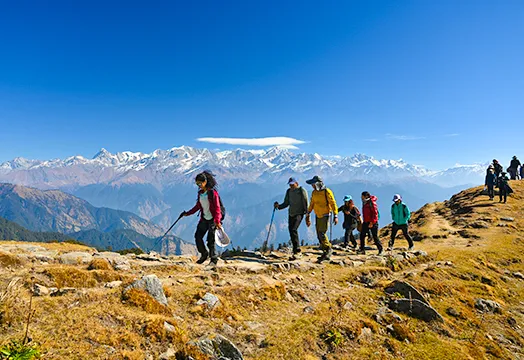
As monsoon season comes to an end, it washes away all the dust and haze that remains in the valleys throughout the summer, and then?
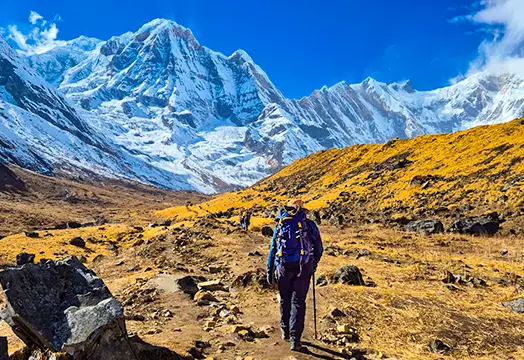
Located in north-central Nepal's Gandaki Province, Annapurna is the world's 10th highest and one of the most challenging mountains on the planet. Its height rises to 26,545 feet. Yet reaching Annapurna base camp is a far more accessible adventure, drawing trekkers from around the world every single season.
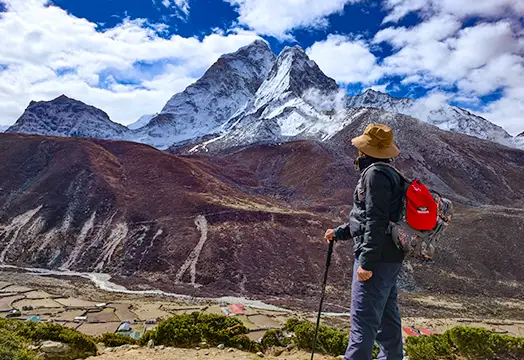
What does it feel like to stand on a trail where the mountain before you is worshipped as a goddess? For most of us, it's an adventure. But for the local communities who live in its shadow, it's something closer to faith. That mountain is Everest.

Over the last few decades, trekking has driven a profound shift: rural economies and local communities are reaping direct and indirect benefits.

Hiking teaches you to fall in love with the outdoors. Trekking teaches you to endure it. Mountaineering teaches you to respect it completely.

There are only a handful of Himalayan regions that hold profound spiritual significance as well as immense natural beauty. The Gaumukh Tapovan trek is one such destination that wonderfully combines adventure, divinity, and extraordinary Himalayan beauty.

What if a trek could leave you with more questions than answers? What if, after days of trekking, you reach a lake filled with centuries-old human skeletons?

Every year, every season reveals a new side of the Himalayan range. Be it trails covered in colourful rhododendrons or trails transformed into a lush green paradise, each season offers some of the most mesmerizing views of the Himalayas.