
Uttarakhand

Location
Uttarakhand

Duration
5 days

Max Altitude
12000 ft

Trekking
40 km

Grade
Moderate
Monday–Saturday: 10 AM to 06 PM (GMT +5:30)
Location
Uttarakhand
Duration
5 days
Max Altitude
12000 ft
Trekking km
40 km
Grade
Moderate
Monday–Saturday: 10 AM to 06 PM (GMT +5:30)
Panwali Kantha blends the layers of history, folklore, and spiritual beliefs, which are deeply rooted in the traditions of Uttarakhand.
This land is believed to have been touched by the Pandavas during their journey known as the Mahaprasthanam. According to the legend, after the war of the Mahabharata, the Pandavas renounced their kingdom and began their final pilgrimage toward the Himalayas in search of redemption and liberation (moksha).
Traversing the route that connects Kedarnath and Gangotri, the Pandavas also visited Panwali Kantha on that journey. So, walking through this region, you can imagine these legendary figures crossing the same terrain thousands of years ago.
As it connects two of the most revered pilgrimage destinations, Kedarnath and Gangotri, this sacred pathway was mostly used by Sadhus, pilgrims, and sages. People believe Panwali Kantha still preserves the echoes of ancient journeys, thus giving it a profound spiritual undertone.
You can visit the temples being constructed on the summit of the Panwali Kantha Trek. They are essentially built by the local villagers to honor deities. The locals believe that certain divine spirits roam the high altitudes and need secluded, permanent places to live. In return, these deities protect the villagers from negative energies.
One of the biggest defining highlights of the Panwali Kantha Trek is its endlessly stretched meadows. These undulating grasslands create a soft, green landscape that feels almost surreal. Along this terrain, you can walk freely with uninterrupted visuals of the distant valleys and towering Himalayan peaks.
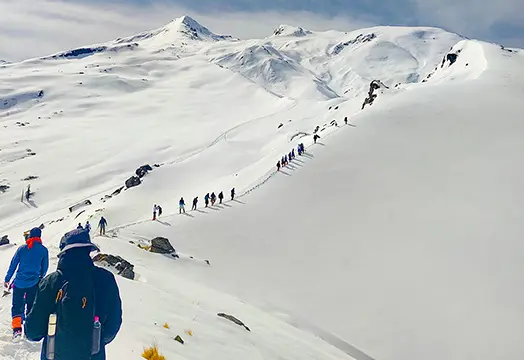
In spring and summer, the meadows appear like lush green carpets; in autumn, they obtain golden-brown hues dotted with vibrant wildflowers; and in winter, they turn into snow-covered plains. This dramatic transformation of these bugyals (meadows) give this trek a unique visual identity. Besides, a quiet and almost meditative atmosphere allows you to deeply connect with nature.
The trek showers you with some of the most breathtaking and close-up views of the iconic peaks like Chaukhamba, Nanda Devi, Kedar Dome, Thalaysagar, Trishul, and Neelkanth. What truly defines the entire experience of this trek is the scale, clarity, and quiet grandeur of its peaks. Also, the trek offers long-duration views, not just at one viewpoint.
The feeling of proximity of these summits is one of the most striking aspects. The crystal-clear skies enhance visibility, making the Himalayas appear vivid and sharply defined. The beauty of the peaks evolves throughout the day. At sunrise, they look pink and gold; the illumination spreads in daytime; and as evening approaches, the mountains turn orange, amber, and crimson.
One of the most distinctive and visually awe-inspiring features of Panwali Kantha is its glowing winter line. This rare atmospheric phenomenon produces a vibrant band of yellow and orange along the horizon. It appears as a distinct horizontal glowing line across the sky just after sunset, which is caused when a layer of cold air sits above warm air.
You will observe that a dark line separates the horizon like a natural “border” drawn across the sky. To add to that, the hazy silhouettes of the Shivalik range just below the winter line look absolutely enchanting.
Note: The winter line is uniquely visible in two places in the world – Mussoorie (India) and the Swiss Alps. Panwali Kantha may not have those perfect conditions, but the effect is mesmerizing nonetheless.
The forest trails of Panwali Kantha are among the most beautiful trekking routes in the Garhwal Himalayas. As you start your trek from Ghuttu Village, you quickly find yourself in dense forests of oak, rhododendron, pine, and deodar trees.
During spring and summer, the beauty of these wild trails is profoundly enhanced by red and pink rhododendron flowers. While crossing this section, you’ll experience sunlight filtering through trees, creating a dreamy atmosphere. These forests are part of the larger Himalayan ecosystem near the Kedarnath Wildlife Sanctuary.
One distinct feature that you will notice on the Panwali Kantha Trek is its shepherd shelters, scattered across forest clearings and high-altitude meadows. Also known as channis, these weathered structures serve as seasonal homes for shepherds who bring their cattle to graze in these alpine grasslands. These time-worn yet functional shelters tell stories of a life deeply connected to the mountains. They also symbolize resilience and simplicity.
Just after monsoons, when the grass is lush and nutrition-rich, people of nearby villages bring their mules/horses to these meadows and leave them there for days. During this period, the horses graze and play in these grasslands and sleep in the shelters.
A significant part of the Panwali Kantha Trek lies in the Kedarnath Wildlife Sanctuary, which is a thriving natural habitat where different ecosystems coexist in remarkable harmony. In the lower section, the trail winds through a thick canopy of oak, deodar, and rhododendron. Other than that, ferns, mosses, and medicinal plants also grow abundantly here.
Deeper into these woods, the region is a haven for birdlife, as you can spot the Himalayan Monal, koklass pheasants, partridges, Himalayan woodpecker, and various other songbirds.
The region is also home to some elusive species of mammals such as Musk Deer, Bharal (Blue Sheep), Himalayan black bear, and even the occasional Himalayan Leopard. More commonly, you may encounter langurs and monkeys leaping through trees. Thus, with every step, the trail is enriched with a new layer of life.

The Panwali Kantha Trek is located at an altitude of 12000 feet in the Tehri Garhwal district of Uttarakhand, India, within the Garhwal Himalayas. It is known for its vast rolling meadows and panoramic Himalayan views.
The length of the Panwali Kantha trek is approximately 40 km, which usually takes around 5 days of trekking. However, in many cases, the length also varies as per the itinerary you choose. So, from a short to an extended itinerary, the length can vary from 24 km to 65 km.
Panwali Kantha is generally considered a moderate trek. It’s not the easiest beginner trek, but it’s also not extremely technical. With decent fitness and preparation, most people can comfortably complete it. The trek reaches a height of 12,150 feet at Dyuili Top. You’ll cover a few days of steady uphill walking, while some stretches can feel tiring.
The best time to visit the Panwali Kantha Trek is April to June and September to October, when the weather is pleasant, the temperature is soothing, and the skies are clear.
During spring and summer seasons, the meadows come alive with lush greenery, forests are decorated with rhododendrons, and pleasant daytime temperatures are felt across the landscapes.
During the autumn season, skies turn crystal clear after the monsoon, stunning mountain views become common, meadows acquire vibrant hues with wildflowers, and the weather is cool and crisp.
The maximum altitude reached during the Panwali Kantha Trek is 12,150 feet at Dyuili Top. This spot is a nice vantage point for incredible views of sunset and sunrise. Besides, this place also offers a spectacular, panoramic 270-degree view of the Garhwal Himalayas, featuring the iconic peaks like Chaukhamba, Nanda Devi, Kedar Dome, Thalaysagar, Trishul, and Neelkanth.
At the base camp of this trek, Ghuttu Village, you’ll be provided a guesthouse to stay at night. During the trek ahead of base camp, the accommodation provided in the campsites is tents (twin-sharing basis). You’ll be provided with cozy sleeping bags and mattresses. So, as part of a nature-focused, authentic Himalayan experience, this will be the main form of your stay throughout the trek.
Packing smart is important for the Panwali Kantha Trek, since conditions can change quickly and amenities are basic.
Here's a list of essential items to pack for the Panwali Kantha Trek:
At TTH, we provide wholesome and nutritious meals during the Panwali Kantha Trek. The food is vegetarian and includes a variety of dishes such as rice, dal, vegetables, chapati, paratha, pasta, noodles, and soup. We also offer snacks such as biscuits, and salty, and dry fruits during the trek. Special dietary requirements such as vegan, gluten-free, or Jain food can also be arranged if informed in advance.
To reach the starting point of the Panwali Kantha Trek, you typically have to travel to the Ghuttu Village. It is the most popular base, accessible by road from Rishikesh, which is approx. 200 km and takes 7 to 9 hours to reach. Trek The Himalayas will drive you from Rishikesh to Ghuttu.
Here is how you can reach Dehradun or Rishikesh:
By Air: Fly to Jolly Grant Airport, which is around 27 km from Dehradun and 16 km from Rishikesh.
By Train: Board a train to Rishikesh railway station or Haridwar or Dehradun, which are well-connected to major cities.
By Road: There is fairly good road connectivity from Delhi or Chandigarh to Rishikesh, Haridwar, and Dehradun.
Yes! If you are looking for peaceful, untouched, and wild treks with raw natural beauty, there are several equally beautiful yet less crowded ones, just like Panwali Kantha. You can explore treks like Ranthan Kharak, Surya Top, Gulabi Kantha, Surya Top, Bhrigu Lake, Chandrakhani Pass, and Phulara Ridge.
These treks are some of the closest alternatives to Panwali Kantha in terms of scenery, solitude, breathtaking Himalayan views, serene meadows, dense forests, high-altitude passes, off-beat journey, and authentic nature experience.
The trail includes forest paths, steep ascents and descents, and vast alpine meadows.
On the Panwali Kantha Trek, you will witness a variety of terrains that will make your experience scenic and a bit adventurous.
Yes, there are water sources available along the Panwali Kantha Trek, but they are mostly natural and seasonal. Along the trek, you’ll encounter small mountain streams fed by snowmelt and rainfall. You can find natural spring water near certain campsites, which is convenient for drinking and cooking. Also, you can encounter a couple of waterfalls on the way. Around the base camp, you can find tap water.
To obtain the necessary permissions from the local authorities, it is mandatory to complete your profile with all the required information.
If you need help, watch the video below for a step-by-step guide on how to complete and submit your profile details.
View the Guide
Hear Trekkers Share Their Panwali Kantha Trek
You’ll have to arrive at Rishikesh first at the pickup point from where the journey of this trek begins. There are many ways to reach Rishikesh, but the most convenient option is to first arrive at the Dehradun/Delhi bus station, airport, or railway station, depending on your preference. From there, you can take a bus, train, or book a cab to Rishikesh.
Please Note: The most ideal and closest transport to reach Rishikesh is from Haridwar or Dehradun.
If you are taking a bus to Rishikesh, it is highly convenient to catch one from either Dehradun or Delhi.
(We highly recommend choosing government Uttarakhand Transport Corporation (UTC) buses over private ones, as they are generally more reliable, while private buses can sometimes be prone to delays. Whichever option you choose, ensure you reach Rishikesh by 6:00 AM on the pickup day).
For international and domestic trekkers opting for a flight, the most preferred option is to fly into Jolly Grant Airport (Dehradun Airport), which is exceptionally close to Rishikesh.
| Location | Travelling Guide / Travel Instruction |
|---|---|
| DELHI | The Indira Gandhi International Airport, Delhi, is the prime airport that offers multiple daily direct flights to Jolly Grant Airport (Dehradun). Major airlines operating this route include IndiGo, Alliance Air, and Air India. |
|
OUTSTATION (Mumbai / Blr / Hyd / Pune) |
You can book a direct or connecting flight to Dehradun Airport. If direct flights are unavailable, flying via Delhi is the best route. |
From Dehradun Airport to Rishikesh:
The distance between Jolly Grant Airport and Rishikesh is around 22 km. After arriving at the airport, you can easily take a public bus or book a private cab to reach the TTH pickup point.
Note: If you are arriving by air, it is recommended to reach one day in advance.
Rishikesh is well connected by rail via the Yog Nagari Rishikesh Railway Station (YNRK). Alternatively, the Haridwar Railway Station (HW) is located around 28 km away and serves as a major national rail junction.
(If you prefer to travel independently to Base camp and don't want to take TTH's pick-up service, you can either take a government bus or book a private cab from Rishikesh. Your trek coordinator will provide guidance on how to arrange for the bus or cab booking.)
Note - In July and August month always have a buffer day in your Itinerary due to the Monsoon.
( If you prefer to travel independently to Base camp and don't want to take TTH's pick-up service, you can either take a government bus or book a private cab from Rishikesh. Your trek coordinator will provide guidance on how to arrange for the bus or cab booking. )
Trek Essentials Guide :
To request a cancellation, please email us at info@trekthehimalayas.com using your registered email ID.
Cancellations prior to 25 days from the start of the Trip
Refund Options
Cancellation between 24 days and 15 days to the start of the Trip
Refund Options
Cancellation between 14 days and 10 days to the start of the Trip
Refund Options
Cancellation less than 9 days to the start of the trek.
Refund Options
Note:
Booking and Payments
Itinerary and Modifications
Cancellations and Refunds
Force Majeure
Every season in the Himalayas has its own way of showing off the mountains, but winter reveals a different side of them, one that feels like a whole new world.

Discover the untouched beauty of the Himalayas with our curated list of the Top 13 Hidden Treks in Uttarakhand 2025. Far from the crowded trails of Valley of Flowers and Kedarkantha, these lesser-known gems offer solitude, pristine landscapes, and authentic Himalayan charm. From the breathtaking views on Ranthan Kharak Trek to the spiritual serenity of Satopanth Lake Trek, each trail promises a unique adventure. Explore lush forests, alpine meadows, remote villages, and glacial rivers as you uncover the secrets of Uttarakhand’s offbeat trekking routes. Perfect for nature lovers and seasoned trekkers alike, these hidden trails provide a deeper connection with the Himalayas’ raw beauty. Whether it's the challenging Bali Pass Trek or the scenic Dodital Darwa Pass Trek, every route offers unforgettable vistas and cultural richness. Trek The Himalayas brings you this handpicked collection for an unparalleled trekking experience in 2025.

Trek The Himalayas (TTH) is introducing Stargazing with Telescopes experiences on the treks. Every night will be a window to the universe with an unforgettable connection with the cosmos.Imagine lying under a blanket of stars, the night sky stretching infinitely above you, as you drift into dreams of distant galaxies.Stargazing, the timeless art of gazing at the night sky and marvelling at the vast expanse of the universe. It’s more than just gazing; it’s an experience that connects us to the cosmos, inviting us to ponder the mysteries of the universe. When we look up at the stars, we are not just seeing distant celestial bodies but are also engaging in a profound dialogue with the universe, tracing constellations that have guided explorers for millennia and witnessing the beauty of the Milky Way. Through the lens of stargazing, we gain a deeper appreciation for the natural world and our place within it. It invites us to slow down, look up, and lose ourselve.

Experience the best of trekking in Uttarakhand with Trek The Himalayas. Our diverse range of treks offers an unparalleled opportunity to explore the scenic trails, breathtaking views, and unforgettable adventures in the heart of the Himalayas. From the lush green valleys and pristine rivers to the towering snow-capped peaks, Uttarakhand provides a perfect backdrop for trekking enthusiasts. Whether you're a seasoned trekker or a beginner, our well-curated treks cater to all levels of experience. Journey through iconic routes like the Kedarkantha Trek, known for its stunning winter landscapes, or the Valley of Flowers, famous for its vibrant flora. Traverse the challenging Roopkund Trek with its mystical lake or the serene Har Ki Dun Trek, rich in culture and history. Start your adventure today and immerse yourself in the majestic beauty of Uttarakhand's mountains. Join us for a memorable trekking experience that will leave you longing for more.

Discover the top 10 summer treks with Trek The Himalayas for an unforgettable adventure. Start with the Kedarkantha Trek, ideal for beginners and offering stunning winter landscapes. Immerse in the vibrant meadows of the Valley of Flowers, famous for its colorful alpine blooms. Explore the contrasting valleys of the Hampta Pass or enjoy panoramic views on the Brahmatal Trek. Challenge yourself on the Goechala Trek with incredible views of Kanchenjunga from 16,200 feet. Traverse the unique terrain of the Rupin Pass and admire the Pangarchulla Trek’s views of Dronagiri and Parvat peaks. Experience the beauty of the Tarsar Marsar Trek with its alpine lakes, or tackle the diverse landscapes of the Pin Parvati Pass. Finally, the Kashmir Great Lakes trek offers seven sparkling alpine lakes in stunning scenery. Join us and make the most of your summer trekking adventure!

Experience the best beginner-friendly treks this autumn with Trek The Himalayas: Phulara Ridge and Panwali Kantha. Both treks are perfect for those new to trekking, offering stunning vistas and gentle trails that showcase the beauty of the season. The Phulara Ridge Trek takes you through picturesque meadows and forests, providing panoramic views of the surrounding peaks and valleys. Meanwhile, the Panwali Kantha Trek offers a serene journey through lush landscapes and charming villages, with breathtaking views that unfold along the way. These treks are designed to provide a comfortable yet rewarding experience, allowing beginners to enjoy the splendor of autumn in the Himalayas without the challenge of more strenuous routes. Join us for these unforgettable adventures and immerse yourself in the natural beauty and tranquility of the Himalayan foothills.

Countdown to Best Autumn Treks as the Kashmir season commences and more! This season offers a spectacular array of trekking experiences across varying difficulty levels, showcasing some of the most stunning landscapes in the Himalayas. From leisurely hikes to challenging trails, each trek provides a unique opportunity to immerse yourself in the vibrant fall colors and serene mountain vistas. Whether you're seeking an easy trek to enjoy the crisp autumn air or a more strenuous adventure to test your limits, our curated list of treks has something for everyone. Join Trek The Himalayas for an unforgettable autumn adventure, where breathtaking views and thrilling trails await. Experience the beauty of the Himalayas in its autumn splendor and create lasting memories on these extraordinary journeys.
Enter your weight and height to check if you’re fit for the trek.
Medical & Disclaimer Form (Mandatory Documents) Click here to download Medical & Disclaimer Form
No images found for Latest.
Government employees can avail the benefit of Special Casual Leave (SCL) when they join us for a trekking expedition. As per Pay Commission guidelines, up to 30 days of Special Casual Leave can be availed in a calendar year for trekking or mountaineering expeditions conducted through a registered organisation.
Trek The Himalayas is a registered adventure tour operator with the Indian Mountaineering Foundation (IMF) and the Ministry of Tourism (MoT), making your trek eligible for SCL benefits.
To apply, email us at info@trekthehimalayas.com at least 30 days before the trek departure date, with the following details:
This benefit is exclusive to Indian Government employees and is applicable only for treks within India.
Since the inception of Trek The Himalayas, countless trekkers have chosen us to be a part of their trekking journey. Some experiences were learning moments, while many of you returned time and again, allowing us to be part of your most unforgettable adventures. Over the years, we have continuously evolved, improving our operations, and every detail that shapes your experience.

Through it all, you have shown us that we are not just another trekking company to you, we are family. Your trust, loyalty, and love mean more to us than words can express, and we cherish every step we have taken together in the mountains.
As a small way of giving back and saying thank you for choosing us again and again, we are excited to introduce something special: our heartfelt expression of gratitude to our valued and loyal trekkers.
We are launching an amazing policy to make your trekking journey even more exciting.
YES! An unbelievable policy for trekkers
With the TTH Trek Ambassador Policy, anyone who completes four treks with us gets their fifth trek absolutely free. You can choose from a variety of treks that we offer in himalayan states of India including Ladakh, Uttarakhand, Himachal Pradesh, Sikkim and West Bengal. You just need to start creating your trek bucket list and we are here to help you accomplish it.
Thinking, “I have already done more than 6 treks with TTH, what about me?” In this case you automatically qualify for the policy and therefore, your next trek will be on us. In fact, for every paid 8 treks you complete, 2 treks are on us.

Choose any Trek You Love
Love the Chadar Trek? It could be free!
Your dream treks including Markha Valley, Bali Pass, or Pin Bhaba Pass, can be yours at no cost under this policy.
Just like five stars make a perfect set, you are that fifth star for TTH. But this star does more than shine; it guides and inspires. You will share your tips, your stories, your experiences, and help new trekkers enjoy the journey as much as you do. That’s why this trek is special, and it’s your chance to be a TTH Trek Ambassador on the trail.
As an avid trekker, you bring excellent trekking knowledge and experience, and we would love you to share it and guide others along the way. You will be introduced as our TTH Trek Ambassador, representing TTH on the trail. Your experiences will glorify the shine of treks! And we can’t wait to see how you make the journey as beautiful as the Himalayan trails themselves!
What About Those Who are Just Getting Started?
Those who are just starting their trekking journey are also eligible for this policy, they just need to complete any four treks/expeditions with us (weekend treks, panch kedar excursion, and multi-sport adventures count too) and they will get the chance to become a TTH Trek Ambassador with their fifth trek absolutely free of cost.
This initiative is our way of appreciating trekkers who continue to walk with TTH again and again. When you complete four treks with us, you reach an important milestone in your trekking journey. Your fifth trek is then offered by TTH as a gesture of appreciation. You will also step in as a TTH Trek Ambassador, sharing your stories, inspiring others, and becoming a part of a community that celebrates the spirit of trekking.
Yes, it absolutely can. And that’s what makes this policy special. If trekking in Ladakh has been your dream, this could be your moment. Iconic treks like Chadar Trek and Markha Valley Trek are available as options for your free fifth trek.
Of course! A trek is a trek, and all your TTH treks, including weekend or two-day treks count toward your free fifth trek.
Yes, and this is one of the nicest parts of the policy. The free trek benefit works in groups of four treks. After completing four treks, your fifth trek is free. If you have completed eight treks, the benefit comes again, and your ninth and tenth treks will also be free. In short,for every four treks completed with TTH, you earn free treks along the way. The more you trek, the more TTH gives back.
Trek The Himalayas offers a wide range of treks be it easy to moderate treks like Kedarkantha, Har Ki Doon, Ranthan Kharak or moderate to difficult treks like Bali Pass, Pin Bhabha Pass or Chadar. By the time you complete four treks in the Himalayas, you have already grown into an experienced trekker.
Naturally, you would now like to prefer to take a step up and choose a difficult trek as your fifth one. Here is where Trek The Himalayas stands out as it offers a variety of difficult treks. And luckily all of them are qualified as free treks under the TTH Trek Ambassador policy. With TTH, you get a variety of trek options to choose from. You can pick a tougher trail or go for an Easy or Moderate trek; the choice is yours.
Yes definitely, we’re happy to offer this. Young trekkers bring fresh energy and enthusiasm to the trail, which makes the journey even more special. If your child has completed four treks with TTH, they can choose a Summer Camp as their fifth free trek.
You’ll be happy to know that any himalayan trek from easy to difficult level can be chosen as your free trek. The best part is that treks like Chadar Trek, Markha Valley, and many other beautiful himalayan treks are included. You may also choose higher-grade treks such as Bali Pass or Pin Bhaba Pass as part of your free trek.
As a TTH Trek Ambassador, your role goes beyond just trekking. You become a mentor on the trail. Someone who guides and shares real experiences with fellow trekkers. After completing multiple treks with TTH, you bring valuable knowledge and perspective that naturally encourages others and adds energy to the group.
Your stories and practical tips help first-timers and intermediate trekkers feel more comfortable and motivated. This is where your experience shines and lifts the overall trekking spirit of the group.
Challenging and peak summit treks, however, follow a slightly different approach. These treks are designed for highly experienced trekkers and climbers, where every participant is already well-prepared and self-driven. In such settings, there is limited scope for peer mentorship, as the structure and demands of the trek are very specific.
That’s why challenging and peak summit treks are kept outside the free fifth trek option, not because they are out of reach, but because the Trek Ambassador role is best experienced on trails where your guidance, encouragement, and shared journey can add value to others.
To claim the fifth-trek benefit, you must book your fifth trek using the same login ID/account that you used for your previous four eligible treks. This allows our system to automatically identify your trek history and verify your eligibility.
Once your previous four eligible treks are successfully matched to your account, the trek fee for your fifth eligible trek will be waived automatically at the time of booking. You do not need to submit a separate claim or request the benefit manually.
Please note: The benefit is applicable only to treks that are eligible under the TTH Trek Ambassador Policy. Treks that are not covered under the policy will not count toward the benefit or qualify for the waived trek fee. Any additional charges or services not covered by the policy will need to be paid separately.
No, you don’t. The trek fee for your fifth trek will be waived at the time of booking, provided you are eligible under the TTH Trek Ambassador Policy. All you have to do is select and book your fifth eligible trek, and you’re all set to go!
The first upcoming trek you undertake after successfully completing your fourth eligible trek will be considered your fifth trek under the TTH Trek Ambassador Policy. If you have multiple treks booked in advance, the benefit will apply to the trek that falls fifth in your completed trekking sequence.
All four treks must be registered under a single email ID. This helps us confirm that the same person has completed all four treks with TTH. Please ensure your records are linked to one email ID.
The free fifth trek is only valid for treks within India. International treks, including those in Nepal or other countries, don’t qualify as your free trek. However, any international trek you’ve completed does count toward your total number of treks with TTH.
Each unique trek you complete adds to your total. If you repeat a trek you’ve already done, it won’t be counted toward your free fifth trek.
The free trek includes only the trek fee itself. Any extra costs like trek insurance, transport, gear rentals, offloading, or special meals are not included and will need to be paid separately.
To be eligible for the free fifth trek, we count only treks you’ve completed with TTH. But don’t worry, even if you’ve done weekend treks, pilgrimages, or international treks with us, they all contribute to your count. By the time you’re eligible, you’ve likely completed more than four treks with TTH anyway.
The Trek Ambassador Policy does not apply to the Satopanth Lake Trek, Panch Kedar Trek & Drive, Char Dham Yatra, Private trips, and all Sightseeing programs including Safari.
.webp)
.webp)
.webp)
.webp)
