
19 September 2026
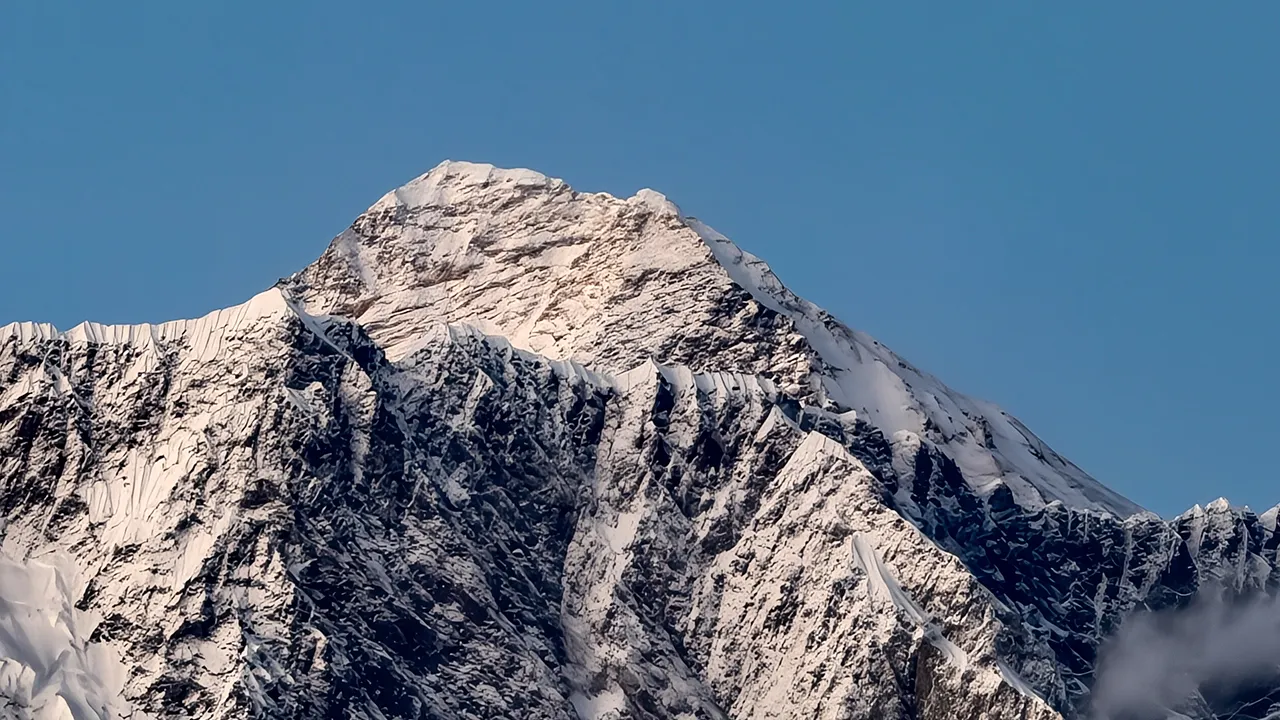
What does it feel like to stand on a trail where the mountain before you is worshipped as a goddess? For most of us, it's an adventure. But for the local communities who live in its shadow, it's something closer to faith.
That mountain is Everest. And the trail that leads to its feet is the Everest Base Camp trek, one of the most talked-about journeys on earth. You've probably thought about it. Most trekkers do, at some point. Somewhere between your first multi-day hike and your fifth, the thought creeps in: what if I went to the Everest Base Camp?
It's a fair thing to want. The trek runs through Sagarmatha National Park, a UNESCO World Heritage Site, and through villages where the Sherpa community has welcomed trekkers with chai, dal bhat, and quiet hospitality for decades.
But there's more to this trail than views and altitude gain. There's a story behind it, one most trekkers never hear before they lace up their boots. So let's talk about it properly.
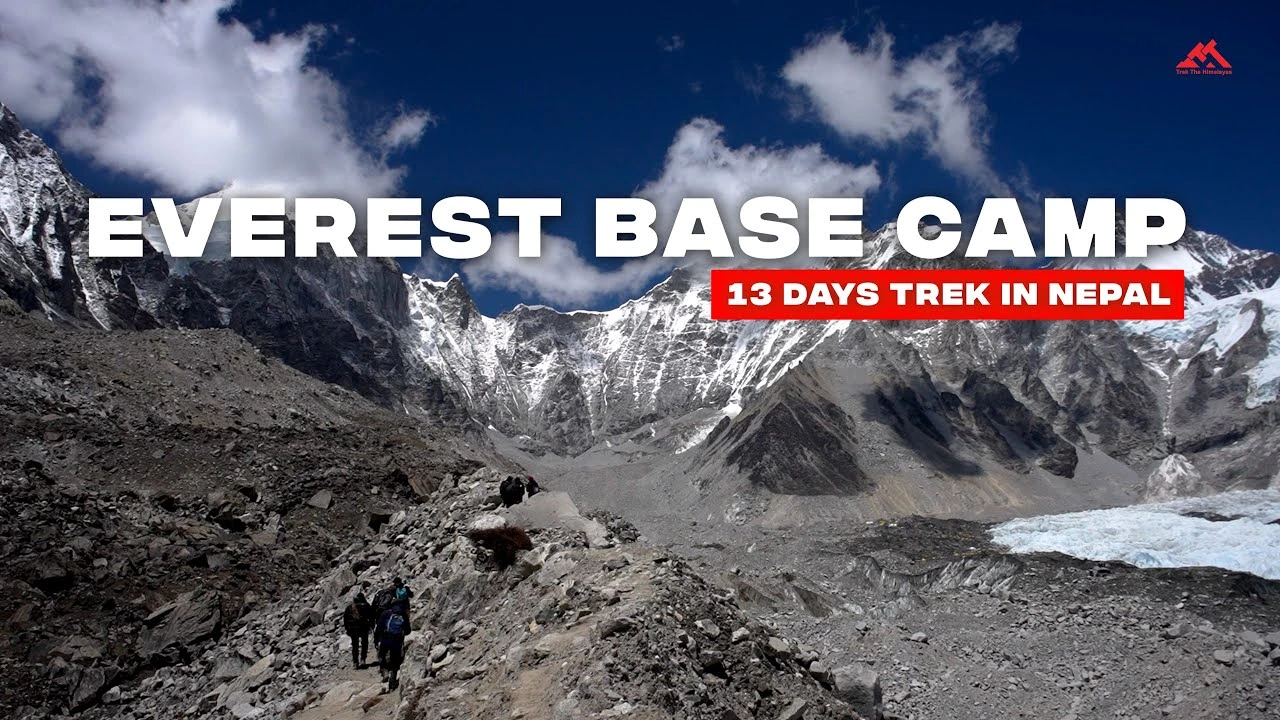
Everest is located on the border between Nepal and Tibet, part of China. It's the highest mountain on the planet, standing at 8,849 meters (approx. 29,032 ft); that's the officially confirmed height.
Whereas Everest Base Camp sits much lower, at 5,364 meters (approx 17,598 ft). Still, that's higher than any peak in the continental United States or Western Europe. You reach it on foot, not by summit rope.
Everest has a very rich history right from its glacial formation to its modern legacy as the world’s highest mountain on Earth. Let’s talk about its climbing history and how it became so popular among trekkers nowadays.
The first expedition to Everest was led by George Mallory in 1921, during which he climbed the north side of the mountain. He returned to Everest in 1922, and 1924 was his final expedition. In 1999, during another research expedition, the bodies of Mallory and his climbing partner Andrew Irvine were discovered on the north slope. The oldest known human remains on Everest belong to them. However, the question still remains: did they reach the summit first, or not?
However, it was a climbing expedition in 1953 that changed the history of Everest.
The British had tried and failed for decades. In 1953, a large expedition led by Colonel John Hunt made one more attempt, with climbers, Sherpas, porters, and mountains of supplies, all pushing toward a summit no human had ever touched.
The going was brutal. Acclimatization problems and faulty oxygen equipment slowed the team for weeks. By May 21, they had fought their way to the South Col. A first summit bid by Charles Evans and Tom Bourdillon came agonizingly close, stalling out at the South Summit.
Then, on May 29, 1953, Edmund Hillary of New Zealand and Sherpa Tenzing Norgay made their move. They climbed past the rock step that now bears Hillary's name and, at 11:30 in the morning, stood where no one ever had.
It's worth pausing on that detail: it wasn't a lone Western climber who reached the top first. It was a partnership, a New Zealand beekeeper and a Sherpa mountaineer, roped together, sharing the moment equally during the 1953 climbing expedition.
Everest means different things to different people who gaze upon it. The mountain is known by three names, each reflecting the perspective of the region. Each name holds cultural and spiritual significance, showcasing the life, traditions, history, and identity of the Himalayan communities surrounding the world’s tallest peak.
Mount Everest is located within the Sagarmatha National Park. The name 'Sagarmatha' is derived from two Nepali words: ‘Sagar,’ meaning Sky, and ‘Matha,’ translating to Forehead. Together, they convey the idea of the "Forehead of the Sky," highlighting the towering height of this iconic mountain.
In the 20th century, Nepal embraced the name Sagarmatha as a means of asserting national identity and honoring local heritage.
Here's what most trekkers don't know until they're already on the trail: Everest isn't just a mountain to the people who live near it. She's a deity.
The Sherpa community calls her Chomolungma, Goddess Mother of the World, and has for generations, long before any Westerner set eyes on her. Before any major expedition begins, a lama leads a Puja ceremony at Base Camp, asking the mountain spirits for safe passage. Climbers and trekkers alike take part, whether or not they follow the belief themselves.
To the Sherpa, this isn't a ceremony for ceremony's sake. The mountain is seen as a living guardian, something that shelters them, provides for them, and has to be respected, not conquered. That framing changes how you walk the trail once you understand it.
Everest is the name most of the world uses, and the odd one out, because it has nothing to do with the mountain itself.
Here's the story most trekkers never learn. In 1852, a mathematician named Radhanath Sikdar, working for the Great Trigonometrical Survey of India, calculated that a peak then labeled simply "Peak XV" was the highest point on Earth. Years of verification followed. Despite the mountain already carrying two names, Chomolungma and Sagarmatha, the British Royal Geographical Society renamed it in 1865 after Sir George Everest, the former Surveyor General of India. Ironically, Everest himself reportedly felt uneasy about having a mountain he'd never seen named after him.
So the name on your trekking permit isn't a local name at all. It's a 19th-century administrative decision.
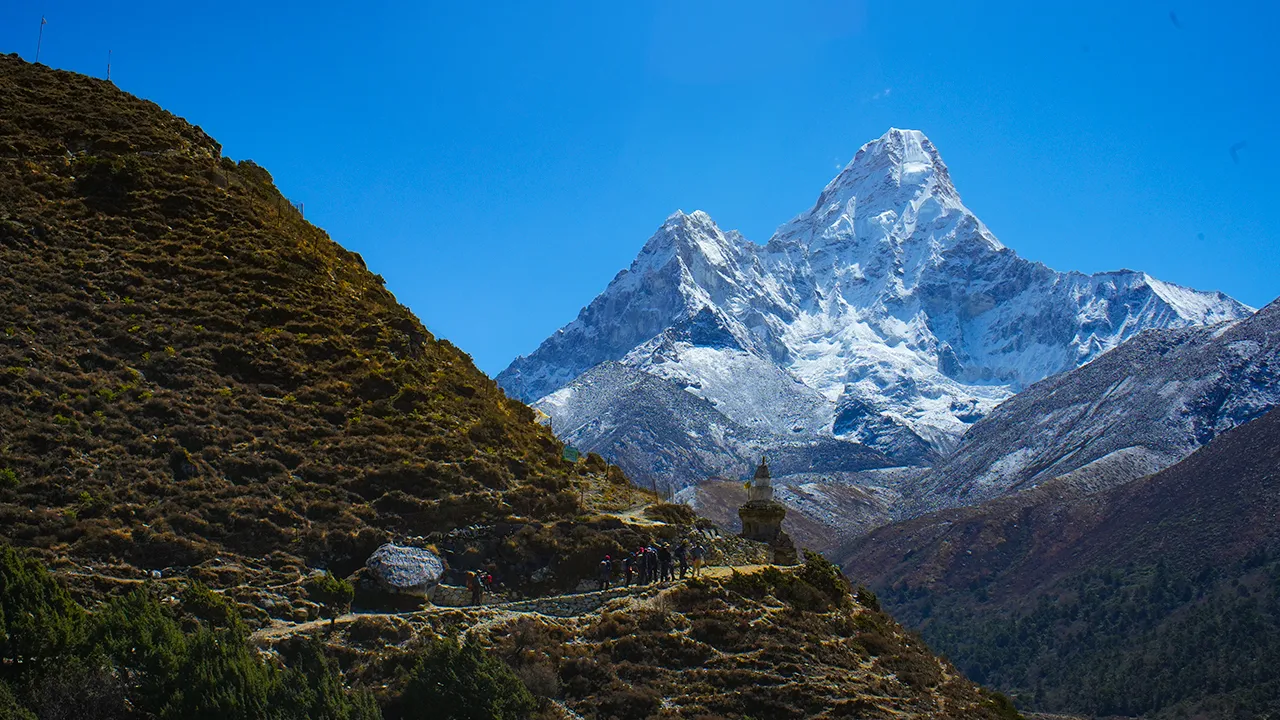
A handful of legends have survived the trek's modernization, and they're worth knowing before you go.
Read this detailed guide on the highlights of the Everest Base Camp Trek to know more.
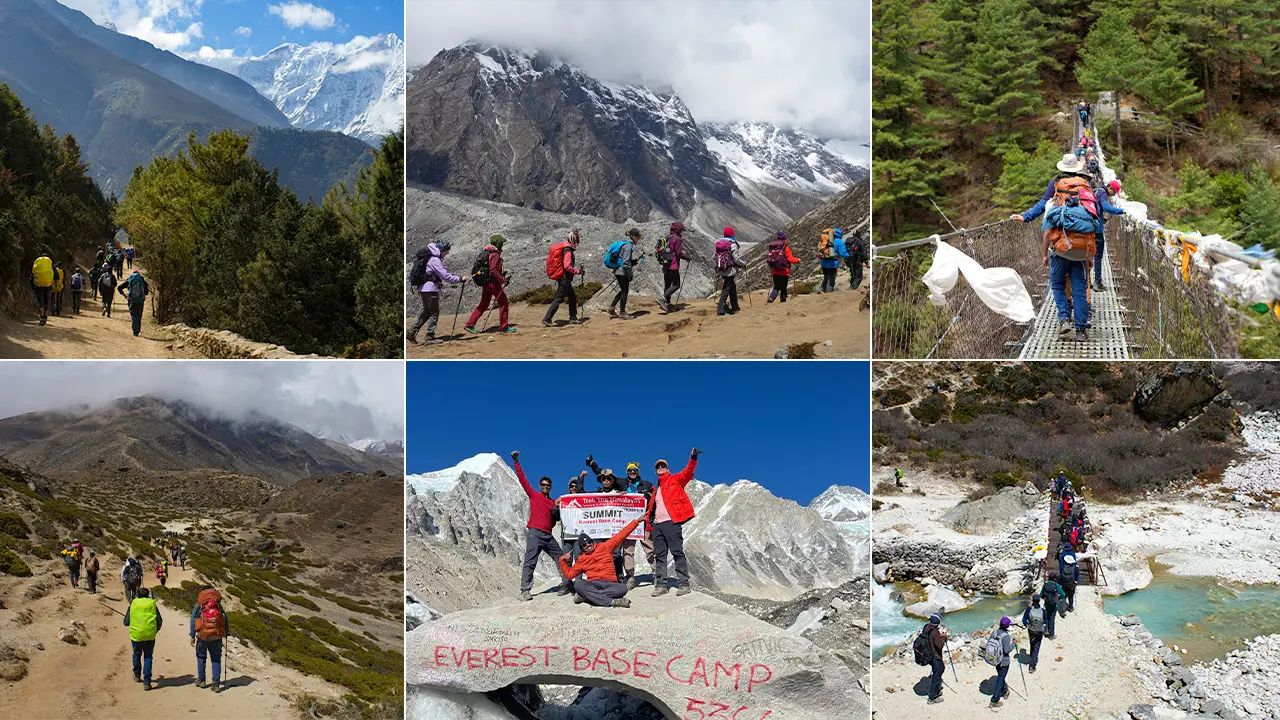
You don't need to be a climber to reach Everest Base Camp. All you need is a moderate level of fitness, patience, and an understanding of altitude. That's really all there is to it. Below is a brief table summarizing the differences between Everest Base Camp and Everest Summit.
| Factors | Everest Summit | Everest Base Camp Trek |
|---|---|---|
| Altitude | 8,848 meters | 5,364 meters |
| Difficulty level | Extreme | Moderate |
| Ideal for | Experienced mountaineers | Fit Beginners |
| Skills Required | Advanced mountaineering | Basic fitness |
The numbers vary slightly depending on the exact route and source, but here's the honest, commonly cited range.
Note: No technical climbing is needed. The real challenge is altitude, not terrain. Good fitness, gradual ascent, and proper rest days matter far more than raw hiking speed.
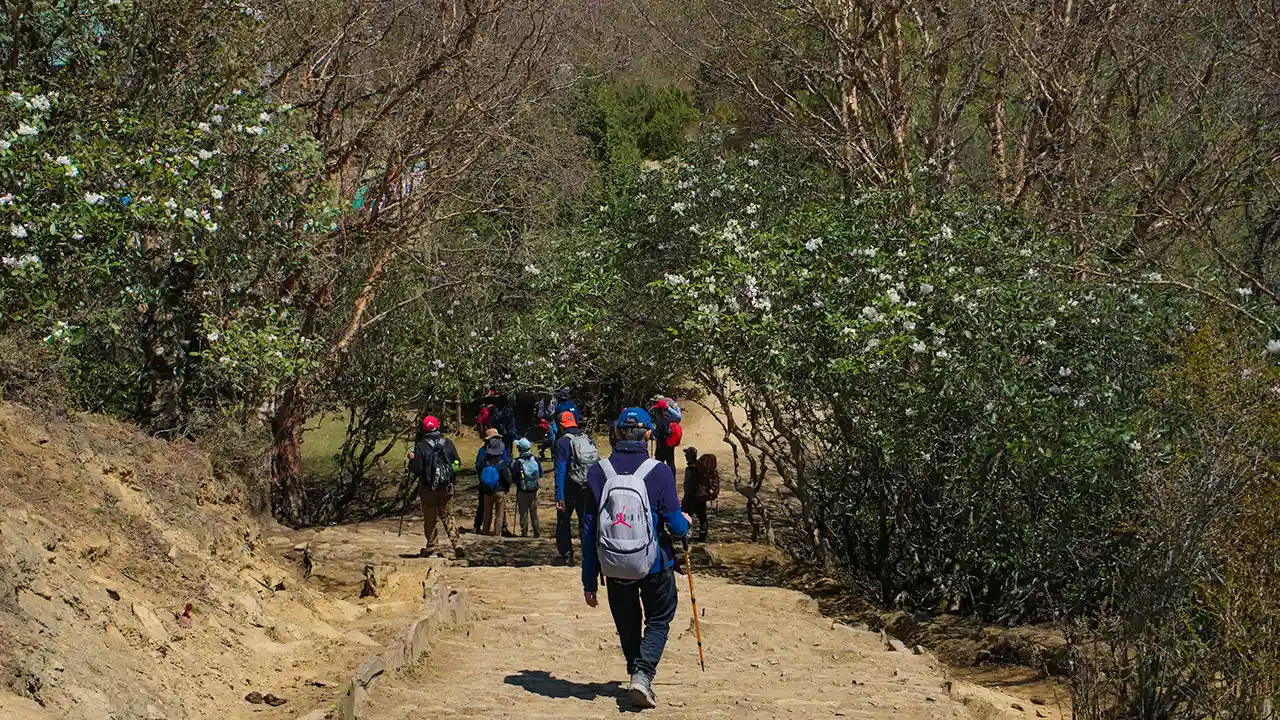
The two best seasons are spring, which lasts from March to May, and autumn, which lasts from September to November.
Autumn is generally considered the single best window. The monsoon clears out by late September, skies stay clear, and the trail dries out. October in particular is prized for stable weather and sharp mountain views. You can also witness snow during early October.
Spring brings a different personality to the same trail. Rhododendron forests bloom pink & White on the lower sections, with milder temperatures, and April marks the start of the Everest climbing season.
Both seasons draw crowds. If solitude matters more to you than perfect weather, the shoulder months of March or late November into early December offer a quieter trail.
Learn about the best time for the Everest Base Camp Trek in our detailed guide.
Note: Add a few days on either end for Kathmandu arrival, permits, and weather buffers around Lukla flights, which are notorious for delays.
Between the whispering prayer flags, the crunch of boots on trails, and the first glimpse of Everest rising beyond the clouds, you might start recalling that dream you had once, and today, you are on the way to achieving it: reaching the foot of the world’s highest peak. At Base Camp, Mallory’s famous words, “Because it’s there,” suddenly feel less like an answer and more like a triggering call. You finally understand why some journeys cannot be explained; they must be lived.
As you experience sunrise from Kala Patthar, the stories of Sherpas, explorers, Hillary, and Tenzing come alive around you. The mountain teaches you that greatness is not about standing above others, but standing beside them.
And perhaps that is Everest’s greatest gift. You can admire it through photographs, but one day, you may wish you had walked its trail. Some adventures become memories; the Everest Base Camp trek becomes part of your story. Don’t let yours remain a story you only wished for, but the one you had lived.
In 1921, George Mallory was part of the first summit attempt on Everest, but the first official attempt was by Charles Howard-Bury. In 1953, Edmund Hillary and Tenzing Norgay became the first to successfully reach the summit.
In 1953, Edmund Hillary of New Zealand and Tenzing Norgay climbed Mount Everest for the first time in history.
Sherpas are an ethnic community of Tibet & Nepal. Their name literally means ‘ People of the East’. For a long time, they were considered merely porters, but in reality they are the backbone of Himalayan trekking.
The Everest Base Camp trek is renowned for being the starting point of the world’s tallest mountain, featuring warm Sherpa hospitality, stunning viewpoints, and an adventurous trail that attracts trekkers.
The most recommended season for the Everest Base Camp trek is spring, particularly the months of March, April, and May, and Autumn in the months of October and November.
The Everest Base Camp trek is a non-technical trek that poses a challenging experience. It is classified as difficult when it comes to the level of difficulty.
Everest Base Camp Trek is suitable for beginners if you have a solid baseline of physical fitness and proper preparation, even though it requires no technical climbing skills.
You’ll stay in family-run tea houses with shared rooms and common washrooms. Single rooms may be available, but not at Lobuche and Gorakshep.
The most convenient option is flying from major Indian cities to Kathmandu, such as Delhi, Mumbai, and Kolkata. Alternatively, you can travel by road through border points such as Gorakhpur or Raxaul.
You need a Sagarmatha National Park entry permit and TIMS or local municipality permission. Trek the Himalayas arranges permits. Carry valid original identification documents.
19 September 2026

Trek updates, stories & mountain insights.
Tips and insights for every trekker.
09 Oct 2026

08 Oct 2026
07 Oct 2026
06 Oct 2026
05 Oct 2026
04 Oct 2026
03 Oct 2026
01 Oct 2026
30 Sept 2026
29 Sept 2026
Every season in the Himalayas has its own way of showing off the mountains, but winter reveals a different side of them, one that feels like a whole new world.
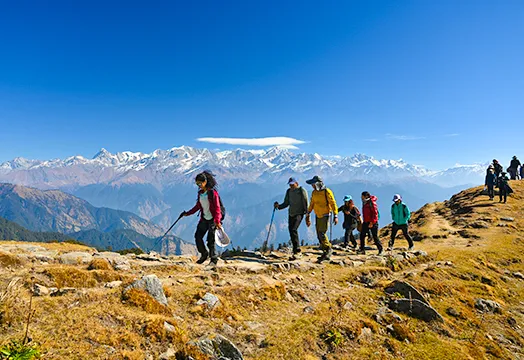
As monsoon season comes to an end, it washes away all the dust and haze that remains in the valleys throughout the summer, and then?
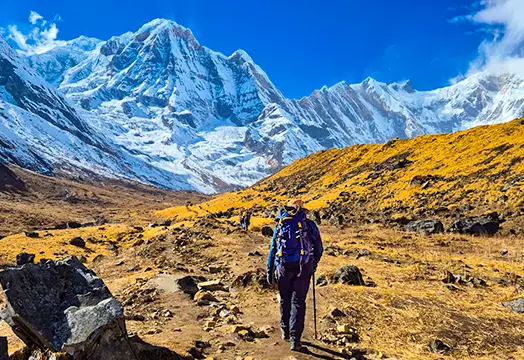
Located in north-central Nepal's Gandaki Province, Annapurna is the world's 10th highest and one of the most challenging mountains on the planet. Its height rises to 26,545 feet. Yet reaching Annapurna base camp is a far more accessible adventure, drawing trekkers from around the world every single season.
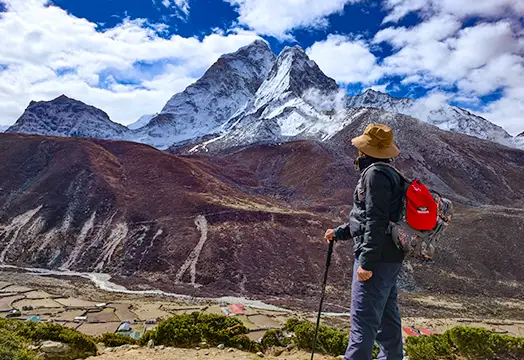
What does it feel like to stand on a trail where the mountain before you is worshipped as a goddess? For most of us, it's an adventure. But for the local communities who live in its shadow, it's something closer to faith. That mountain is Everest.

Over the last few decades, trekking has driven a profound shift: rural economies and local communities are reaping direct and indirect benefits.

Hiking teaches you to fall in love with the outdoors. Trekking teaches you to endure it. Mountaineering teaches you to respect it completely.

There are only a handful of Himalayan regions that hold profound spiritual significance as well as immense natural beauty. The Gaumukh Tapovan trek is one such destination that wonderfully combines adventure, divinity, and extraordinary Himalayan beauty.

What if a trek could leave you with more questions than answers? What if, after days of trekking, you reach a lake filled with centuries-old human skeletons?

Every year, every season reveals a new side of the Himalayan range. Be it trails covered in colourful rhododendrons or trails transformed into a lush green paradise, each season offers some of the most mesmerizing views of the Himalayas.

Altitude sickness is a physical reaction that occurs when you climb faster than what your body can adapt, especially in regions where air pressure and availability of oxygen tends to drop.