
12 February 2026
Standing at the base of any mountain, while staring at the peak of that mountain. A lot is felt by a trekker, from feeling stunned, admiration, to a quick rush of adrenaline, to scared, and then self-doubting yourself, asking - Can I really do this?
When a trekker starts climbing a mountain, it’s not just always about claiming the peak. Often, trekking is more about learning and getting to know the mountains. After getting familiar with the mountains, you start understanding the challenges the mountains carry within themselves, and then you start ascending accordingly.
But, you mustn’t forget that - every peak, every mountain is different from one another, they all have various levels of challenges in them. Some are equipped with gentle slopes and really forgiving trails that warmly welcome first-timers, but other peaks? They will test your endurance, technical skills, and mental strength.
And knowing all these things is exactly why we have curated this article. To break things down and make it all easy for you. In this article, you will get to know which peak is easy to climb and which one is challenging.
Apart from that, you will also be enlightened about how you can prepare yourself to climb those peaks in smart ways rather than just with bravery. Last of all, we will also share some interesting facts about all the easy to moderate, moderate to difficult, and difficult to challenging peaks that even some experienced trekkers might not be aware of.
And trust me, when it comes to mountain climbing, all these insights will come in handy and will help you in seeing the summits with much wiser eyes. So, if you’ve ever dreamed of standing and claiming the peak while the rest of the world unfolds beneath you, these trekking peaks in India will help you choose and achieve those peaks till you reach the top of them.
The Ultimate Guide to Expedition Grades and Techniques

Now I know, figuring out which Himalayan peak lies in the easy category or which one lies in the challenging category is quite a task. To ensure your focus remains on preparing for mountain climbing, we have compiled a comprehensive list of mountain peaks that you can explore according to your capabilities. All the peaks are listed in order of their grade level.
Easy to Moderate Peaks
Moderate to Difficult Peaks
Difficult Peaks
Challenging Peaks
Being able to get some amount of information about so many different mountain peaks all in one place seems like a task. And to save you from all the hustle and bustle of gathering the information about all the prominent trekking peaks.
We have gathered and put all the information in one place. All you have to do is pack your backpacks, prepare your boots and crampons, and get ready to begin your journey.

Kedarkantha is prominently known as the “Queen of Winter Trek,” and it is nestled in the Uttarkashi, the district of Uttarakhand. This trek is said to be the perfect location for those who are looking to experience the feel of winter and climb the peak without facing any challenging hurdles.
The trail of this trek is surrounded by dense pine forests, open snowfields, and some peaceful, stunning campsites that will elevate your experience. Other than that, the trail will allow you to witness peaks like Swargarohini, Bandarpoonch, Black Peak, and Draupadi ka Danda 2.
As for the summit point of this trek, standing at the peak, you will experience a magical sunrise moment, where the sky is covered in a perfect shade of orange and red, casting a golden glow over the snow-covered mountains.
From Sankri to Hargoan, the journey to reach the Kedarkantha peak is filled with its own beauty and charm. So, if you are eager and curious to explore this winter paradise, don’t forget to go through this ultimate Kedarkantha trek guide.
|
Do You Know?
|
| Visit Kedarkantha Peak |

Located in the Garhwal region of the Himalayas, Pangarchulla. The journey to reach this peak is quite thrilling and gives a full rush of adrenaline. The trail of this trek takes the trekker from Oak to Deodar and the Maple forest, while witnessing some really grand mountains as they climb upwards.
Apart from that, while trying to fulfil your dream to stand at the peak and soak in all the mesmerising beauty, you will get an opportunity to visit the Nanda Devi National Park, and walk on the diverse terrain that is a mixture of emerald lush green meadows, rocky patches, and some snow-covered areas.
All these things allow the trekker to experience the true beauty of doing a Himalayan trek. The true beauty of this trek lies in the moment when the atmosphere and scenery of Pangarchulla Trek change into the most fascinating view, where the snow-capped mountain peaks and covered trails add a touch of adventure to it.
|
Do You Know?
|
| Visit Pangarchulla Peak Trek |

Nestled in northeastern Tanzania, East Africa, somewhere around the Kenya border. It is one of the most popular and iconic peaks in Africa. The scenery of this place is what makes it stand out among all, as when a trekker walks on the trail of this trek, they come across different views with each step they take forward, from lush rainforest views to beautiful alpine desert, and then finally witnessing icy glaciers as they stand at the summit point.
As for the route, trekkers choose to reach the Kilimanjaro peaks, which include the Machame gate and Karanga gate, are very well-curved and marked routes, making trekking possible on this trail, even though it is quite a difficult trek. With all the steady trails, you will be able to enjoy climbing the Barranco Wall, view as well as walk on different terrain without any hurry.
|
Do You Know?
|
| Visit Kilimanjaro Trek |

Kanamo Peak, standing at 19,550 ft in the Spiti Valley of Himachal Pradesh, is a dream high-altitude trek for many trekkers. Its true beauty lies in the raw, remote landscape and the challenges it offers from the journey through Kaza to Kibber village, along with a crucial acclimatisation day that adds to the thrill.
The trail features varied terrain, scenic patches, and vibrant meadows, but what truly sets Kanamo apart is its solitude, as it remains far less crowded than other peak expeditions. Ideal for experienced trekkers seeking a difficult-level trek, Kanamo rewards you with panoramic summit views, a crossing of Asia’s highest suspension bridge, the Chicham Bridge, and visits to iconic landmarks like the Key Monastery (Kye Gompa).
|
Do You Know?
|
| Visit Kanamo Peak Trek |

To reach this beautiful Yunam peak, trekkers have to visit the Lahul of Himachal Pradesh. The journey of this trek begins at the most popular tourist spot - Manali. After that, you will go through some remote and rugged areas of the Lahul and Spiti Valley. As you keep moving forward in your trail, you will come across some stunning views of snow- capped peaks and frosty glaciers.
Other than that, as you keep doing the Mount Yunam peak climb, you will be witnessing a perfect transition of the landscape view. As they go from rocky terrain to perfect snowy ridgelines, making it a perfect adventurous trek for trekkers.
What makes the climb of this peak more tempting is the perfect view you will get to see while standing at the peak of the mountain. All the serene beauty, as well as the location of this trek, is what makes it so extraordinary. It is one of those treks, where a trekker can immerse themself in the beauty of it, and get an opportunity to experience the raw beauty of the Himalayas that is still untouched by the modern world.
|
Do You Know?
|
| Visit Yunam Peak Expedition |

Nestled in the stunning Valley of Kullu, in Himachal Pradesh. The Friendship Peak trek is a perfect blend of thrill and beauty. This trek offers quite some astonishing views, but the real beauty of this trek is its summit point. Standing at the peak of this mountain, you will get to witness the mesmerising panoramic 360 - degree view of the Himalayan ranges like Deo Tibba and Hanuman Tibba.
This trek is said to be an ideal trek for experienced trekking enthusiasts. As these it requires some level of technical climbing skill. The view from the top of this peak makes you realise how much calmness a place provides when it is isolated from the outer world and surrounded by the unthinkable beauty.
|
Do You Know?
|
| Visit Friendship Peak Expedition |

Located in the region of Ladakh, the Stok Kangri Peak Expedition is the perfect peak to view the beauty of the Ladakh mountain ranges. Being one of the peaks most trekkers look forward to, the Stok Kangri climb can be quite an exhilarating experience.
To reach the summit point, the trekker must cross various diverse landscapes, including cold deserts and snow-covered ridges, thereby elevating their trek experience by providing different views all in one trek.
One thing about this trek route is that the whole route is filled with constant ups and downs in it, it is quite a rocky path, and during winters the trail gets filled with a complete icy ridgeline. But the reward, after reaching the summit point, will make every effort worth it, as you will witness the clear view of Zanskar and the Indus Valley from there.
|
Do You Know?
|
| Visit Stok Kangri Peak Expedition |

Nestled in Nepal’s Khumbu region, the Lobuche Peak is the most fascinating place to visit for every trekker. The journey to reach this peak is the same as the route to reach the Everest Base Camp. The journey of this trek starts by taking a flight to Lukla, but the real thrill?. It lies after reaching Lukla, where the real trekking begins.
The trail of this trek is equipped with several challenges, except for facing the challenge of the rough path, the trekkers also encounter dropping of oxygen level, but these challenges are what truly make these treks so interesting.
|
Do You Know?
|
| Visit Lobuche Peak Expedition |

Located in the raw and untouched terrain of Ladakh, the Dzo Jongo East Peak Expedition is one of the most thrilling adventures for trekkers. The beauty of this trek truly lies in the journey itself. The route goes through the Zanskar range, and some high-altitude meadows.
Other than that, in this expedition, you will come across the Markha Valley, some traditional villages and many other things. So, read the ultimate guide to Dzo Jongo Peak if you wish to learn more about this expedition.
|
Do You Know?
|
| Visit Dzo Jongo East Peak Expedition |

Popular for its rugged terrains and magnificent views of the mountains among the trekkers, the Kang Yatse II expedition is located in the Zanskar Range. This expedition journey begins from Leh and will provide trekkers with an in-depth view of Ladakh’s culture and heritage.
On the route of the expedition, some small yet major villages fall on the trekker's path, which truly get to witness the shift of the trail. All the way, from grazing lands to cold desserts they witness it all. And lastly, at the summit, the trekkers will be rewarded with an astonishing view of the surrounding mountains, glaciers and the Leh Valley. So, if you want to learn and explore this adventurous place, then you can read the guide of Kang Yatse II Peak here.
|
Do You Know?
|
| Visit Kang Yatse II Peak Expedition |

The trek, whose trails lead you to the Dzo Jongo East peak, also gives you an opportunity to go from the high-altitude region of the mountains, while you get to witness the glaciers, too. Apart from that, you will also get to witness a mesmerising view of Ladakh’s peaks, Kang Yatse I and II and so on. It is considered the most easily accessible, and it offers perfect solitude to the trekkers.
Speaking of this peak climbing, it offers quite a thrilling experience of trekking that requires a certain set of skills in a trekker to reach the summit. So, that trekker can witness the raw, unparalleled beauty of Ladakh.
|
Do You Know?
|
| Visit Dzo Jongo East and Kang Yatse II Peak Expedition |

Kang Yatse I is a peak that is located in the Ladakh region, offering a perfect landscape view of the mountains, a summit for the trekkers. The journey to reach the Kang Yatse I summit begins from Leh, but the true adventure trekking begins from the Skiu region.
As you move forward in your journey, you will come across the beautiful Markha Valley, and then some cold deserts too. During this expedition trek, you will get to explore the culture of Ladakh, see some villages of Ladakh, some ancient monasteries that are located there and so on.
Other than this, the summit point provides some of the most breathtaking views of the valleys around the peak and so on.
Speaking of, the climbing of this peak appears to be easy in the beginning, but after a certain point, it starts becoming rocky as you come near the summit. The altitude of this peak is what truly makes it challenging to climb because, after a specific point on the trek, the trekkers start experiencing thin air around them, and using some technical climbing gear is required, making acclimatisation more necessary for trekkers than usual. Other than that, it’s an adrenaline-filled experience and a must-do for all adventure seekers.
|
Do You Know?
|
| Visit Kang Yatse I Peak Expedition |

One of the most thrilling treks to do in the Pir Panjal range of Himachal Pradesh is none other than the Deo Tibba Peak expedition. It is one of the most prominent trekking spots among the trekkers who wish to witness the perfect view of the stunning Himalayas. As well as take their mountaineering hobby one level up.
The journey of this trek begins from the most popular tourist spot, Manali, then the trail to reach the Deo Tibba peak goes through some dense forest, alpine meadows and with some glaciers coming in between the trek route.
The camp for this trek expedition is located in Chikki, Seri and Tenta, where the walking area keeps changing according to the weather conditions. Like - easy trails, snowy slopes, rocky ridges and so on. But the Deo Tibba peak still looks majestically giant even from a good amount of distance between the trail and the summit that offers some really breathtaking views to the trekkers.
|
Do You Know?
|
| Visit Deo Tibba Peak Expedition |

The Kang Yatse I & II Peak Expedition offers a rare chance to the trekker, where they trek to witness the summit of the two iconic peaks in one journey. Located in the heart of Ladakh, both peaks offer some stunning views of the vast Himalayan ranges. Apart from that, while being on this trek, you will also get to explore Leh and witness the breathtaking Markha Valley, where every landscape feels straight out of a postcard.
Starting from the beginning point, the trekkers get to view different scenarios of the trail that are equipped with ever-changing views that keep the journey exciting. This summit demands lots of technical snow and ice climbing from the trekker, but the sense of achievement is also gained as you reach the top, giving you an opportunity to experience the unforgettable moment of your life.
|
Do You Know?
|
| Visit Kang Yatse I and Kang Yatse II Twin Peak Expedition |

The Nun Peak Expedition is one of the most thrilling high-altitude climbs in the Indian Himalayas, standing tall at 7,135 meters in the Nun-Kun massif of Ladakh. Known for its challenging glaciers, steep ice walls, and technical mixed routes, it attracts seasoned mountaineers seeking a true adventure. The expedition usually begins from Base Camp at the village of Kharnak, followed by acclimatisation at Advanced Base Camp, before tackling the snow-covered ridges and crevassed glaciers leading to the summit. Apart from the adrenaline rush, climbers are rewarded with panoramic views of the Himalayan range, including the majestic Kun Peak, making this expedition both a test of skill and a visual spectacle.
|
Do You Know?
|
| Visit Nun Peak Expedition |

Located in the Garhwal region of the Himalayas, the Nanda Ghunti Peak Expedition is quite a striking high-altitude adventure. This peak is very popular among the trekkers for its dramatic ridgelines and close-up views of Mt. Nanda Devi and Trishul.
The exceptional thing about this expedition is that the journey of this trek is filled with lush alpine meadows, glacial moraines, and some snowy slopes too. In fact, the ridge of this peak really tests the skill and endurance of the trekkers.
As for the route, it really exposes trekkers to the snow faces and sharp ridges climbing as they come near the summit. What makes Nanda Ghunti special is its raw, less-crowded approach and the intense mountaineering experience it offers, making it ideal for climbers looking to step into serious Himalayan expeditions.
|
Do You Know?
|

The Mera Peak Expedition is one of the most thrilling trekking expeditions of Nepal’s Khumbu region. It allows the trekkers to do the trek of the country's highest peak, called Mera Peak.
Located at an altitude of 21,247 ft., this trek offers some of the most beautiful, breathtaking views of the Himalayas. Although to witness those views, a trekker has to go through some serious climbing challenges.
This trek begins from Lukla, then goes through some remote villages, the rhododendron forest and beautiful Hinku Valley. The trail is equipped with some glacier views and high altitude terrain, and so on.
From the summit, you’re rewarded with a spectacular panorama of Everest, Lhotse, Makalu, Cho Oyu, and Kanchenjunga. With minimal technical difficulty, Mera Peak is perfect for experienced trekkers ready to step into mountaineering.
|
Do You Know?
|
| Visit Mera Peak Expedition |

Situated in the Garhwal region of the Himalayas, the Satopanth Peak Expedition is quite a thrilling trek for mountaineers who love chasing some high-altitude challenge. This expedition is quite popular for its pyramid shape appearance, for its icy slopes, and for the perfect panoramic views of peaks like Badrinath, Chaukhamba, and Nilkanth.
The journey of this expedition truly begins from Gangotri, from there the trekkers get to witness the Gaumukh sacred river, Gangotri temple, Chaturangi glaciers, Vasuki Tal Base camp, and so on. As it is one of the most challenging treks, the trekkers get to experience the glacial crossings, knife ridge, and high-altitude climbs, making it a perfect blend of technical mountaineering and breathtaking Himalayan beauty.
|
Do You Know?
|
| Visit Satopanth Peak Expedition |

Standing all mighty in the Caucasus Range of Russia, Mount Elbrus Expedition is one of the finest high-altitude climbs to do for any trekking enthusiast. The most unique thing about this expedition is that even though it’s challenging, it doesn’t require any non-technical skills, but it really demands high-level fitness and experience to reach the peak summit. To do this expedition, a trekker must have a high level of endurance in their body, as it can be quite demanding at times.
It is an expedition where cable cars are used, while taking gradual acclimatization from time to time. During the climb, you will also come across some vast glacier slopes, will encounter extreme cold weather, and will also have to endure long summit days too, but at the same time, the view, the journey, and all the experience make all the challenges worth enduring at the end.
|
Do You Know?
|
| Visit Mount Elbrus Expedition |

Situated in Uttarakhand’s Garhwal region, the Rudragaira peak expedition is equipped with 19,086 ft. It is one of the most thrilling and adventurous peaks to trek for trekkers. This trek offers one of the best views of the Himalayan peaks of Gangotri I, II, III, Shivling, Shrikanth, Jogin peaks, and the Bhagirathi sisters.
The journey of this expedition begins from Gangotri, then the route of this journey goes through Rudragaira Nala, and then some dense forests as well as some alpine meadows. As for the terrain of this trek, it is filled with some steep ridges and glacier crossings that truly test the physical endurance and mental strength of a trekker, giving them a perfect Himalayan mountaineering experience.
Reaching the Rudragaira summit is the ultimate reward, with unforgettable views of the Gangotri massif under clear mountain skies. Ideal for experienced trekkers, this expedition is perfect for those seeking the thrill of a technical climb.
|
Do You Know?
|
| Visit Rudragaira Peak Expedition |

Popularly known as the Kala Nag Peak. The Black Peak is located in the Garhwal region of the Himalayas at an elevation of 20,950 ft. It is one of those peaks that provides a perfect yet unique view of the skyline from its summit point. A lot of experienced and trained trekkers wish to climb this expedition at least once in their lifetime. It is considered one of the most challenging peaks of the Himalayas.
The best part about Black Peak climbing is that not only is the summit view even, but the climbing part of this trek is also very rewarding. As it provides a complete, challenging and thrilling experience of the trek. As for the view, after reaching the summit point, the trekkers get to witness the snow - capped view of Swargarohini and Bandarpoonch peaks.
The journey of this trek is all about witnessing the rocky, rugged moraines, alpine meadows, stunning glaciers and so on.
|
Do You Know?
|
| Visit Black Peak Expedition |
Now, if you wish to expand your knowledge and learn more about the right way to climb all grades of expeditions, you can explore our “Ultimate Guide on Expedition Climbing” article.
The technical climbing simply means when a trekker is required to use some technical gear, some equipment to climb and come down from mountains during their trek. Those gears will help in keeping the trekkers safe during their climb.
Well, yes, the techniques that trekkers can use while climbing the expeditions is the crampon techniques and the right walking technique.
Unfortunately, no. Even though most of the easy expeditions are beginner-friendly, they also require trekkers who are fit and have at least some prior high-altitude trekking experience.
No, doing an expedition requires you to have adequate breathing circulation, and smoking can affect that. Therefore, we suggest that you quit smoking at least 3 months before your trek, and if you wish to know more in this context, you can get in touch with our trek coordinator, who will guide you through it.
If you are an experienced trekker, then you can go on expeditions like Mount Friendship Peak, Mount Kilimanjaro or Pangarchulla. Although don’t forget to have a proper briefing on the safety guidelines and practice your skills.
12 February 2026

Trek updates, stories & mountain insights.
Tips and insights for every trekker.
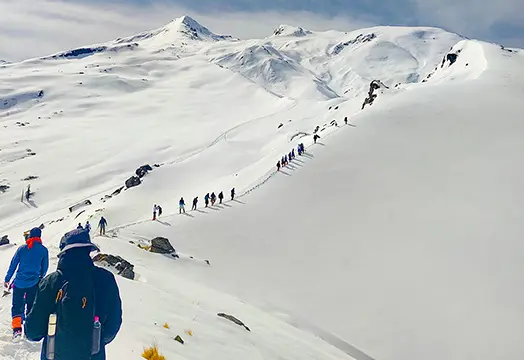

Every season in the Himalayas has its own way of showing off the mountains, but winter reveals a different side of them, one that feels like a whole new world.
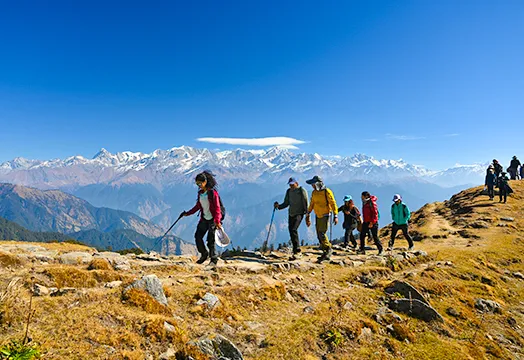
As monsoon season comes to an end, it washes away all the dust and haze that remains in the valleys throughout the summer, and then?
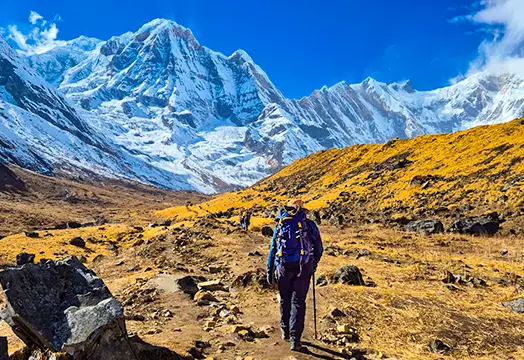
Located in north-central Nepal's Gandaki Province, Annapurna is the world's 10th highest and one of the most challenging mountains on the planet. Its height rises to 26,545 feet. Yet reaching Annapurna base camp is a far more accessible adventure, drawing trekkers from around the world every single season.
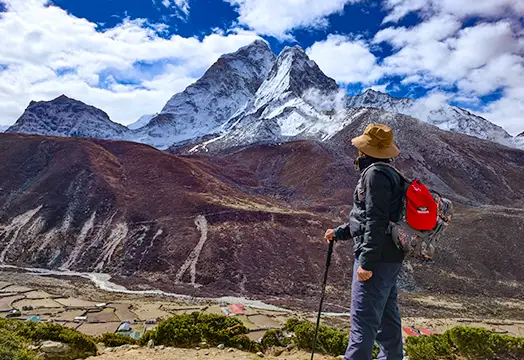
What does it feel like to stand on a trail where the mountain before you is worshipped as a goddess? For most of us, it's an adventure. But for the local communities who live in its shadow, it's something closer to faith. That mountain is Everest.

Over the last few decades, trekking has driven a profound shift: rural economies and local communities are reaping direct and indirect benefits.

Hiking teaches you to fall in love with the outdoors. Trekking teaches you to endure it. Mountaineering teaches you to respect it completely.

There are only a handful of Himalayan regions that hold profound spiritual significance as well as immense natural beauty. The Gaumukh Tapovan trek is one such destination that wonderfully combines adventure, divinity, and extraordinary Himalayan beauty.

What if a trek could leave you with more questions than answers? What if, after days of trekking, you reach a lake filled with centuries-old human skeletons?

Every year, every season reveals a new side of the Himalayan range. Be it trails covered in colourful rhododendrons or trails transformed into a lush green paradise, each season offers some of the most mesmerizing views of the Himalayas.

Altitude sickness is a physical reaction that occurs when you climb faster than what your body can adapt, especially in regions where air pressure and availability of oxygen tends to drop.
11 Oct 2026
10 Oct 2026
09 Oct 2026
08 Oct 2026
07 Oct 2026
06 Oct 2026
05 Oct 2026
04 Oct 2026
03 Oct 2026
01 Oct 2026