
17 February 2026

Walking on the rugged, unknown terrain of the mountains is one of those few experiences that makes you feel very different yet calming inside. But to achieve that feeling, not only do you have to plan a trip to the mountain, you are also supposed to carry gear and other things that are important for trekking.
And among all the gears, carrying a trekking pole is very mandatory. Why? Well, you will learn that sooner, but take it from someone who has been leading treks in the mountains every day for a decade. A trekking pole is very important for your body while trekking.
Throughout all these years, the one thing that trek leaders have noticed is that many trekkers either think that the trekking pole is pointless and ignore it, or think that it is equipment just for beginners.
All the myths and mixed opinions around trekking poles have led me here. Today, with insights from our trek leader, I’ll bust some common misconceptions and share everything you need to know from choosing the best trekking poles to finding budget-friendly options before planning your next trek.
Therefore, while planning your trip, make sure to consider this friendly guide from our trek leader, and take it as your friendly manual. It is completely simple, practical, and based on real mountain experience because out there, it’s not about fancy gear, it’s about walking smart and coming back with happy legs and good memories.

For centuries, our ancestors used a basic, very normal, simple wooden stick to support and balance their body weight while walking in the mountains. That “wooden stick” was later modified into a “trekking pole” in the 1970s, and it has been used by trekkers ever since to maintain balance and provide support while ascending mountains.
Throughout the year, the trekking pole structure, technique, and material have evolved a lot. So, without any further due let’s dive deep into every aspect of this trekking poles guide.
Where you will get to know all the things about a trekking pole, including things like-
About Trekking Poles
Hearing the word “trekking pole,” what is the first image that comes to your mind? Probably a long stick made up of some material strong enough to handle the weight of a human body, but is this truly what a trekking pole is?.
Well, trekking poles are basically said to be a standard device that provides complete stability to the trekker’s body and prevents their knees and joints of the body from getting any long-term damage.
A lot of the time, people tend to assume that it’s a walking pole for elderly trekkers or for beginners, but this assumption is far from the truth. It is that one most underestimated gear that every trekker should use instead of ignoring it.
The Best Type of Trekking Poles
As you all know, in today’s time, the market has a wide range of options available for everything. Similarly, the best affordable trekking poles are also available in the market for trekkers to purchase.
Speaking of it, there are certain features that trekkers look for in trekking poles, as they are a one-time investment. Hence, a trekker must purchase a trekking pole that is made up of a certain specific type of material, and the price range should be affordable too, with features that will make carrying it on a trek more convenient.
Now, things trekkers should keep in mind while purchasing it are -
The material of a trekking pole is very important as it impacts your security, energy, and stability during the trek. Therefore, while purchasing, make sure that you purchase a pole made of ‘Carbon fibre’ because they will be ultralight in weight and will also have quite high rigidity.
Benefits of Carbon Fibre Trekking Pole
In the market, there are various options of trekking poles available, but there are only three main types of them that are prominent among the trekkers: Adjustable, Foldable, and fixed-length.
Among all three of them, the adjustable one is the most preferable one for the trekkers. Speaking of it, in the adjustable pole, the stick basically gets divided into 3 to 4 sections that are available in a sliding pattern. Meaning? That, according to your preference, you can easily adjust the length of the pole.
Note - Make sure to keep an eye on the opening and closing (adjusting area) of the trekking poles.

There are lots of people who carry trekking poles on the trek with themselves just to provide some support to their body, and to do so, they believe that while walking, they just have to put the stick forward, put their weight on it, and it will help in pushing their body forward.
But trust me when I say this, that not using the poles in the right way can harm your body more than not using them at all.
Therefore, it’s very important that before you begin your journey to explore the mountains, you must learn the right way to use the gear properly to maintain your safety during your trek.
Now, speaking of the right way to use the stick. Here are the instructions that you must follow -
You know, till now we were discussing what the right way is to use a trekking pole, but have you ever wondered which season or situation a trekking pole is required the most by the trekkers?
Well, a trekking pole is mandatory while you are trekking, but it plays an important role during the monsoon and winter seasons the most.

Among all the trekking gears, trekking poles are considered to be something that is just for beginners and not really important. This myth about trekking poles is what brings us here to make trekkers understand the true worth of trekking poles.
So, with the help of our trek leader, just like we guided you about clear instructions on how to use a trekking pole accurately, we will be listing out all the reasons that will make a point about why this specific gear is so important to carry during trekking.
Here are all the reasons that make carrying a trekking pole the right choice during the trek -
These are the prime reasons to carry a trekking pole with you on the trek. It would be better for you if you had an adjustable trekking pole with you, which would be made up of carbon fibre.
It’s upto you whether you wish to buy it or rent it out for your trek. Although we would suggest that if it’s your first trek, then you should definitely rent it out after that, you can make this one-time investment by purchasing it.
So, if you are looking to rent a trekking pole, you don’t need to look around; just click on rent and get this gear for your next trek. “Rent - A - Gear”
Always remember that trekking pole? It is one of the most essential pieces of gear for your safety during your trek. Irrespective of the fact that many trekkers believe it is either just an extra accessory or something that beginners or elderly trekkers need.
But in reality, it provides a silent support to trekkers on every climb, descent, river crossing, and on long, exhausting trails. Take it from someone who has led several trekkers to the mountains, too many times.
If a trekker has chosen the right trekking pole for themselves and knows how to use it correctly, then it can and will protect their knees, improve their balance while walking, and conserve their energy when they need it the most.
So, it doesn’t matter if it’s your first time climbing a mountain or if it’s your 5th or 10th time climbing the mountain, you must learn and understand how to choose, adjust and use a trekking pole in the right way so that it makes a noticeable difference in your trekking.
Therefore, next time preparing for any trek of yours, make sure to choose a trekking pole wisely, don’t treat them as just an option; instead, make sure to consider them as your reliable, trustworthy friend on the trek.
As in the mountains, they will provide an unmatched confidence in your steps and a stability in your trekking journey.
The best type of trekking pole that a trekker can use is the adjustable one that will be made up of carbon fibre and will be lightweight too.
The height of your trekking poles should be high enough that a 90-degree angle can be formed with your elbow while you hold the trekking pole.
The most adequate place to keep a trekking pole while resting is to put it outside the tent, as in this way, neither you will get hurt because of it, nor will there be any chances of breaking the trekking pole by mistake.
17 February 2026

Trek updates, stories & mountain insights.
Tips and insights for every trekker.
22 Oct 2026

21 Oct 2026
19 Oct 2026
18 Oct 2026
17 Oct 2026
16 Oct 2026
15 Oct 2026
14 Oct 2026
13 Oct 2026
12 Oct 2026
Winter is almost here, and you're still planning on following the same routine. Sitting in a blanket, sipping on hot tea, and binge-watching your favorite movies.
Every season in the Himalayas has its own way of showing off the mountains, but winter reveals a different side of them, one that feels like a whole new world.
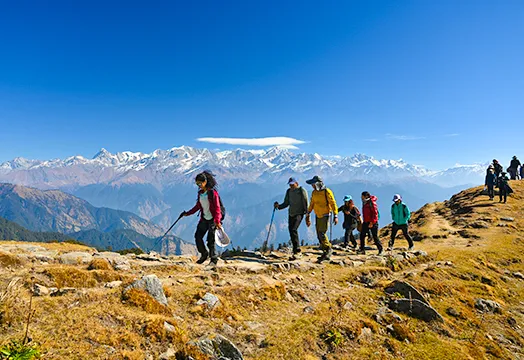
As monsoon season comes to an end, it washes away all the dust and haze that remains in the valleys throughout the summer, and then?
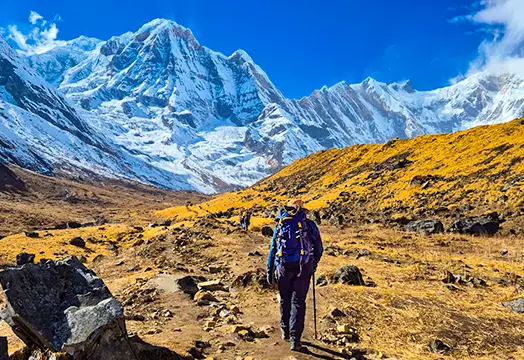
Located in north-central Nepal's Gandaki Province, Annapurna is the world's 10th highest and one of the most challenging mountains on the planet. Its height rises to 26,545 feet. Yet reaching Annapurna base camp is a far more accessible adventure, drawing trekkers from around the world every single season.
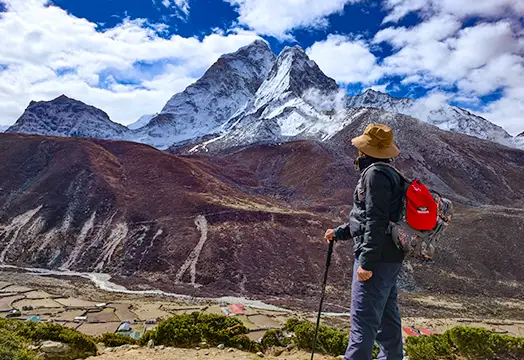
What does it feel like to stand on a trail where the mountain before you is worshipped as a goddess? For most of us, it's an adventure. But for the local communities who live in its shadow, it's something closer to faith. That mountain is Everest.

Over the last few decades, trekking has driven a profound shift: rural economies and local communities are reaping direct and indirect benefits.

Hiking teaches you to fall in love with the outdoors. Trekking teaches you to endure it. Mountaineering teaches you to respect it completely.

There are only a handful of Himalayan regions that hold profound spiritual significance as well as immense natural beauty. The Gaumukh Tapovan trek is one such destination that wonderfully combines adventure, divinity, and extraordinary Himalayan beauty.

What if a trek could leave you with more questions than answers? What if, after days of trekking, you reach a lake filled with centuries-old human skeletons?

Every year, every season reveals a new side of the Himalayan range. Be it trails covered in colourful rhododendrons or trails transformed into a lush green paradise, each season offers some of the most mesmerizing views of the Himalayas.