
2 December 2025

The mighty Himalayan territory never ceases to surprise us with its hidden gems. Gulabi Kantha Trek is one such wonderful destination that promises nature’s raw beauty in abundance. One of the highly underrated treks in the recent while, Gulabi Kantha offers a nice blend of stunning valleys, dense, isolated forests, and incredibly vast meadows. This trek is largely untouched and less explored, which provides it with a distinct edge.
The Gulabi Kantha is located at an altitude of 13,200 Ft. in the Garhwal Himalayas in the Uttarkashi district of Uttarakhand, India. It’s primarily a moderate trek that can also be trodden by first-timers. In every season this trek adopts a new form and a new charm. The transformation of trails is so enriching that every season keeps startling you.
In the winter season, going to Gulabi Kantha is like stepping into a stunning spectacle of winter wonderland with snowy landscapes. The trek begins from Hanuman Chatti, an extremely beautiful valley that also serves as a crucial junction for many other treks, including the very famous Yamunotri. The winding trail takes you through captivating forests to breathtaking meadows, and all the way to the striking summit of Gulabi Kantha.
Wrapped by the genuine Himalayan beauty, Gulabi Kantha trek is an unforgettable retreat to nature. It promises an experience that sticks to your heart for a long time. The word ‘Gulabi’ means ‘pink color’ and ‘Kantha’ means ‘slope’ or ‘trench’; so it roughly translates to Pink Slope or Pink Trench. In spring when pink rhododendron flowers bloom, the entire region gets dramatically painted by pink color. That is why this place is known as Gulabi Kantha.
Here are the main reasons as to why you should choose this trek:
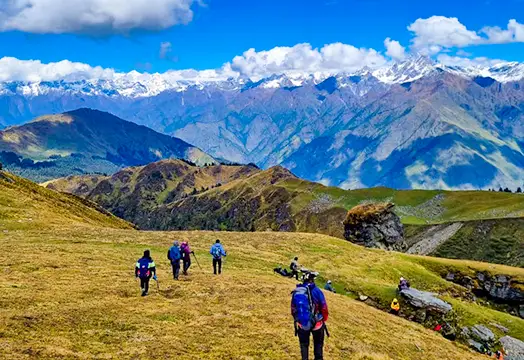
One of the key highlights of the Gulabi Kantha trek is a panoramic view of the Himalayan peaks. Some of these prominent mountain peaks clearly visible from the summit are: Swargarohini, Bandarpoonch, Chaukhamba, and Nanda Devi. Other notable sights this trek offers are Bali Pass and Gangotri Massif. The Swargarohini Range looming over the horizon seems to follow you even as you wade through the dense forests or you drift along the alpine meadows.
As you deep dive into this untouched territory, you might encounter some of the unique plants, bird and animal species. This place is rich in diverse flora like oak, cedar, pine, maple, and rhododendron trees. In certain times of the year, the trails are replete with multiple varieties of vibrant wildflowers as well. The fauna in Gulabi Kantha trek includes musk deer, Himalayan monal, and rare glimpses of other elusive mammals and birds.
The winter in Gulabi Kantha trek leaves such a magical imprint on its landscapes that it appears like a snowy paradise. The highland meadows, also known as Bugyals, turn into an endless stretch of white blanket. The snow-covered trails running on high altitude landscapes give a delightful experience while walking. From December to March, the trek is a completely different world altogether, making it stand out from the ordinary. The undulating meadows of Gulabi Kantha allow a wide-ranging gaze of surrounding hills that are cascaded one after another.
Gulabi Kantha offers an immersive experience of unique local culture. Right from the base camp, you will start noticing certain specific traditions and customs of this region. So it’s a good opportunity to interact with natives, understand their lifestyle and know what it takes to lead a rural life. It would be interesting to know their side of the story and the things that have been passed on through ages. Engaging with them and gaining these amazing insights about their lives is truly enriching.

All the campsites of Gulabi Kantha Trek are extremely enticing, while in winters, these spots look like marvels of nature. Particularly, Seema Thatch is mesmerizing beyond what you can imagine. This usually lush-green campsite is located in the midst of a huge meadow, which is beautifully surrounded from three sides by a dense forest of oak, pine and cedar trees. This location offers one of the best spots for witnessing vibrant sunrises and sunsets.
Another captivating campsite on this trek is Kandola Channi, a high-altitude clearing, which is otherwise used as a grazing zone for cattle. This area is worth exploring as it contains old, traditional wooden huts and farmlands belonging to Nishni villagers. This place is also known for the cultivation of potatoes, kidney beans, and millets.
The discussion of beautiful campsites of Gulabi Kantha is incomplete without mentioning Hanuman Chatti. It’s a peaceful, traditional Himalayan village that is situated along an enthralling valley. Serving as a launchpad for several treks, this place is apt for resting, relaxing, and exploring.
Gulabi Kantha offers several spots and locations that are worth capturing for a lifetime. Due to its elegant natural features, pristine conditions, panoramic views, and diverse landscapes, you always get an unmatchable photo opportunity throughout the year. Winters, particularly, display unique frost-covered landforms and phenomenal atmosphere for capturing rare moments. Moreover, sunrise and sunsets throw magnificent colors like red, golden, purple, and yellow to turn the entire horizon extremely vibrant.
Being one of the least explored treks, Gulabi Kantha receives fewer tourists and, therefore, is quite a peaceful and serene destination. With very few people walking on these trails, you experience its pristine surroundings and soothing expedition. If you are seeking a tranquil journey, this trek is a desired option to enjoy a relaxing environment, peaceful hikes, and stunning mountain views without getting overwhelmed by crowds. Away from the hustle and bustle of city life, this trek allows you to reflect upon your thoughts and experience pure mindfulness.

For any winter trek, adequate preparation and right packing should be your first practical concern. Be it Kedarkantha, Winter Kuari Pass, Brahmatal or Dayara Bugyal, every trek needs a fair degree of groundwork so that nothing can take away from you the experience you are seeking. If you fail to address these basics, winters can be brutal on high altitudes; that’s for sure! For beginners, there is a good possibility for certain mistakes right at this point in time. So to learn about such mistakes and to address them, this informative piece will help you get ready well.
Now you might confront a few pertinent queries that naturally come to your mind: How cold will it get on high altitudes? Could I easily withstand it? How difficult will it be to trek over there as a beginner?
Well, temperature in winters plunges drastically below zero degree. As the sun goes down, so does the mercury column. The reading can show as low as -15o C, and in some circumstances even lower. During the daytime, the temperature scale usually ranges from 5o C to 10o C, and the hike is largely manageable.
So, yes you can not only withstand these temperature fluctuations but comfortably manage them as well. Although negative temperatures and snow undeniably play a significant role in these conditions, winter treks are not too difficult for beginners either. The difference, however, is how efficiently you are prepared. And that’s what everything boils down to – Preparation!

Layering is probably the most effective way to solve the puzzle of cold in high altitude winter mountains. The strategy is to carry enough layers of clothes so that the cold can’t penetrate through no matter what. As a rule of thumb, you need to pack at least five warm layers for winters. Here’s the trick for combination – base layer, mid layer, and outer layer.
For the base layer, you need to carry thermals (upper and bottom), and synthetic T-shirts to wick moisture away. Better if you carry two sets of each.
For the middle layer, carry a fleece jacket, which is good at providing warmth and quick-drying. Another clothing for this layer to carry is a sweater or sweatshirt, which adds extra warmth.
The outer layer is equally important to focus on. It should include a waterproof and windproof jacket that will protect you from elements. The next item is a padded jacket or a down jacket, which is great for retaining warmth and insulation even in rainy weather. For the lower body, waterproof and windproof tracking pants are ideal for protection against snow and wind. Not to forget, insulated padded pants are important for your legs, especially on snowy treks.
It is paramount in winters and you need to shield your head at any cost. For that you have to carry a woolen cap/beanie or balaclava to fully cover your head and neck. A sun cap will also be helpful during sunny weather. Don’t forget to carry sunglasses as it is very instrumental on high altitudes to protect your eyes from sun’s UV rays as well as snow blindness.
From a scientific standpoint, hands and feet are the first ones to lose heat from a human body. So their protection is equally crucial, especially in adverse weather conditions. For that, you should pack one pair of woolen gloves, one pair of synthetic waterproof gloves, two pairs of thick woolen socks, and three pairs of usual synthetic socks.
High altitude Himalayan winter treks need a really sturdy pair of trekking shoes, and you cannot be negligent about this. Your feet are the body parts that bear most of the brunt during hiking, so you have to take extra care of them. Thus, your shoes need to be comfortable, water resistant, high ankle length, and with good grip. It will be better to practice wearing them at home before the trek to avoid any possibility of developing blisters.
Don’t underestimate the significance of your backpack as it is home to each and every essential that you need out there. Choose a material that is durable, water resistant, and comfortable. It should have enough space (50 to 60 Ltr) to contain all of your items. Make sure to choose one with padded straps, hip belts, and good quality zippers and buckles. Your packing strategy should be such that the backpack has different pockets for different items and so you can pull out every required thing when needed.

To fully prepare for any Himalayan winter destination, a prior knowledge regarding proper hydration and nutrition will be useful for you while on trek. On high altitude treks, it is crucial to maintain energy and regulate water level to prevent altitude sickness. Also, in such conditions your body burns more oxygen in order to stay warm and function properly.
You have to stay hydrated throughout your journey by taking sips of water every 15 to 20 minutes, even when you don’t feel thirsty. Drink warm fluids such as tea, hot chocolate, or soup, which are good sources for raising your core body temperature. A crucial tip to highlight here is you need to frequently replenish electrolytes in your body, which provide essential salts and minerals.
Similarly, to fulfill its nutritional needs, your body requires more calories to sustain energy. Your meals should be rich in carbohydrates because it’s the main source for immediate and sustained energy. Fats in the form of nuts (almonds, walnuts, peanuts), cheese and butter are also energy-rich foods on Himalayan heights. Finally, proteins are equally important for your muscle recovery and body strength to perform necessary tasks.

When it comes to comfortably enjoying your maiden Himalayan trip, good physical and mental fitness are of utmost importance. This is what will decide whether you experience a pleasant expedition or not.
Here is how you can work on your fitness:
| Winter | Spring | Summer | Monsoon | Autumn | |
| Temperature | Daytime: 0°C to 10°C Nighttime: -5°C to -15°C |
Daytime: 10°C to 20°C Nighttime: 0°C to 7°C |
Daytime: 10°C to 25°C Nighttime: 5°C to 8°C |
Daytime: 10°C to 18°C Nighttime: 7°C to 13°C |
Daytime: 5°C to 15°C Nighttime: 2°C to 8°C and 0°C to -3°C |
| Weather | Snowfall Clear skies Chilly winds Freezing nights |
Pleasant Melting snow Cold air Occasional afternoon showers |
Pleasant, stable and clear Warm days, cool evenings and cooler nights Crystal-clear views |
Heavy rainfall Cloudy and misty atmosphere Slippery trails Poor visibility |
Pleasant Crisp and clear skies Crystal-clear views Vibrant colors |
| Attributes | Highly attractive snow-covered trails Stunning views of Himalayan peaks Snow-laden forests Expansive snowy alpine meadows |
Blooming rhododendron flowers Clear and crisp views of Himalayas Panoramic sceneries Stunning contrast of greenery and snow |
Enchanting route through dense forests of oak, pine and rhododendron trees Attractive trails along ridge lines Lush green meadows of Seema Thatch and Kandola Channi Remarkable 360-degree view of mountain range from the Gulabi Kantha summit |
The trek is not recommended due to torrential rainfall and slippery trails The mountain views are obstructed due to fog and mist |
The post-monsoon weather offers exceptional visibility, making long distance views stunningly clear Mild climate means pleasant and dry weather conditions that are ideal for beginners Wildflowers blooming across the alpine meadows with golden, reddish, and yellow hues Panoramic views of prominent mountain summits throughout the trail as well as from the summit. |
Gulabi Kantha is an unbelievably stunning destination to trek. It offers a sublime blend of enchanting sceneries, lush forest covers, wide open meadows, and breathtaking Himalayan range with majestic peaks dominating the skyline. The winter season provides a magical touch to these landscapes only to magnify their beauty extensively. For beginners, the trek offers a moderate expedition, but with proper gear and fitness preparation, Gulabi Kantha promises an unparalleled experience.
Don’t miss our latest Web Story for the ultimate trekking gear checklist for first-time trekkers.2 December 2025

Trek updates, stories & mountain insights.
Tips and insights for every trekker.
23 Oct 2026

22 Oct 2026
21 Oct 2026
19 Oct 2026
18 Oct 2026
17 Oct 2026
16 Oct 2026
15 Oct 2026
14 Oct 2026
13 Oct 2026
Winter is almost here, and you're still planning on following the same routine. Sitting in a blanket, sipping on hot tea, and binge-watching your favorite movies.
Every season in the Himalayas has its own way of showing off the mountains, but winter reveals a different side of them, one that feels like a whole new world.
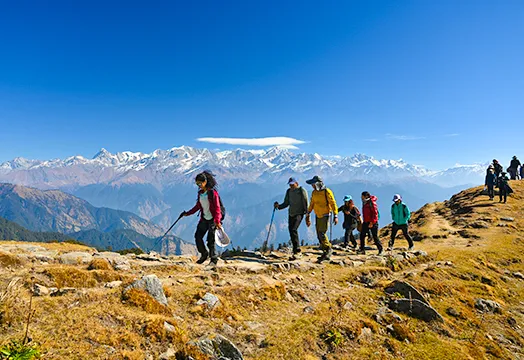
As monsoon season comes to an end, it washes away all the dust and haze that remains in the valleys throughout the summer, and then?
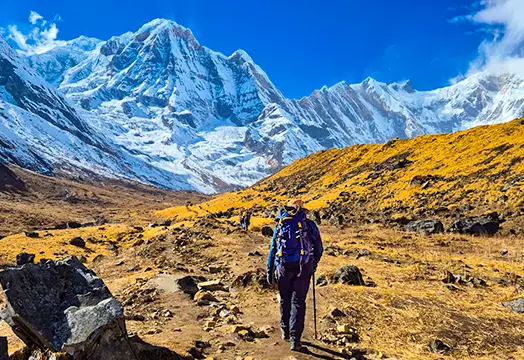
Located in north-central Nepal's Gandaki Province, Annapurna is the world's 10th highest and one of the most challenging mountains on the planet. Its height rises to 26,545 feet. Yet reaching Annapurna base camp is a far more accessible adventure, drawing trekkers from around the world every single season.
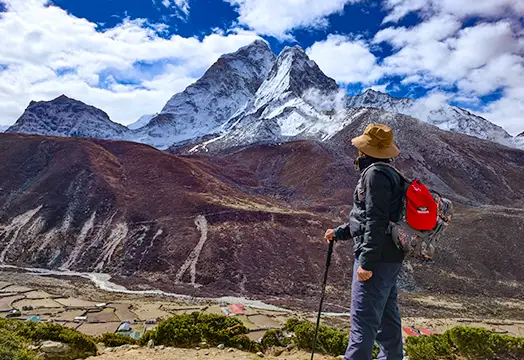
What does it feel like to stand on a trail where the mountain before you is worshipped as a goddess? For most of us, it's an adventure. But for the local communities who live in its shadow, it's something closer to faith. That mountain is Everest.

Over the last few decades, trekking has driven a profound shift: rural economies and local communities are reaping direct and indirect benefits.

Hiking teaches you to fall in love with the outdoors. Trekking teaches you to endure it. Mountaineering teaches you to respect it completely.

There are only a handful of Himalayan regions that hold profound spiritual significance as well as immense natural beauty. The Gaumukh Tapovan trek is one such destination that wonderfully combines adventure, divinity, and extraordinary Himalayan beauty.

What if a trek could leave you with more questions than answers? What if, after days of trekking, you reach a lake filled with centuries-old human skeletons?

Every year, every season reveals a new side of the Himalayan range. Be it trails covered in colourful rhododendrons or trails transformed into a lush green paradise, each season offers some of the most mesmerizing views of the Himalayas.