
17 October 2024
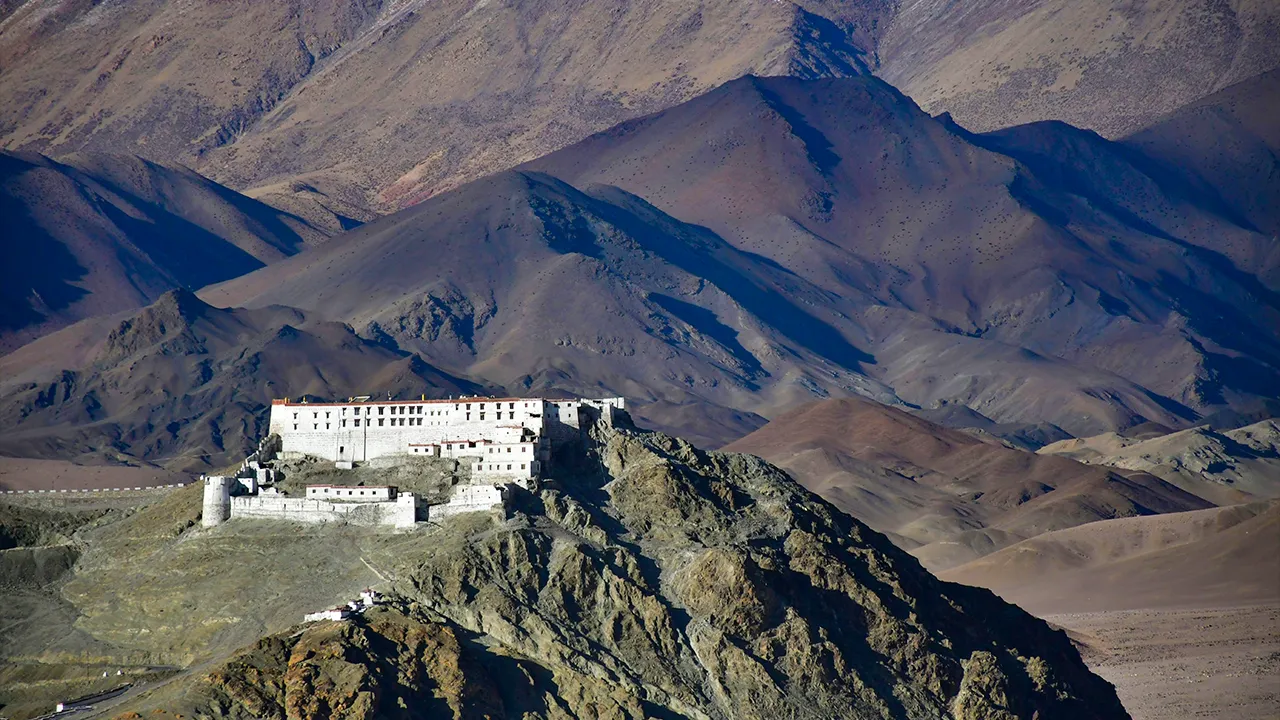
Leh Ladakh is surely on the wishlist of almost every traveller. The scenery keeps changing; so does the experience, and that is what makes exploring Ladakh so interesting. Now, as amazing as this might sound, it becomes much harder to sum it up in a list. One moment, you are looking at a vast blue lake surrounded by bare mountains; the next, the landscape changes into a cold desert, a quiet village, an ancient monastery, or a valley where the night sky is clear enough to reveal a completely different side of the region.
And all these major attractions are mostly far away from each other. So, if you are planning a trip and wondering which places are actually worth adding to your itinerary, here are 11 places to visit in Leh-Ladakh that bring together the region’s most iconic sights along with a few lesser-explored experiences. This is especially helpful if you are going for a trek and have only some time to spare before or after it.
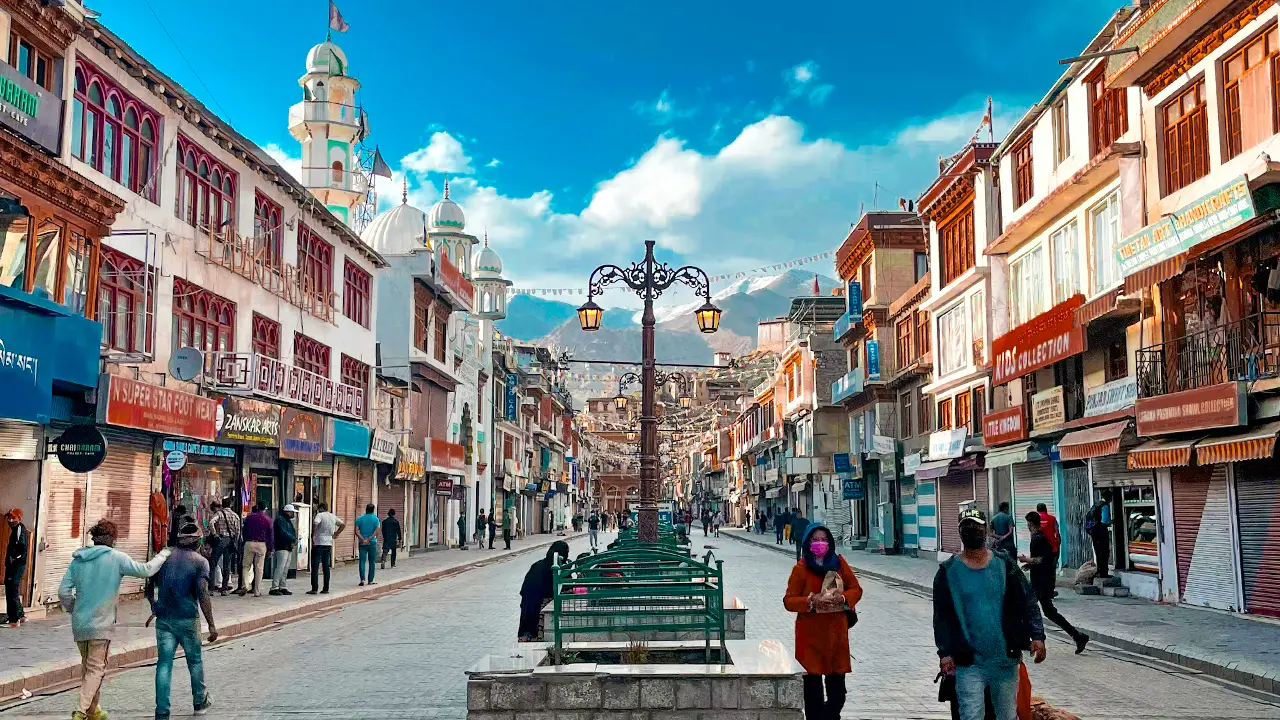
The Old Town has its own charm, with its narrow lanes, traditional Ladakhi houses and old buildings offering a very different introduction to the region. It is a usual town where people live, work and go about their day. You can go about exploring the culture of the area. Also, the Main Market has shops, cafés, bakeries, handicrafts, and local food filling the streets, making it a lively place. It has now become an important part of Leh’s contemporary identity, while the nearby Old Town preserves its centuries-old character. So, if you have just arrived in Leh, this is a good place to start things slowly.
A few things to keep in mind: Wear comfortable shoes because the Old Town is best explored on foot. Take your time around the narrow lanes. If you are shopping for local crafts or food, speaking to shopkeepers and trying local specialities can make the experience much more rewarding than simply walking through the market.
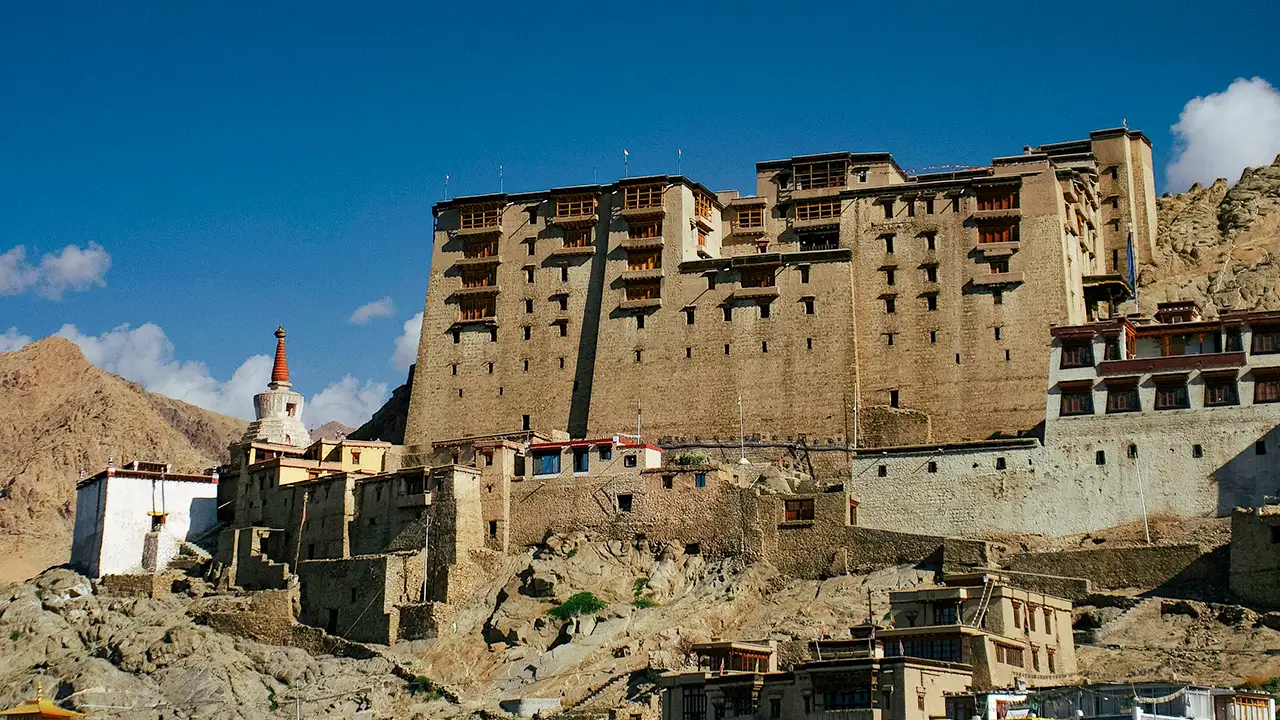
Leh Palace is perched just above the town, and looks like a fortress that has somehow grown out of the mountain. This nine-storey palace was constructed in the 17th century, and was once the royal residence of the Namgyal dynasty. Today, its weathered walls and traditional architecture offer a glimpse into Leh’s royal past. But, the palace is worth exploring for more than its history. You can go through its old rooms and corridors, and look back towards Leh from above. The view brings the whole town into perspective, with the tightly packed buildings below giving way to the stark mountains beyond.
In addition to that, if you happen to visit after sunset during the current tourism season, there is yet another reason to check what is happening at the palace. A sound-and-light show was inaugurated here in April 2026 as part of efforts to promote heritage and night tourism. It gives you a new experience of the palace, bringing a new dimension to a landmark that has stood above Leh for centuries.
A few things to keep in mind: Give yourself some time to explore rather than treating the palace as a quick photo stop. The climb and altitude can be tiring, especially soon after arriving in Leh, so take it slowly and allow your body time to adjust.
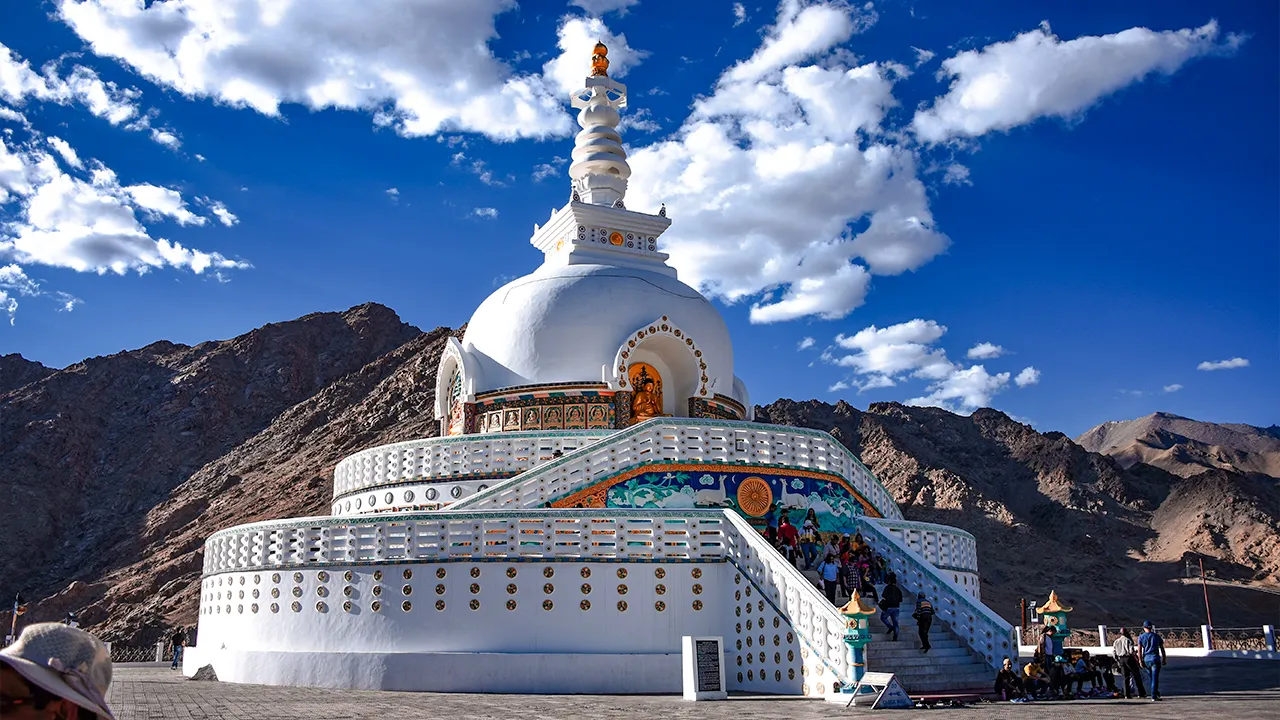
For one of the best views of Leh, head up to Shanti Stupa. Standing on a hilltop above the town, the white-domed stupa gives you a clear view of Leh’s rooftops, surrounding mountains, and the landscape stretching beyond. So, even though the stupa itself is a peaceful place to spend some time, the real highlight is stepping outside and taking in the view.
Shanti Stupa Leh is also a convenient addition to Leh’s itinerary because you do not need to set aside an entire day for it. Pair it with Leh Palace and the Old Town, and you can explore some of the city’s most important sights without rushing from one end of town to another.
A few things to keep in mind: The stupa is on a hillside, so take your time while walking around, especially during your first few days in Leh. Visit during the day for a broad look at the landscape, or stay around sunset when the mountains and town begin to change colour.
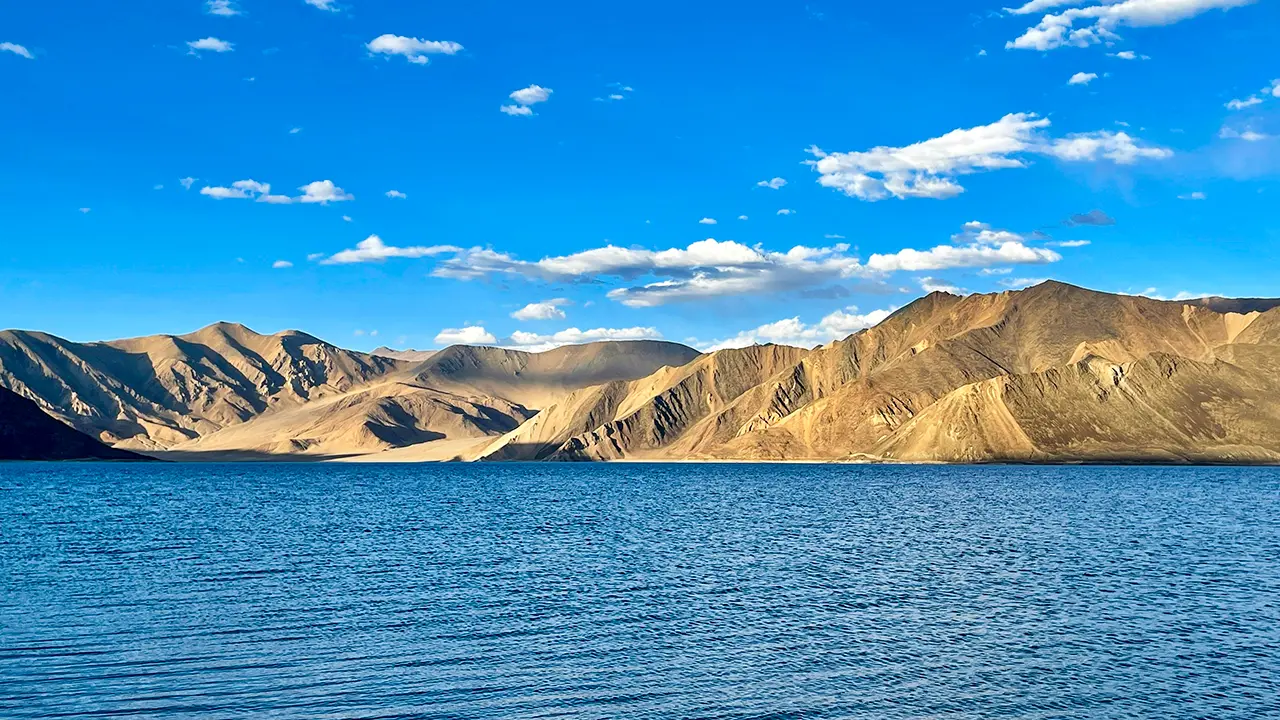
You have probably seen Pangong Tso in photographs. The blue water, the bare mountains, and that wide sky. But did you know, that depending on the light and weather, the water can shift between shades of blue, green and grey. So, the Pangong you see in the morning may not look quite the same by afternoon.
Stretching for around 134 km from Ladakh into Tibet, Pangong Lake is one of the world’s highest saltwater lakes. The landscape around it is stark, with the enormous mountains rising around the water. But if you look a little closer, though, there is more life here than the barren landscape suggests.
At last, there is the journey to get there. The drive takes several hours, and the high altitude means your body may need some time to adjust. Once you arrive, give yourself a little time to simply sit by the lake rather than rushing through the obligatory photographs. The view does a pretty good job of keeping you occupied.
A few things to keep in mind: Acclimatise properly in Leh before heading to Pangong, carry warm layers even in summer, and be prepared for a sharp drop in temperature after sunset. Follow local instructions around the lake and avoid entering the water (it is extremely cold).
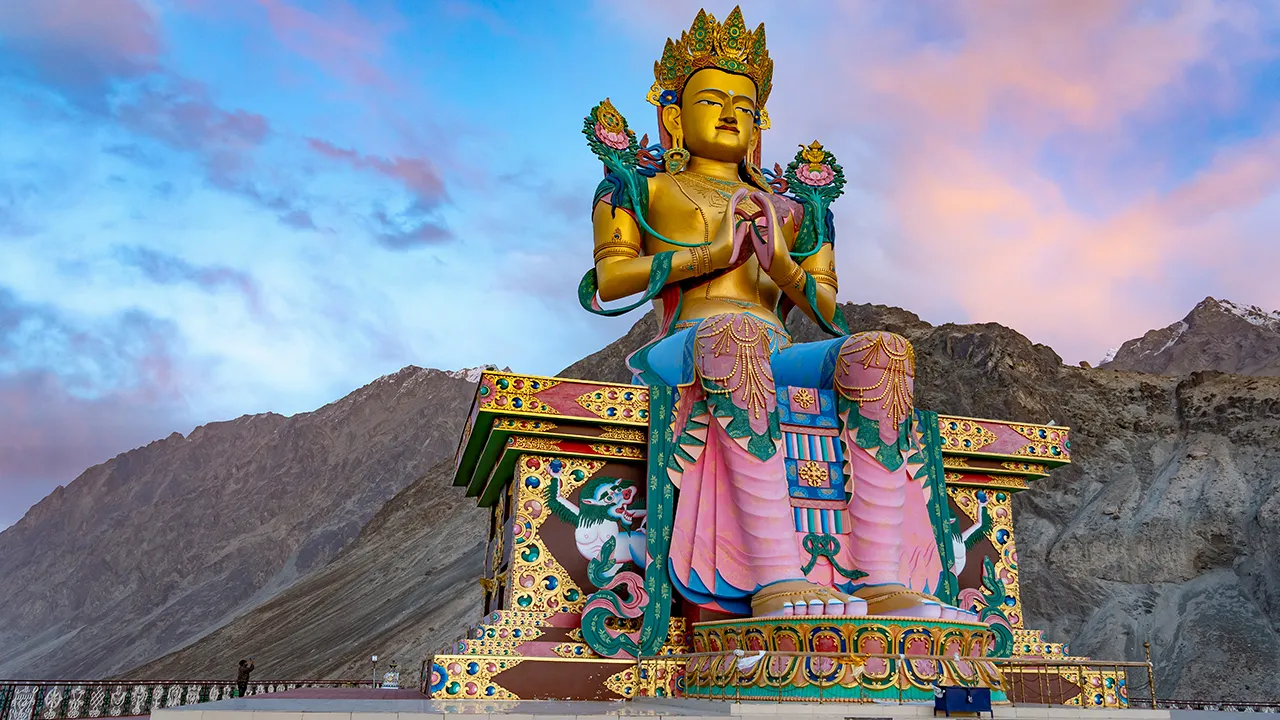
Nubra Valley brings together some of Ladakh’s most striking landscapes, from cold desert dunes to green villages and mountain views. The Shyok and Siachen rivers flow through the region, supporting settlements and patches of greenery amid the dry landscape. One of the best-known stops here is Hunder, where sand dunes meet a backdrop of rugged mountains. Not only that, but the village is also famous for its double-humped Bactrian camels. This is a reminder of Nubra’s past as an important stop along the old Silk Route. Along with this, you also get a glimpse into the region’s Buddhist heritage at the Diskit Monastery Nubra Valley, which stands above the village and offers sweeping views of the entire valley.
And even after visiting these places, if you have extra time, you can explore Sumoor and Panamik, where you get to discover a quieter village surrounding and a different side of Nubra beyond its popular tourist spots. Together, these places make the valley worth exploring beyond a quick visit to Hunder.
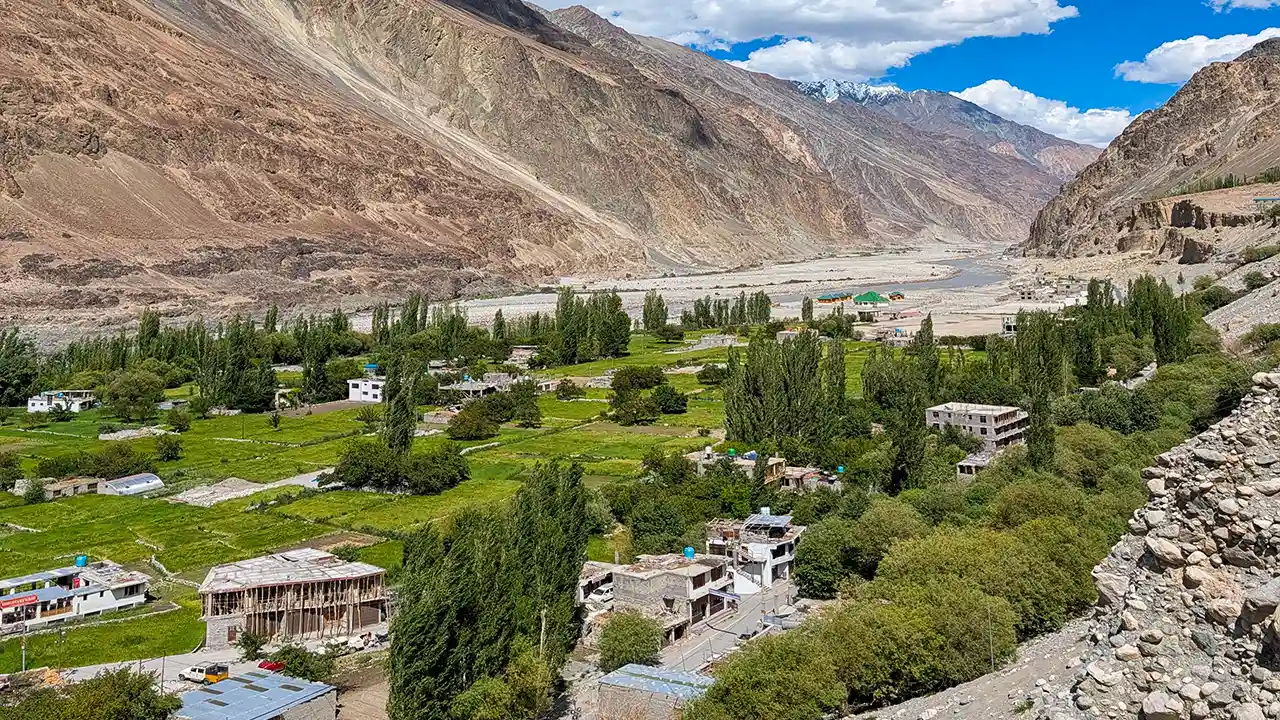
Turtuk is shaped by Balti culture, traditional village life, and apricot orchards. Located in Nubra Valley near the India-Pakistan border, the village became part of India in 1971. A walk through Turtuk takes you past traditional stone houses, green fields and narrow village lanes. Out here, the landscape is greener than many people expect in Ladakh, making the journey here as interesting as the village itself. If you are already planning to p[ass through Nubra Valley, Turtuk is worth the extra time for its culture and slower pace of life.
A few things to keep in mind: Plan for a longer day or an overnight stay, respect local customs when exploring the village, and follow security instructions because of its location near the border.
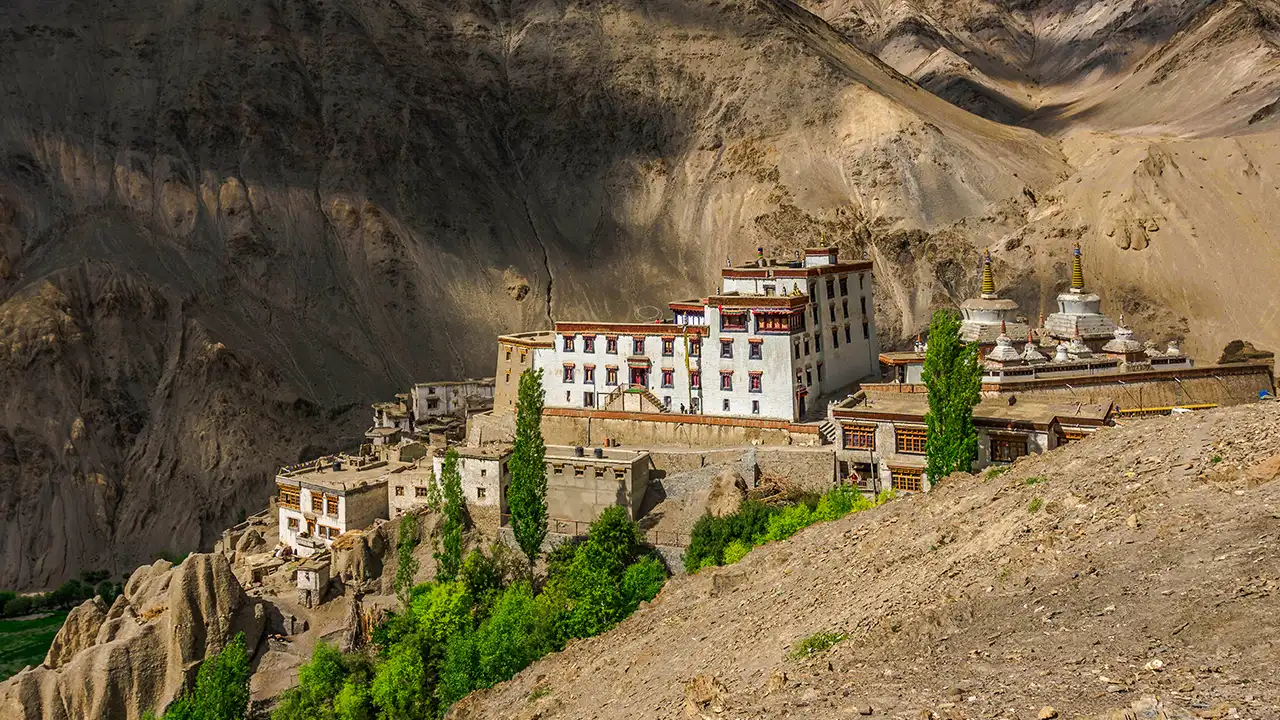
Alchi Monastery, standing on flat ground near the Indus River, dates back to around the 11th-12th centuries. It is especially known for its ancient murals, intricate woodwork, and Buddhist art influenced by Kashmiri traditions.
The main reason to visit is the artwork inside its temple complex. The walls feature detailed paintings of Buddhist figures and deities, offering a glimpse into the artistic traditions that flourished in the western Himalayas centuries ago. Unlike a visit focused mainly on architecture or mountain views, exploring Alchi is an opportunity to appreciate Ladakh’s history through its preserved art.
After visiting the monastery, take some time to walk around Alchi village and enjoy its quieter surroundings. It makes a worthwhile stop for travellers interested in Ladakh’s cultural heritage, especially if you want to explore beyond the region’s famous lakes and mountain landscapes.
A few things to keep in mind: Check the monastery’s visiting rules before entering, as photography may be restricted inside the temples. Dress respectfully and allow enough time to appreciate the artwork rather than rushing through the complex.
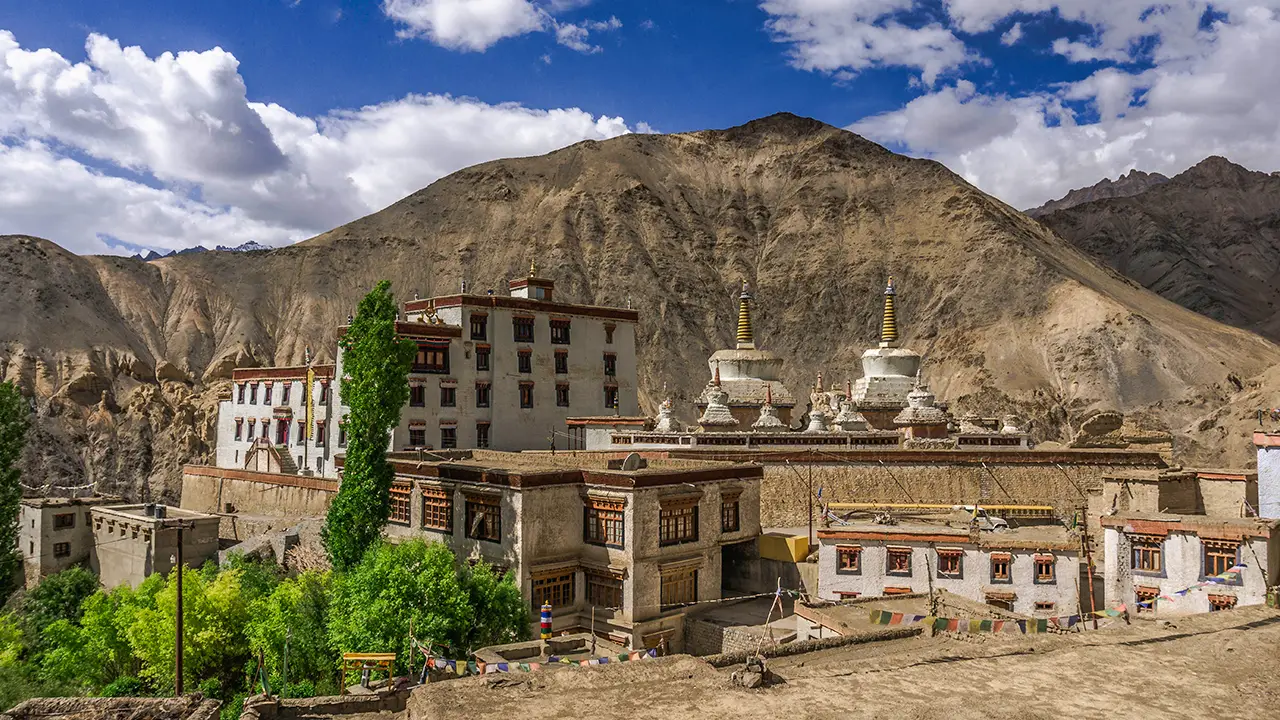
The area is known for its pale, eroded rock formations that give the surroundings a moon-like appearance, earning it the popular name “Moonland” or “Moonscape.” The landscape is the main reason many travellers make a stop here, but there is more to see than just the unusual terrain.
The Lamayuru Monastery sits right within this landscape and is one of the important Buddhist monasteries of western Ladakh. It dates back to the 11th century and has ancient frescoes, traditional masks, and a meditation cave associated with the Buddhist master Naropa.
Lamayuru also makes for a good road stop if you are travelling between Leh and Srinagar or Kargil. Take some time to walk around the monastery and look at the surrounding formations instead of treating it as just a quick photograph stop.
A few things to keep in mind: Lamayuru is about 127 km from Leh, so plan enough time for the journey. Also, follow the rules around photography and access to the prayer areas.
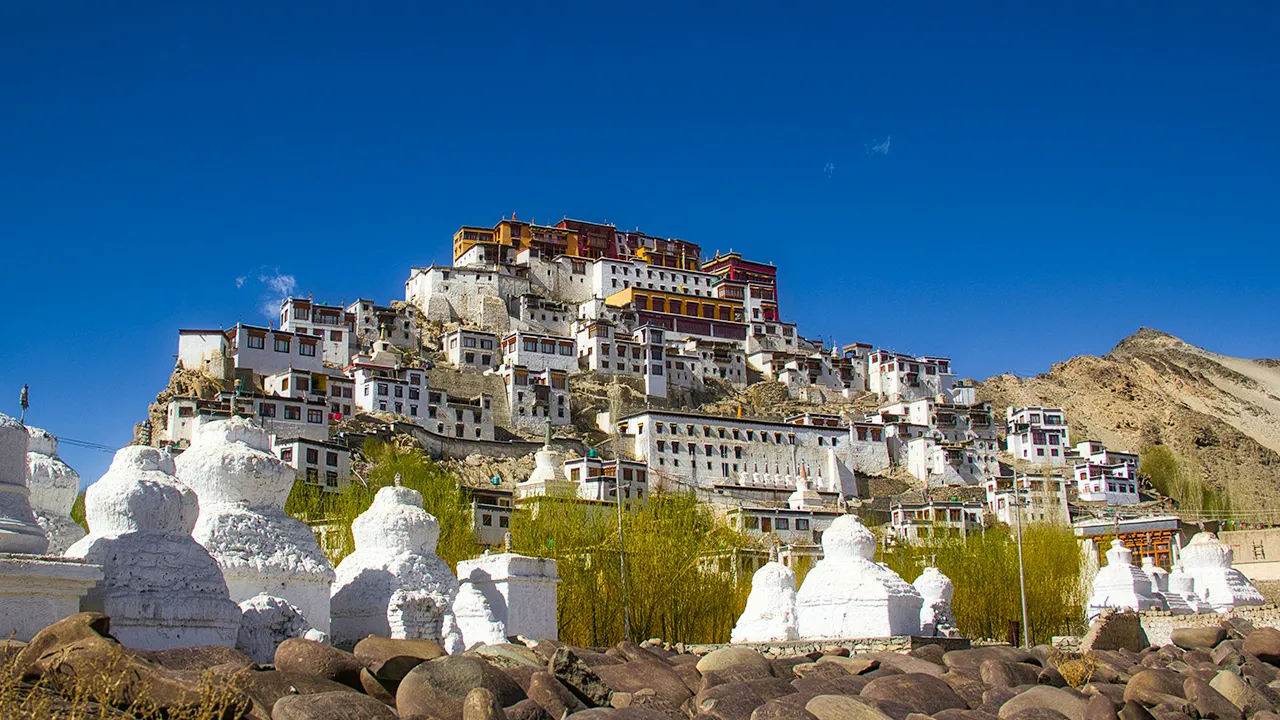
Thiksey Monastery is one of those places that deserves a little more time than a quick photo stop. Spread across a hillside about 19 km from Leh, the monastery is a striking collection of white buildings rising one above another, with the surrounding Indus Valley stretching out below. Built in the 15th century, it belongs to the Gelug school of Tibetan Buddhism and remains an active monastery.
Step inside, and the experience changes from the impressive exterior to quiet prayer halls filled with Buddhist paintings, statues, and other religious artefacts. One of its most notable features is the Maitreya Buddha statue, which stands about 15 metres tall and occupies two levels of the temple. The monastery also offers a chance to see Buddhist practices that are still part of everyday monastic life.
If you can, visit in the morning when the monks gather for prayers. It gives you a better sense of Thiksey as a living religious centre rather than simply another heritage site on the Ladakh sightseeing list. The annual Thiksey Gustor festival, known for its traditional masked dances, is another important part of the monastery’s cultural life.
A few things to keep in mind: Dress modestly and maintain silence around prayer areas. Photography may be restricted inside certain sections, so follow the monastery’s instructions. Since the complex is built along a slope, take your time while exploring its different levels.
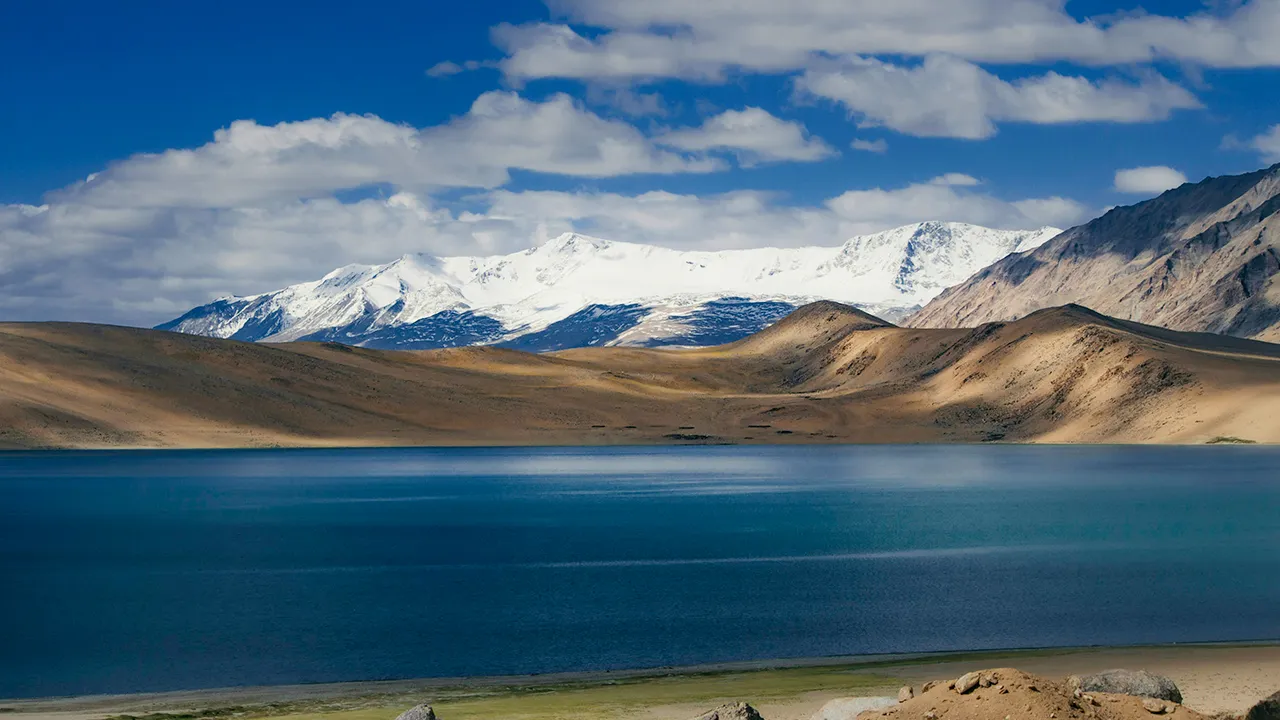
If Pangong feels like Ladakh’s most famous lake, Tso Moriri feels like the quieter one. Set in the Changthang region, this high-altitude lake is surrounded by barren mountains and wide-open landscapes, with very few signs of the busy tourist routes you see around Leh.
The Tso Moriri Lake attractions go beyond the lake itself. The surrounding wetland is an important habitat for birds such as bar-headed geese and black-necked cranes, while the nearby village of Korzok gives you a glimpse of life in this remote part of Ladakh. You can also spend some time exploring the open landscapes around the lake rather than simply stopping for photographs.
Getting to Tso Moriri takes more effort than visiting many of Ladakh’s popular attractions, but that is also part of its appeal. The drive through the Changthang plateau takes you through vast, open terrain with hardly any development along the way. If you have the time, spending a night near the lake lets you experience its quiet surroundings without having to rush back to Leh.
A few things to keep in mind: Tso Moriri is at a very high altitude, so proper acclimatisation is important before travelling here. Carry warm clothing, keep basic medicines and essentials with you, and check the latest local travel and permit requirements before setting out.
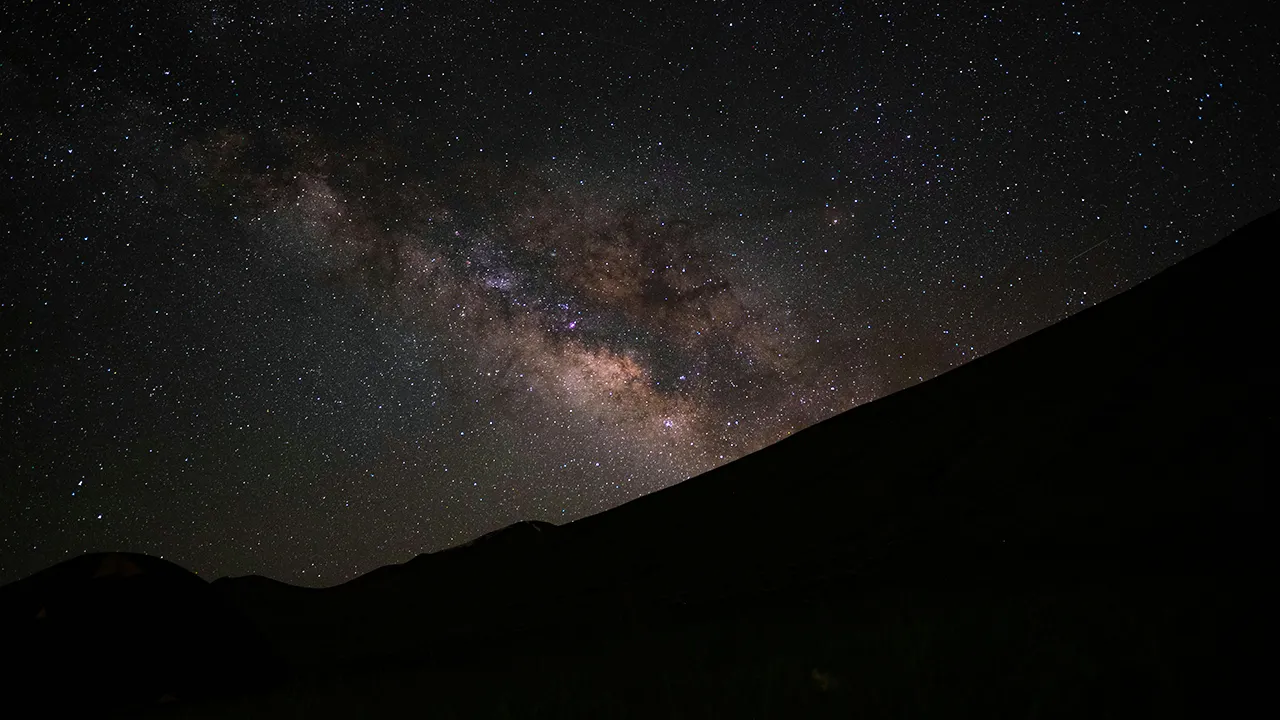
Hanle is where your Ladakh experience continues after sunset. Located in the remote Changthang region, this small village is known for its clear, dark skies and the Indian Astronomical Observatory, one of the world’s highest astronomical observatories. Far from major towns and with very little artificial light, Hanle offers some of the best conditions in Ladakh for observing the night sky.
During the day, you can explore the village and its surroundings, including Hanle Monastery, while the real show begins after dark. On a clear night, the Milky Way becomes visible across the sky, making stargazing one of the main reasons travellers add Hanle to their itinerary. For anyone planning a longer Ladakh tour, it is a great way to experience a side of the region that has little to do with the usual sightseeing circuit.
The journey to Hanle is also part of the experience. The route takes you through the vast landscapes of Changthang, where open plains and distant mountains replace the busy roads and popular tourist stops around Leh.
A few things to keep in mind: Hanle is remote and located at a very high altitude, so proper acclimatisation is essential. Check the latest access and permit requirements before travelling, carry sufficient warm clothing and essentials, and avoid bright lights at night if you are there for stargazing.
By now, you must have understood that Leh-Ladakh is much more than just some famous viewpoints. This variety is what makes a trip here worth taking your time over. You may not be able to fit every place on this list into one itinerary, and you don’t have to. Pick the experiences that interest you most, leave enough time for acclimatisation and travel, and give yourself some room to explore along the way!
17 October 2024

Trek updates, stories & mountain insights.
Tips and insights for every trekker.
11 Nov 2026

10 Nov 2026
09 Nov 2026
06 Nov 2026
05 Nov 2026
04 Nov 2026
03 Nov 2026
02 Nov 2026
01 Nov 2026
31 Oct 2026
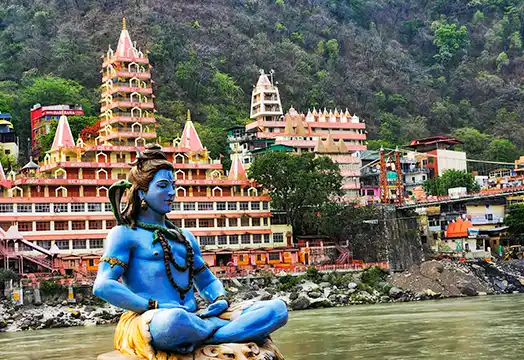
Rishikesh is a popular tourist destination in Uttarakhand, and there is a valid reason for its popularity.
For Trek The Himalayas (TTH), safety is paramount the foundation of everything we do. Right from the inception, we have been actively safeguarding the health, lives, and overall well-being of trekkers, staff, and the environment.
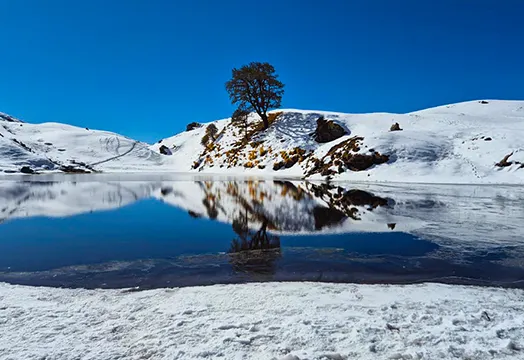
Winter is almost here, and you're still planning on following the same routine. Sitting in a blanket, sipping on hot tea, and binge-watching your favorite movies.
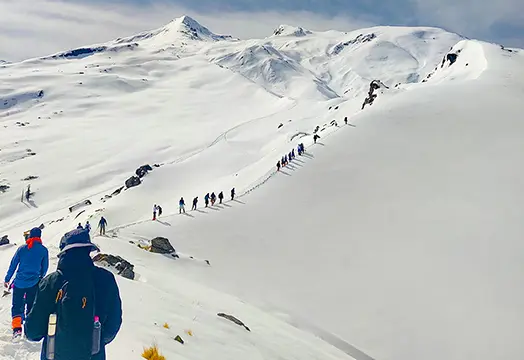
Every season in the Himalayas has its own way of showing off the mountains, but winter reveals a different side of them, one that feels like a whole new world.
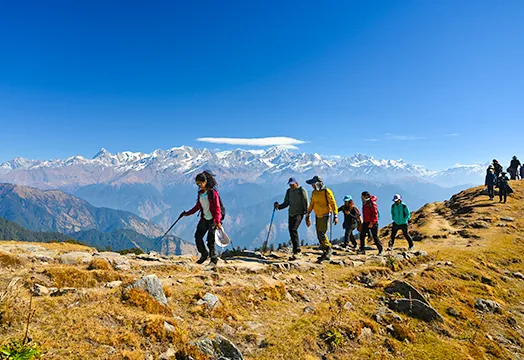
As monsoon season comes to an end, it washes away all the dust and haze that remains in the valleys throughout the summer, and then?
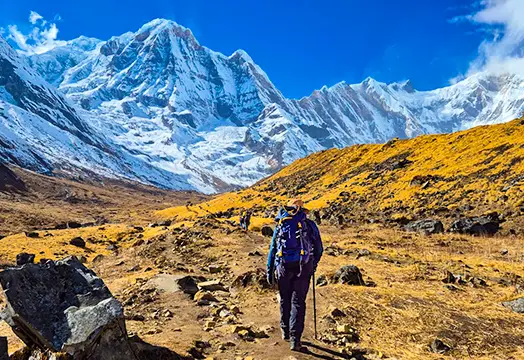
Located in north-central Nepal's Gandaki Province, Annapurna is the world's 10th highest and one of the most challenging mountains on the planet. Its height rises to 26,545 feet. Yet reaching Annapurna base camp is a far more accessible adventure, drawing trekkers from around the world every single season.
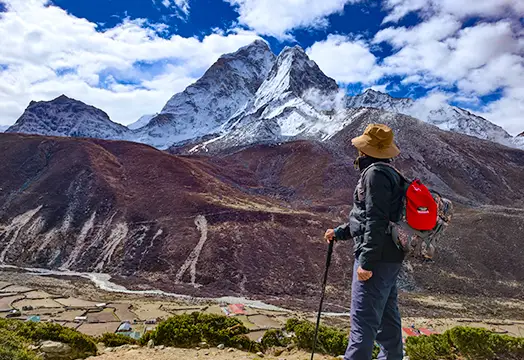
What does it feel like to stand on a trail where the mountain before you is worshipped as a goddess? For most of us, it's an adventure. But for the local communities who live in its shadow, it's something closer to faith. That mountain is Everest.

Over the last few decades, trekking has driven a profound shift: rural economies and local communities are reaping direct and indirect benefits.

Hiking teaches you to fall in love with the outdoors. Trekking teaches you to endure it. Mountaineering teaches you to respect it completely.

There are only a handful of Himalayan regions that hold profound spiritual significance as well as immense natural beauty. The Gaumukh Tapovan trek is one such destination that wonderfully combines adventure, divinity, and extraordinary Himalayan beauty.