
5 June 2026

The monsoon season has almost arrived, and we know that many true mountain and nature lovers have already started looking for the best monsoon trek to explore this year.
But before you start planning your next adventurous trek, we’d like to ask a few questions: How much do you know about “Leeches” that are bound to accompany you on your monsoon trek? And how many do’s and don’ts do you know about dealing with them?
Not much, right?
Well, after hearing the name “leeches” we are sure, you must have started imagining the worst, but let us make one thing absolutely clear: “leeches are not as frightening in reality as we have made them out to be.” Their bites do not spread diseases and are mostly harmless. However, they can cause discomfort and panic if you’re not prepared.
So, to save you from unnecessary stress and help you trek with confidence, we have gathered some of the best tips and tricks in this article for dealing with leeches on your next monsoon trekking adventure.

Now, you must know that before heading out on any trek, a little preparation is completely mandatory. When it comes to monsoon trekking, that preparation becomes absolutely non-negotiable. Here, are some tips that every trekker must follow -
Note: Salt is truly harmful for leeches as salt causes severe dehydration in leeches, and since leeches play quite a role in maintaining the ecosystem, we strongly recommend you to avoid using this salt tip as much as possible on leeches during your trek.

Now, comes the time where all your monsoon tips and tricks to keep leeches away will come into play. Before, we dive into “What you can do to keep leeches away during the trek”?.
We would like you to understand that there is no possible way to avoid leeches while trekking during the monsoon season because leeches basically thrive in a high moisture atmosphere, and monsoon season also happens to be their breeding season.
Now, here are some Do’s and Don’ts that we need you need to follow while being on the trek -
| DO's | DON'Ts |
|---|---|
|
|

Now, like we have mentioned before, leeches bites are not harmful, but they definitely do cause an itchiness that tends to last for at least three to ten days. So, if during your trek a leech has bitten you. Here are some post trek care tips that you must follow -
See, leeches are the most unavoidable part of the monsoon trekking experience, and fearing that they might bite you, you should never let that thought stop you from exploring the beautiful and best treks of monsoon. So, to ensure that won’t happen, we truly hope that you follow all the above mentioned tips and take all the basic precautions, so that later on you can enjoy all the misty forests, lush valleys, and rain-washed mountain landscapes during your next monsoon trek.
The best way to avoid leeches while trekking is to tightly tuck trousers into your socks, wear full sleeves T - shirts and pants, and always carry some effective repellents with you during your monsoon trek.
The right way to remove a leech from your body is to gently slide a fingernail or any flat edge object beneath the leech’s mouth, then break the skin suction and when the suction is broken then quickly flick it away to prevent it from reattaching to your body.
A leech bite typically bleeds for approx 2 to 10 hours, but sometimes the wound can bleed for upto 24 hours too.
Absolutely, wearing fitted gaiters over your boots can easily create a strong physical barrier that can efficiently block leeches from getting attached to your skin.
5 June 2026

Trek updates, stories & mountain insights.
Tips and insights for every trekker.

Winter is almost here, and you're still planning on following the same routine. Sitting in a blanket, sipping on hot tea, and binge-watching your favorite movies.
Every season in the Himalayas has its own way of showing off the mountains, but winter reveals a different side of them, one that feels like a whole new world.
As monsoon season comes to an end, it washes away all the dust and haze that remains in the valleys throughout the summer, and then?
Located in north-central Nepal's Gandaki Province, Annapurna is the world's 10th highest and one of the most challenging mountains on the planet. Its height rises to 26,545 feet. Yet reaching Annapurna base camp is a far more accessible adventure, drawing trekkers from around the world every single season.
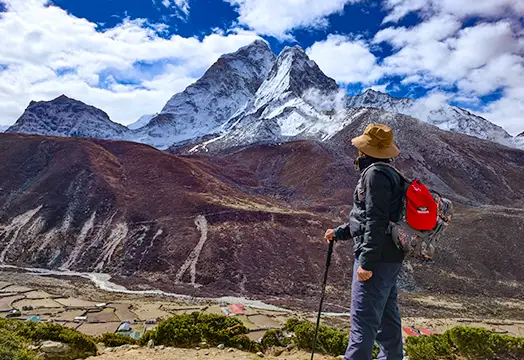
What does it feel like to stand on a trail where the mountain before you is worshipped as a goddess? For most of us, it's an adventure. But for the local communities who live in its shadow, it's something closer to faith. That mountain is Everest.

Over the last few decades, trekking has driven a profound shift: rural economies and local communities are reaping direct and indirect benefits.

Hiking teaches you to fall in love with the outdoors. Trekking teaches you to endure it. Mountaineering teaches you to respect it completely.

There are only a handful of Himalayan regions that hold profound spiritual significance as well as immense natural beauty. The Gaumukh Tapovan trek is one such destination that wonderfully combines adventure, divinity, and extraordinary Himalayan beauty.

What if a trek could leave you with more questions than answers? What if, after days of trekking, you reach a lake filled with centuries-old human skeletons?

Every year, every season reveals a new side of the Himalayan range. Be it trails covered in colourful rhododendrons or trails transformed into a lush green paradise, each season offers some of the most mesmerizing views of the Himalayas.
24 Oct 2026
23 Oct 2026
22 Oct 2026
21 Oct 2026
19 Oct 2026
18 Oct 2026
17 Oct 2026
16 Oct 2026
15 Oct 2026
14 Oct 2026