
1 January 2026
.webp)
Every year, hundreds of trekkers go on a winter trek specifically to enjoy and witness the snow-covered landscapes, stunning panoramic mountain views, and experience the serene beauty of nature. However, as they focus more on the enjoyment aspect of their journey, they sometimes overlook small details while preparing for their winter trek adventure.
And the most missed details by trekkers are - not equipping themselves properly with winter trekking essentials, which will help them in staying warm during a winter trek. I mean, we all know that cold never suddenly comes in; it slowly starts creeping into the weather.
When you are wearing your socks, at first you will feel chills in your body, then when you stop moving, a warmth will settle, and as you keep progressing in your trek, you will also start feeling colder. In one moment, you’re admiring frost-covered tree views, and in the other, you will be wondering why your fingers have started feeling numb suddenly despite wearing gloves.
That is exactly when it hits the trekkers that, to keep themselves warm during a winter trek, layering is not enough. They need to find some other ways too to maintain the warmth in their body, and this is exactly why a trek leader plays a crucial role.
Hence, to make sure that every trekker knows how they can keep themselves warm during the winter trek, or what they can do to keep their body warm. With the help of our trek leader (Sudhanshu Tomar), we (Trek The Himalayas) have curated this article for all the trekkers, which consists of all the tips and guidelines they can follow throughout their trek.
While having a conversation with our trek leader (name), an expert in mountaineering with many years of trekking experience, about the hydration tips for each season, to enlighten and help our trekkers, we asked him to guide us all and share some cheat codes about how trekkers can keep themselves warm while doing the winter trek.
In that context, he firstly states that in the last decades he has seen many trekkers who even shiver under clear blue skies, but then there were some trekkers too who surprisingly stayed warm even during snowfall.
The main reason for these people’s bodies staying warm is the metabolism of their body but unfortunately, many people don’t have that kind of metabolism. Hence, they rely on other ways, such as Smart layering, timely breaks, body heat management, and a few mountain-tested habits that are unknown to the general public and are well known by trek leaders.
Telling more about it, he said that to maintain the warmth in your body, it’s important you keep your body movement active, check the hydration level, take proper meals, and respond to the changing weather adequately.
Talking further about it, he shared some more important tips and tricks that trekkers can use while trekking in winter. So, without any further due let’s deep dive into these tips that will become your saviour in the chilly winter and will help you in defeating the cold weather during your winter trek.
Every year, thousands of trekkers do the trek in temperatures that tend to go from 5° C to - 8 °C easily, and to beat such brutal cold temperatures, there is only one thing that can save them from falling sick, and that is - Right Preparation.
But before we dive into the solution, two things are very important for a trekker to understand and keep in mind: Firstly, if you are not preparing for a trek in the right way, and secondly, if you are underestimating the cold weather. Both things can lead to problems that will put your life in danger before you even realise it. Now, things that can solve your cold problems are -
.webp)
Every trekker is well aware of the fact that wearing proper layers of clothing while trekking in the mountains is essential. Wearing layers of clothes helps in trapping the heat in the body, leading you to get adjusted to the cold, chilly weather quickly.
A lot of times, trekkers think that why not wear one bulky jacket instead of wearing so many layers of clothes, but what they don’t know is that each layer serves a different purpose that helps in keeping the body warm.
So, let’s take a look at the right way in which layering of clothes should be done -
| Clothes Layering System | |
| Base Layer |
|
| Mid Layer |
|
| Outer Layer |
|
Apart from that, make sure to layer your legs properly, too. First, cover your legs with a thermal base and then layer it with trekking pants. If you happen to feel extremely cold in your body, then make sure to add a lightweight fleece layer too.
The main aim of covering your body with so many layers is to protect you from experiencing extreme cold in the body. To feel comfortable throughout the day, you can add or remove some layers of clothing according to your preference and situation.
Like - While climbing, you can avoid wearing the mid-layer, or when you are at a stopping point, and a chilly wind is blowing, then you can add a layer of jacket to your clothing.

A lot of you might not know this, but sweating is the biggest enemy of your body when it comes to staying warm. You know, there is an unsaid rule that all our trek leaders always tell in their batch that - “Try not to get sweaty in the first place at all”.
Reason? Well, we all always think that it’s the cold air that makes our body cold, but in reality, the truth is that while trekking or even in general, if your body is sweating, then it’s the “sweat cooling” that makes our body cold.
Process - When your body gets covered in sweat, that sweating starts drawing heat away from your body way too rapidly, then you realise ( in the exact speed at which it evaporates), then it leads to you feeling chill all over in your body, which later gets magnified through the wind. This results in your body feeling extremely cold, increasing the chances of getting hypothermia and so on.
Now, what can you do to prevent yourself from getting caught in this situation? Just follow these tips given by the trekking experts that will help you avoid getting sweaty at all costs.

When you sleep at night, your body will automatically go into a complete relaxation mode, where it recovers from all the tiredness and at such time I’m sure you won’t like to keep shivering constantly and stay tired the next day too.
Therefore, staying warm at night is very necessary for your body, but in order to do so, just having a good sleeping bag is not enough. It’s important you carry a proper night setup with you that will help in keeping your body warm. Hence, after asking some of our trek leaders, we are listing out some tips for you all that you can use during your trekking trips in winter.
To do so, when you prepare your tent, make sure to use two insulated pads. They should be made of foam and inflatable. Apart from that, you can keep some warm clothes under your feet inside your sleeping bag to keep the feets warm.

Now, you must know that staying on an empty stomach for a long time is bound to make our body cold. To keep the body warm, the body must be completely well-fueled. There is a reason why all of our ancestors or parents insisted on the fact that we never go to bed hungry during winter.
Reason? Well, when you eat a proper meal at night that includes all the carbs and everything, it leaves a huge impact on the warmth of your body.
If you are not aware, then you must know that during cold temperatures, your body tends to burn a lot of calories to maintain the warm temperature in your body. Doing so will give a boost of energy to your body, helping it to work or move longer in cold temperatures.
So, to maintain your body heat with the help of food, just make sure to do a few things, such as - eat high-carb food, make sure to intake warm fluids like soup from time to time, and have some ghee or butter that will help in the slow burning of the fat. This is because all the carbs help in generating a good amount of heat in the body.
After following all the tips mentioned above, don’t forget to use the best source of gaining heat in the body, which is Heating Packs. There are a lot of reusable gel heat packs available in the market today. Such hand warmers help a lot in keeping your hands and feet warm. These packs are very useful for all those people who feel way too cold or have poor blood circulation in their bodies.
These easy-to-carry packs are one of the easiest hacks that a trekker can try while being on the trek. To use these packs, all you have to do is -

All the above-mentioned tips are the ones that every trekker who is aiming to do a winter trek needs to follow, no matter what, to maintain their body's heat. But other than these tips, there are some alternative tips too that a trekker can easily follow during their winter trek. These other tips are -
Now, as you are familiar with all the best and important tips to keep your body warm during a winter trek. You must expand your knowledge about other things that are essential for a trek. Meaning? Well, as a trekker, you must have all the knowledge about all the “Essential things to carry on a Himalayan trek”. So, to do that, make sure to read our linked article about the same content and learn about things that will help in making your trekking experience much better.
Now, as we are ending this essential guide, there is one thing that just can’t be denied, and it is that defeating the cold during a winter trek is more about how wisely you prepare for it and listen to your body as well. No doubt the scenery in the mountains is undeniably breathtaking, but at the same time, those beautiful trails are surrounded by extreme cold temperatures, too.
You won’t have any comfortable routine while doing the trek, as the winter trek is all about your judgment, discipline, and respect for the environment. How do we know this? Well, this is something our trek leaders understood very early in their careers. They realised that winter would accompany them, and to handle that extreme cold temperature, the warmth of the body is extremely necessary, and it will come only by doing smart layering, consistent movement, proper nutrition, and mindful rest.
Hence, every tip shared by the trek leader is very important as it comes from the real trail experience of a trek leader. Who has walked on snow-covered paths several times, faced the freezing temperature in the early morning and followed various tips to keep their body warm and hydrated during their winter trek.
This guide has it all, from learning the right way to layering your clothes to managing sweat. Then to knowing the importance of eating warm meals on time to using heating packs against the cold. All these tips play a very important role in helping a trekker to keep their body warm during their winter trek.
In the end, what matters the most is that a trekker must go on trekking after doing a bit of planning before the beginning of their trek, make sure to follow the smart layering and definitely don’t forget to follow all the major mountain-tested tricks.
So, step out for a trek after being prepared thoroughly, just trust the process, and make sure to apply all the advice your trek leader gave you while you enjoy the quietness of the snow-clad Himalayas and create memories for a lifetime.
To keep your body warm quickly, there are some quick tips that you can follow, such as -
Absolutely not, wearing a padded jacket inside a sleeping bag will no doubt trap the heat, but it will result in sweating too. So, at bedtime, prefer wearing thermal instead of that.
Some of the main signs of having dehydration are having dry mouth/lips, headaches, dizziness, fatigue, having dark yellow urine and so on.
The righteous way to use the hot water bottle during a winter trek is to put it under your feet or over your chest while you lie inside your sleeping bag. This tip helps in keeping your body warm, as it acts as an external heating source for your body.
1 January 2026

Trek updates, stories & mountain insights.
Tips and insights for every trekker.

Winter is almost here, and you're still planning on following the same routine. Sitting in a blanket, sipping on hot tea, and binge-watching your favorite movies.
Every season in the Himalayas has its own way of showing off the mountains, but winter reveals a different side of them, one that feels like a whole new world.
As monsoon season comes to an end, it washes away all the dust and haze that remains in the valleys throughout the summer, and then?
Located in north-central Nepal's Gandaki Province, Annapurna is the world's 10th highest and one of the most challenging mountains on the planet. Its height rises to 26,545 feet. Yet reaching Annapurna base camp is a far more accessible adventure, drawing trekkers from around the world every single season.
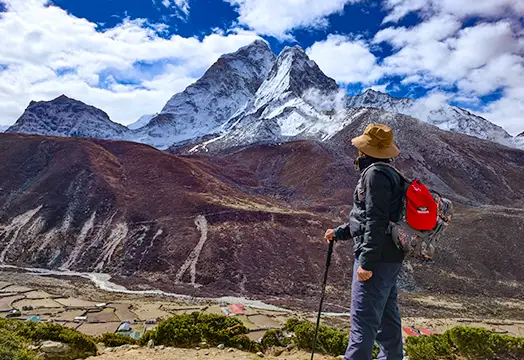
What does it feel like to stand on a trail where the mountain before you is worshipped as a goddess? For most of us, it's an adventure. But for the local communities who live in its shadow, it's something closer to faith. That mountain is Everest.

Over the last few decades, trekking has driven a profound shift: rural economies and local communities are reaping direct and indirect benefits.

Hiking teaches you to fall in love with the outdoors. Trekking teaches you to endure it. Mountaineering teaches you to respect it completely.

There are only a handful of Himalayan regions that hold profound spiritual significance as well as immense natural beauty. The Gaumukh Tapovan trek is one such destination that wonderfully combines adventure, divinity, and extraordinary Himalayan beauty.

What if a trek could leave you with more questions than answers? What if, after days of trekking, you reach a lake filled with centuries-old human skeletons?

Every year, every season reveals a new side of the Himalayan range. Be it trails covered in colourful rhododendrons or trails transformed into a lush green paradise, each season offers some of the most mesmerizing views of the Himalayas.
21 Oct 2026
19 Oct 2026
18 Oct 2026
17 Oct 2026
16 Oct 2026
15 Oct 2026
14 Oct 2026
13 Oct 2026
12 Oct 2026
11 Oct 2026