
18 December 2025
There’s no doubt that trekking in the Himalayas is soul-enriching, but it is unlike any regular walk in nature – it’s a region of unpredictable weather. At times sunny days could turn into unexpected downpours, and nights may get frigidly cold. Thus, creating a thorough and precise packing list becomes extremely crucial for a successful hike.
Trekking trails are not a walk in the park; they take you through forest covers, rugged terrains, snowy slopes, or high-altitude ridges. Thus an appropriate gear takes away all your discomfort and allows you to relish your adventure. In other words, a perfect gear is the one that makes your journey safe, comfortable, and convenient.

Let’s discuss these essentials to help you figure out what items to buy or rent without breaking the bank:
A good quality backpack is the first and foremost investment you have to make before hitting the trail. For a trek, you need a backpack having maximum possible comfort that doesn’t cause muscle soreness. With a fully adjustable suspension system, you can easily move shoulder straps and adjust the length according to your back’s length. The hip belt should be rightly positioned and secured on your hips. Normally for high-altitude, moderate treks, a backpack with carrying capacity of 50 to 60 liters is a good choice.
For efficient packing, you can utilize the space of your backpack in three ways – things used at night, things used during the day, and things that need quick access. So an ideal bag is the one that has enough outer pockets for quick access.
Finally, the one key feature that makes your backpack perfectly fit for a trek is an integrated rain cover. You never know when it rains or snows on high altitudes, so a separate pocket at the bottom carries a built-in rain cover. In the event of sudden rainfall, you can easily reach it.

Right trekking shoes are a crucial component of your trekking list. They should perfectly address your three main concerns – safety, comfort, and protection from injury. So to find the right pair, you need at least three features: high ankle support, good grip, and water resistant. High ankles offer more stability on uneven ground than low cuts. Make sure your shoes are as sturdy and lightweight as possible. Well-built footwear considerably decreases the risk of ankle sprains, toe injuries, and swollen soles.
Before actually buying trekking shoes, you should also consider these important points:
Camping slippers are crucial foot gear on any trek as they provide your feet with extra comfort and hygiene. At the end of your day’s trekking, you need to air out and dry your feet, and be relaxed from hiking boots. They are very convenient at campsites, allowing you to easily slip on and off for quick tasks, such as going to the bathroom at night.
Trekking socks also play a vital role in keeping your feet not just in good shape but warm and dry as well. They help regulate your body temperature and provide proper cushioning and to prevent pressure points and blisters.
If you don’t want high altitude winter conditions to slow you down, microspikes will provide you extra stability and grip on icy trails. The winter treks such as Kuari Pass, Kedarkantha, Brahmatal, Dayara Bugyal, Chopta Chandrashilla, etc. receive heavy snowfall during peak winters. So the snowy trails need extra traction to prevent you from slipping or losing balance. Microspikes, therefore, will be extremely helpful in these Himalayan treks.

Clothing for high-altitude treks requires proper and effective layering to overcome cold and bad weather. Layering is not just stuffing your backpack with clothes – it’s more about a strategic way of getting warmth and comfort.
Layering is done by wearing outfits in three layers: base, middle, and outer. The moisture wicking base layer helps regulate your body temperature by keeping sweat away from your skin. For the middle layer, you need to add insulation that traps and retains body heat. For the outer layer, you need incredible warm outfits that protect you against wind, snow, and rain.
Here are your must-pack clothing items:
It’s always extremely vital for you to maintain hygiene during treks for health and well-being. So here should be your picks:
| Items | Qty |
| Sunscreen (SPF 50) | 1 no. |
| Moisturizer (SPF 30+) | 1 no. |
| Chap-stick / Lip balm | 1 no. |
| Toothbrush and toothpaste | 1 no. |
| Toilet paper & Wipes | 1 no. |
| Antibacterial powder | 1 no. |
| Quick dry towel | 1 no. |
| Zip-lock bag | 1 no. |
Note: Rashes are very common while trekking due to rubbing or chafing, so you should change your undergarments after finishing each day’s trek.

High-altitude Himalayan trails are remote with inherent risks of slips, falls, cuts, sprains and blisters. Far from any clinics and hospitals, you should also be prepared for any medical emergencies occurring while trekking. So a first-aid-kit becomes very crucial stuff for immediate treatment. Another important thing it does is it prevents minor problems from going out of hand and becoming major issues.
Things that should be present in your medical kit include:
| Items | Qty |
| Bandages and Band-aids | 2 and 5 respectively |
| Antiseptic wipes | 1 pack |
| Antiseptic ointments | 1 tube |
| Tapes | 1 no. |
| Blister pads | 1 pack |
| Pain relievers (doctor-approved) | 1 leaf |
| Antibiotic medicines (doctor-approved) | 1 leaf |
| Scissors | 1 no. |
| Safety pins | 5 no. |
| Hand sanitizer | 1 no. |
| Oral rehydration salts | 2 packs |
| Insect repellant | 1 no. |
| Tweezers | 1 no. |
Note: It is always for your well-being that your trek leader should know if you are under any medication prescribed by your doctor. That way the support staff will be better able to assess your health and provide relief accordingly.
In high-altitude Himalayan regions, the sun plays out very differently. Up on the mountains, the ultraviolet radiations get highly intense, which are compounded by thin air and reflection due to snow. Hence, you need sunglasses to protect your eyes from UV rays.
High-altitude treks have usually uneven routes and rugged terrains that can have adverse impact on your knees and joints. So trekking poles are extremely helpful to reduce strain on knees and improve balance.
They help you maintain pace, prevent lower body fatigue, and provide you proper leverage and thrust required to hike on high altitudes. Trekking poles become all the more important when paths are slippery and icy due to snowfall.
A woolen cap seems like a small article, but it is equally crucial for high-altitude treks by preventing body heat loss. It gives a strong protection against severe cold, wind and sun exposure.
In high altitude cold conditions, a significant amount of heat is lost through your uncovered head. The natural property of wool is its excellent insulation that serves as a barrier to heat transfer. Thus a woolen cap is a crucial item that is highly effective for managing changing weather conditions.
A sun cap is a highly useful item of your packing list of high altitude treks as it shields your face, neck, eyes, and ears from UV radiations. Additionally, it reduces visual discomfort, while keeping your head cooler by blocking direct sunlight.

A neck gaiter is a very efficient packing item that is useful for its versatility. It covers your mouth, nose and neck to protect you against cold and wind on high altitude treks. On even lower temperatures, this multi-functional piece shields your face and neck from frostbite. On the other hand, it also serves as an excellent protection against UV rays and sunburns.
A balaclava is very useful for increased warmth and tight protection against extreme cold, wind and snow on high altitude winter treks. It effectively shields your head, ears, neck, and face, while allowing you easier breathing in harsh cold conditions. It’s also versatile and can be used as a neck warmer and head cover tucked under a hood.
Protecting your hands and feet is absolutely necessary on altitudes because in extreme weather conditions, it becomes really difficult to perform routine tasks. Cold affects fingers first and gradually makes them numb, and finally, frostbite kicks in. A good quality pair of gloves provides you warmth, protects you from wind and rain, and prevents injury.
Headlamp/head-torch is a very useful winter trek essential because it offers hands-free operations like setting up camp, cleaning, or carrying out first-aid without fumble. Additionally, for early trekking hours or late returns to campsites, headlamps prove to be very handy. Another good use of headlamps is as a deterrent to scare away wild animals.Additionally, for early trekking hours or late returns to campsites, headlamps prove to be very handy. Another good use of headlamps is as a deterrent to scare away wild animals.
In high altitude trekking, staying hydrated is a survival strategy. As the air thins out, your body receives less oxygen, and to cope with that, your respiratory rate increases. Basically, thin air is dehydrating your body along with robbing you with essential fluids. Besides, altitude sickness is always a possibility.
Hydration is the only way that allows proper oxygen transport, maintains temperature levels and ensures muscle activity. Therefore, you need a water bottle always with you to stay hydrated.

Gaiters can be of immense help on high-altitude, rugged and snowy terrain. They provide extra protection to your feet by not letting snow, water, mud, gravel, and debris enter inside your shoes. Wearing gaiters, your hiking boots will not get wet quickly while walking through the snow. The treks like Kedarkantha, Gulabi Kantha, Kuari Pass, and Brahmatal have frozen trails during winters, thus a pair of good quality gaiters will come handy here.
While on high-altitude treks, you need sustained energy to prevent body-fatigue and optimum blood sugar. So calorie-rich snacks and energy bars will fulfill your energy demand on the go. Make sure to keep dry fruits, nuts, seeds, protein bars, nut butters, etc. for your hike.
As we know, the outdoor trekking activities in high altitude regions provide enriching experience. But the enjoyment and the success of your hike depends a lot on how fully prepared you are. The above mentioned checklist of essential items is very handy for the Himalayan treks and make sure you don’t forget them.
If you are a first time trekker, you need to pay extra attention to the essentials you have to carry with you. Your packing list should include trekking shoes, layered clothing (thermals, quick-dry t-shirts, fleece, waterproof jacket, down jacket), proper head gear, first aid, toiletries, water bottle, sunglasses, and more importantly, a good quality backpack.
For a typical winter trek such as Kuari Pass, Kedarkantha, Brahmatal, etc., you need at least three different types of jackets – a fleece jacket, a waterproof jacket, and a down/padded jacket. You can pick the variety for a down jacket as per weather conditions, but fleece and waterproof are largely unchanged.
If you are planning your next trek to the Himalayas, you need a backpack that is highly comfortable with a carrying capacity of 50 to 60 liters. It should have padded shoulder and waist straps, a supportive structure, and a mechanism to properly distribute its weight. Make sure it has multiple compartments, zippers, and pockets to keep quick-access items.
Yes! Trekking poles are very handy equipment, especially for high-altitude treks, which serve two purposes – safety and comfort. They provide stability, reduce knee strain and ankle injury, and conserve energy.
When it comes to high-altitude Himalayan treks, you need extra safety and comfort to successfully complete your journey. Thus more than any other shoes, trekking shoes are designed to offer firm grip, sturdy construction, ankle support, and water resistance for any type of terrain. Sports shoes simply can’t provide you that, so there is no comparison whatsoever.
If you want to get more info about trekking essentials for different seasons, you can check season-specific pages on our website.
18 December 2025

Trek updates, stories & mountain insights.
Tips and insights for every trekker.
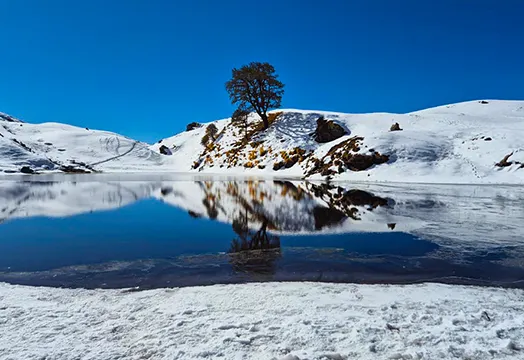

Winter is almost here, and you're still planning on following the same routine. Sitting in a blanket, sipping on hot tea, and binge-watching your favorite movies.
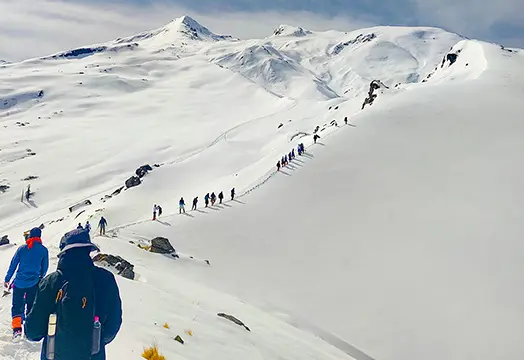
Every season in the Himalayas has its own way of showing off the mountains, but winter reveals a different side of them, one that feels like a whole new world.
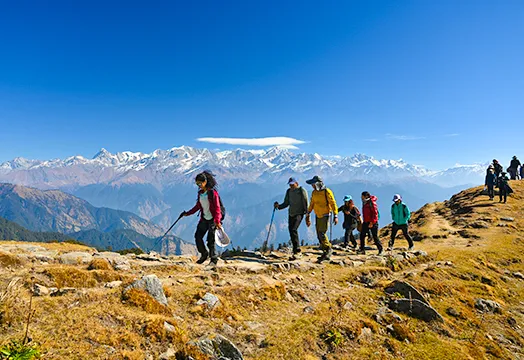
As monsoon season comes to an end, it washes away all the dust and haze that remains in the valleys throughout the summer, and then?
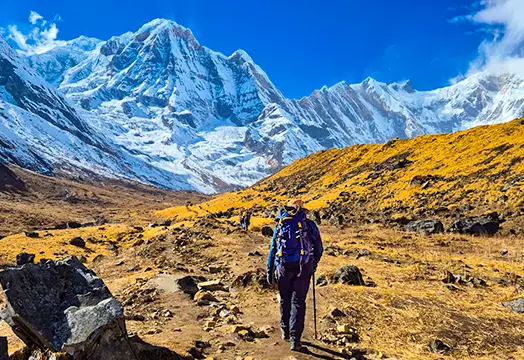
Located in north-central Nepal's Gandaki Province, Annapurna is the world's 10th highest and one of the most challenging mountains on the planet. Its height rises to 26,545 feet. Yet reaching Annapurna base camp is a far more accessible adventure, drawing trekkers from around the world every single season.
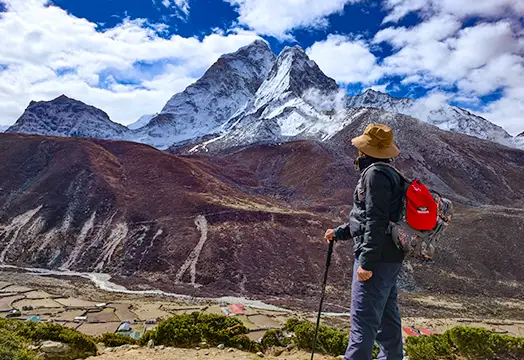
What does it feel like to stand on a trail where the mountain before you is worshipped as a goddess? For most of us, it's an adventure. But for the local communities who live in its shadow, it's something closer to faith. That mountain is Everest.

Over the last few decades, trekking has driven a profound shift: rural economies and local communities are reaping direct and indirect benefits.

Hiking teaches you to fall in love with the outdoors. Trekking teaches you to endure it. Mountaineering teaches you to respect it completely.

There are only a handful of Himalayan regions that hold profound spiritual significance as well as immense natural beauty. The Gaumukh Tapovan trek is one such destination that wonderfully combines adventure, divinity, and extraordinary Himalayan beauty.

What if a trek could leave you with more questions than answers? What if, after days of trekking, you reach a lake filled with centuries-old human skeletons?

Every year, every season reveals a new side of the Himalayan range. Be it trails covered in colourful rhododendrons or trails transformed into a lush green paradise, each season offers some of the most mesmerizing views of the Himalayas.
23 Oct 2026
22 Oct 2026
21 Oct 2026
19 Oct 2026
18 Oct 2026
17 Oct 2026
16 Oct 2026
15 Oct 2026
14 Oct 2026
13 Oct 2026