
8 May 2026

Nestled deep in the wilderness of the high-altitude Garhwal Himalayas, the Dharansi Pass trek is located in the Chamoli district of Uttarakhand, India. Being situated at a height of 16,125 ft, it’s a moderate to difficult trek, and can be done by beginners as well as experienced trekkers.
This trek takes you through one of the Himalayas’ most untouched regions, where you can experience rare, pristine landscapes that remain largely unspoiled by mass tourism. Dharansi Pass lies within the Nanda Devi Sanctuary, which is listed as a World Heritage site. The prominent peaks visible from this trek include Nanda Devi, Dunagiri, Trishul, Nanda Ghunti, and Bethartoli Himal. Most of these summits are distinctly visible from viewpoints like Jhandi Dhar and the pass itself.
It won’t be an overstatement to term this trek as a “curtain raiser” to the inner reaches of one of India’s most revered mountains. The trail starts in the Lata village and climbs steadily through thick forests of oak and rhododendrons. Just as the tree line thins out, you are greeted by beautiful, sprawling alpine meadows of Lata Kharak.
The most captivating highlight of this trek, however, is Dharansi Pass itself, which is a spectacular high-ridge landscape. This trek is perfect for seasoned hikers looking for solitude and raw Himalayan beauty away from the crowded trails.

In essence, Dharansi Pass serves as a spiritual journey to the Nanda Devi Sanctuary. In local mythology, the Goddess Nanda is considered the presiding deity of this vast Himalayan region. It is believed that the peaks surrounding the pass are the Goddess’s physical manifestations: Nanda Ghunti as her head, Nanda Kot as her fortress, and the main peak as her throne. The pass itself is considered a doorway to her inner sanctum. Locals also believe that "Saptarishi" (seven sages) meditated at this place in secret.
Day 1: Arrival at Joshimath
To do the Dharansii Pass trek, you have to first reach Joshimath, which is the base camp. Joshimath is approximately 250 km from Rishikesh and approximately 273 km from Haridwar. You can either board a train from New Delhi to Haridwar or Rishikesh, or take a flight from Delhi to Jolly Grant airport.
After arriving in the morning at Haridwar or Rishikesh, you can continue to Joshimath by hiring a taxi or boarding a bus. The drive to Joshimath is long but absolutely rewarding. The route takes you through scenic towns such as Devprayag, Srinagar, Rudraprayag, and Karnaprayag. While the majority of the road is in nice condition, there are a few rough patches in between.
Day 2: Joshimath to Lata Village
From Joshimath (base camp), you have to drive to the Lata village roadhead, which is 25 km away. The trek starts at the roadhead and takes you to Lata village, which is situated about 1.5 km uphill.
The path to the village is well-paved and winds through scenic, terraced fields. The first stretch is relatively comfortable to tread. As you gain altitude, the visuals become more spectacular. As you enter the village, the ambience is filled with the aroma of fruit orchards like apple, apricot, and walnut.
Another distinct thing you’ll notice in the village is its traditional houses, which are built of wood and stone using the region’s ancient architecture. The village is often referred to as a summer settlement, as locals move here during the warmer months. The trek to Lata village from the roadhead takes around one hour. It’s a nice place to spend the rest of the day and allow your body to acclimatize.
Day 3: Lata Village to Lata Kharak
Today’s trek is a bit more physically exhausting, with an altitude gain of over 1,500 meters (4,921 feet). Experienced trekkers who are habitual of withstanding high-altitude conditions will find this section easier, but for beginners, it demands more physical exertion.
From Lata, you have to follow a cemented trail that takes you uphill toward Bhelta, which is about 4 km away. This village maintains rich traditions of music, dance, and craftsmanship. After walking for about 1 km, the trail narrows and enters a pine forest. The terrain here is composed of loose stones, small rocks, and scree. You’ll also come across a couple of small streams on this way. It will take you around three hours to reach Bhelta.
Bhelta is a nice resting place with fresh water sources nearby. Lata Kharak is still 5 km away from here, and you’ll have to gain an altitude of nearly 1000 meters to get there. The trail from here climbs gradually and steadily and goes through the last section of pine and birch forests. Soon, you’ll come to a crossroad from where the left path goes to Khanook Kharak—ignore this and continue straight.
The final stretch from here is a little bit more demanding, involving sharp bends and steep climbs. Eventually, as the landscape opens up at the top of a cliff, the ridge of Lata Kharak appears in front of you. Beautifully surrounded by rhododendron and birch trees, this clearing offers breathtaking mountain peaks such as Dronagiri, Nanda Ghunti, Ranthi Peak, and Bethartoli Himal.
If you set your gaze to the south, you’ll see parts of the Kuari Pass Trek, including sections of the historic Lord Curzon trail (which is now Nanda Sunanda Marg) and its campsites. There is also a log hut at Lata Kharak where trekkers can stay overnight.
Day 4: Lata Kharak to Dharansi Pass

Today, you’ll have to start your trek early in the morning, as Himalayan weather often becomes unstable after noon. The climb is easy and gentle compared to the previous day, while the altitude gain is around 1,476 feet. From Lata Kharak, the trail takes you through raw, pristine meadows, and soon, the panoramic views of the valley and surrounding peaks become increasingly dramatic.
After navigating the trail for about 2 hours, you’ll reach a point where the path bifurcates. The route straight ahead leads to Saini Kharak – a stunning meadow perfect for taking a detour if you have a buffer day. But you have to take the left route that takes you through a grassy ridge towards the Jhandi Dhar cliff top.
From the top of Jhandi Dhar cliff, the view opens up, and Mt. Dunagiri appears remarkably close. Also, on a clear day, you can spot the distant peaks of the Kedarnath range. –
At the top of the ridge, you’ll find a series of cairns. You will find a unique stone-etched map marking a tri-junction, indicating directions to Dharansi Pass and Lata. The left path leads toward Tomla. But you have to follow the connecting ridge for the final 1.5 kilometers toward Dharansi Pass. A final climb over a rocky ridge brings you to a place of Dharansi, where camping is possible if the weather allows.
If you plan to explore the meadows of Debrugheta, then you need to camp at the pass. However, be prepared for high-speed winds and plunging temperatures after dark. If the weather looks threatening or the wind is too severe, it is highly recommended to descend and spend the night at the more sheltered Lata Kharak.
Day 5: Dharansi Pass to Debrugheta and back to Dharansi Pass
Start your journey as early as possible once again. The Malthuni-Bethartoli ridge serves as a natural barrier between Dharansi and Debrugheta. This ridge essentially serves as an official boundary between the inner and outer Nanda Devi Sanctuary. It should be noted that the inner sanctuary is strictly off-limits, so Debrugheta is the last place visitors are allowed to go.
To reach Debrugheta, you have to walk along the connecting ridge as it descends sharply toward the lower catchment area. While descending, this section of the trek poses a bit of a challenge. The route is somewhat unstable, narrow, and slippery. There is a dramatic elevation drop as you will descend approximately 2,460 feet. This descent takes about 3 hours.
Even being a striking place, Debrugheta has a disadvantage: there is no viable source of drinking water. Because of this, you must treat this as a round trip and return to Dharansi Pass to camp.
The return climb feels challenging and demands more physical exertion. This strenuous hike usually takes about 5 hours to reach the safety of the Dharansi Pass camp. Ensure you carry sufficient water and energy snacks for the full 8-hour journey.
Day 6: Dharansi Pass to Hitoli Campsite
After reaching Dharansi Pass, your journey transitions into the long descent towards Lata. Start by taking the trail to Jhandi Dhar. After reaching there, take a look at the stone map once again, and follow the right path that leads you straight to Tomla.
The descent from here is physically challenging, which exerts maximum pressure on your knees. Taking short and steady steps will help you maintain balance and reduce strain. There is no need to rush as there are uneven patches in between.
As you lose altitude, the landscape gradually transforms into a beautiful forested section. This small region has an enchanting blend of rhododendron, birch, and fir trees, offering a shaded and refreshing environment. This section of the trail is particularly pleasant, with several natural water sources along the way where you can pause, rest, and refill.
If you continue descending through the forest, you come across a small, scenic clearing known as Hitoli. It’s a beautiful place in the middle of nature, perfect for pitching a tent and spending the night. Surrounded by dense forest and the silence of the mountains, Hitoli offers a restful end to a long day’s trek.
Day 7: Hitoli Campsite to Surai Thotha via Tomla. Drive from Surai Thotha to Joshimath
The descent from Hitoli is gentle, which finally takes you to the captivating village of Tomla. Just before you reach the village, the trail winds through a breathtaking stretch of forest that has predominantly cedar trees. It extends for almost five kilometers. These tall trees with aromatic foliage create a peaceful and shaded corridor that makes this section memorable.
The forest floor is often carpeted with needles and filtered sunlight. Such an atmosphere paints a lively and refreshing ambience as you make your way down. The Tomla village perfectly reflects a simple, traditional, and deeply cultural lifestyle of the region. After taking a rest and admiring the rustic beauty of the surroundings, you can continue with your descent. From here, the trail continues downward towards Surai Thotha, which lies about 3 kilometers further below.
This is it – reaching the roadhead marks the completion of the trekking part of your journey. From here, you can take a drive to Joshimath. It offers one last chance to enjoy the mountain landscapes before returning to a more developed setting.

The ideal time to undertake the Dharansi Pass Trek is during the pre-monsoon months of May to June and the post-monsoon period from September to October. During these windows, the weather is generally stable, the skies remain clear, and the trails are more accessible. Daytime temperatures typically range between 12°C and 20°C, making trekking conditions comfortable.
May to June (Spring–Summer): This is a particularly pleasant time to visit, with mild temperatures and vibrant landscapes. Rhododendrons are in full bloom, adding a gamut to the trail, and the meadows appear lush and green.
September to October (Autumn): This period is ideal for clear, uninterrupted views. After the monsoon rains, the air is crisp and clean, offering stunning panoramic vistas of the Nanda Devi Sanctuary and the surrounding Himalayan peaks.
To reach the Dharansi Pass trek, you have to first reach the base camp, Joshimath, which is approximately 250 km from Rishikesh. From Delhi, take an overnight train or bus to Haridwar or Rishikesh. From there, continue with a 9–10 hour journey by taxi or bus to reach Joshimath. The trek begins at Lata Village, which is around 25 km from Joshimath.
The closest airport is Jolly Grant Airport in Dehradun, situated about 270 km from Joshimath.
The nearest major railway stations are Haridwar and Rishikesh, both roughly 250–290 km away from Joshimath.
You can travel by bus or taxi from Rishikesh to Joshimath, passing through Devprayag, Srinagar, Rudraprayag, and Chamoli.
Tucked away in the remote, high-altitude Garhwal Himalayas, the Dharansi Pass trek lies in the Chamoli district of Uttarakhand, India. This trek leads you through one of the Himalayas’ most untouched regions, offering a chance to witness rare, pristine landscapes that remain largely unaffected by mass tourism. Unlike Himalayan treks, it’s a low-altitude jungle trek focused on wildlife, grasslands, and riverine ecosystems rather than mountain views.
Situated at an altitude of around 16,125 ft, this trek falls into the moderate-to-difficult category due to its high elevation, long trekking days, and changing terrain. You need to be prepared for steep ascents, thin air, and unpredictable mountain weather. It can be done by beginners as well as experienced trekkers looking for a challenging yet rewarding Himalayan journey.
The best time to undertake the Dharansi Pass Trek is during the pre-monsoon months of May to June and the post-monsoon season from September to October. During these periods, the weather tends to be stable, with clear skies and better trail conditions, making the journey more enjoyable. Daytime temperatures usually range between 12°C and 20°C, offering comfortable trekking conditions.
Packing right for a Himalayan trek can make the difference between a smooth, enjoyable journey and a difficult one.
Clothing (Layering is key): Thermal wear, fleece/light jacket, waterproof jacket, down jacket, quick-dry track pants and t-shirts.
Footwear: Trekking Shoes (High ankle, good grip), camping shoes, woolen & sports socks.
Trekking Gear: Backpack (40–60L), water bottles, trekking pole, headlamp, sunglasses (UV protected), sunscreen & lip balm (SPF 30+), quick-dry towel, toiletries, first-aid kit.
Climbing Nanda Devi is not allowed due to a combination of certain reasons such as: environmental protection, safety concerns, and historical connotations. First of all, it’s a highly sensitive ecological zone that is part of a UNESCO World Heritage Site. Secondly, the region is geologically fragile. Heavy footfall, waste, and irresponsible tourism activities are aggravating the problems in the region. Lastly, Nanda Devi holds deep spiritual significance in local culture, regarded as a sacred mountain.
8 May 2026

Trek updates, stories & mountain insights.
Tips and insights for every trekker.
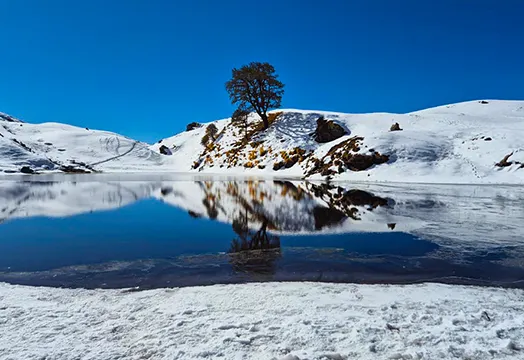

Winter is almost here, and you're still planning on following the same routine. Sitting in a blanket, sipping on hot tea, and binge-watching your favorite movies.
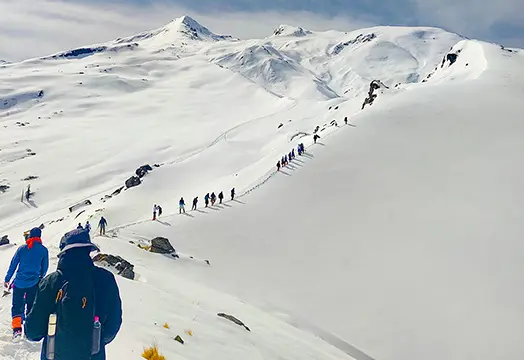
Every season in the Himalayas has its own way of showing off the mountains, but winter reveals a different side of them, one that feels like a whole new world.
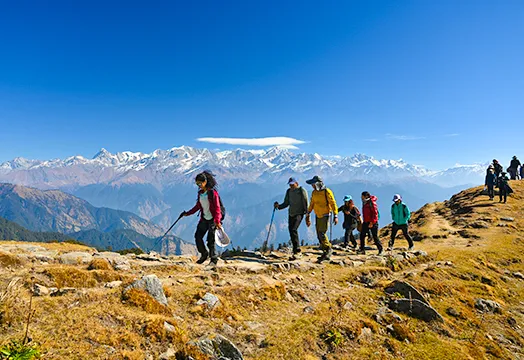
As monsoon season comes to an end, it washes away all the dust and haze that remains in the valleys throughout the summer, and then?
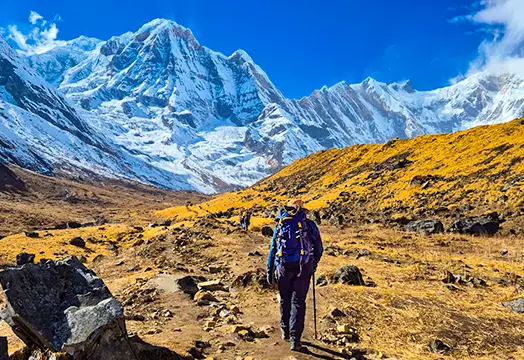
Located in north-central Nepal's Gandaki Province, Annapurna is the world's 10th highest and one of the most challenging mountains on the planet. Its height rises to 26,545 feet. Yet reaching Annapurna base camp is a far more accessible adventure, drawing trekkers from around the world every single season.
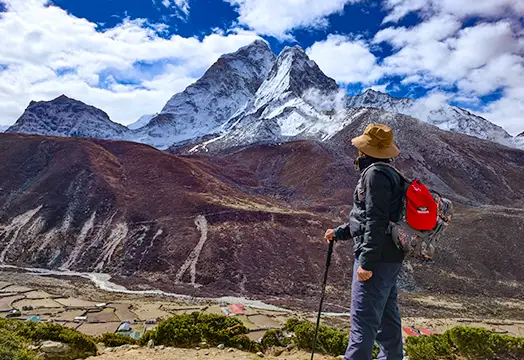
What does it feel like to stand on a trail where the mountain before you is worshipped as a goddess? For most of us, it's an adventure. But for the local communities who live in its shadow, it's something closer to faith. That mountain is Everest.

Over the last few decades, trekking has driven a profound shift: rural economies and local communities are reaping direct and indirect benefits.

Hiking teaches you to fall in love with the outdoors. Trekking teaches you to endure it. Mountaineering teaches you to respect it completely.

There are only a handful of Himalayan regions that hold profound spiritual significance as well as immense natural beauty. The Gaumukh Tapovan trek is one such destination that wonderfully combines adventure, divinity, and extraordinary Himalayan beauty.

What if a trek could leave you with more questions than answers? What if, after days of trekking, you reach a lake filled with centuries-old human skeletons?

Every year, every season reveals a new side of the Himalayan range. Be it trails covered in colourful rhododendrons or trails transformed into a lush green paradise, each season offers some of the most mesmerizing views of the Himalayas.
23 Oct 2026
22 Oct 2026
21 Oct 2026
19 Oct 2026
18 Oct 2026
17 Oct 2026
16 Oct 2026
15 Oct 2026
14 Oct 2026
13 Oct 2026