
18 April 2026

The Dhanna Kunnu Pass Trek is located at an altitude of roughly 11,800 to 12,000 feet near Manali in the Kullu district of Himachal Pradesh, India. This easy-to-moderate 5-day trek allows you to experience the thrill and adventure of the untapped trails of the Himalayas.
Being relatively untouched, Dhanna Kunnu Pass offers a quieter, more immersive experience in nature. On this journey, you will witness a delightful blend of dense forests, alpine meadows, and panoramic views of the Pir Panjal, Bara Bhangal, and Dhauladhar ranges.
This hidden gem of nature is a serene, less-explored region of the Kullu Valley, and lies adjacent to the famous Chandrakhani Pass. The iconic mountain peaks that are visible from this trek are Hanuman Tibba, Indrasen, Deo Tibba, and Friendship Peak.
The journey typically begins from Jana village, leading you through dense forests and serene landscapes, including the Kais Wildlife Sanctuary, before reaching the pass. One of the key attributes of this trek is the constantly shifting scenery, making each day feel like stepping into a new world. Thus, walking on this offbeat trail is like immersing in the raw essence of the Himalayas.
The Dhanna Kunnu Pass Trek is an ancient route used by generations of local Gaddi shepherds as well as traders. As it is connected to remote valleys, it used to facilitate cultural exchange between various regions of the Himalayas. Therefore, walking this route also allows you to walk into history and understand the age-old way of life, where natives and nature coexist in harmony.
When it comes to spiritual essence, the region around Dhanna Kunnu Pass is considered sacred and divine. This is the reason why the Kullu valley is known as the “Valley of Gods”. For the same reason, these mountains are also regarded as the abodes of the Gods, and local communities believe that high passes and peaks are protected by deities.

Day-1: Arrival in Jana village
To reach the Jana Village, you need to board a local bus from the Manali bus stand to Naggar. Public transportation is not an issue here as there is frequent bus service, approximately every 15 – 20 minutes. The Naggar village is located about 20 km from Manali.
From Naggar, continue your journey 13 km further to Jana Village, which serves as the base camp for the trek. A local bus to Jana normally departs around 2:00 PM, so it’s best to plan your arrival in Naggar accordingly.
If you have the flexibility to arrive a day earlier, Naggar is an incredible place to explore. This exploration will set the tone for your unforgettable journey. The key highlights to visit here are the Roerich Museum, an art gallery, and the 500-year-old Naggar Castle. Once the capital of Kullu until 1660 AD, Naggar is rich in historical and cultural charm. Thus, all these places offer a glimpse into the Kullu region’s heritage and scenic beauty.
Day-2: Jana to Matikochar
(The figures given here are in approximate numbers)
The trek begins in Jana village, and after a while, the route transforms into a rugged trail that continues all the way to Matikochar. Walking for around half an hour beyond the village, you come across the Jana waterfall, and then after a few more minutes, you arrive at Kyari. About an hour’s hike from Kyari, you’ll start to see small villages perched along the upper slopes of the valley.
As for the landscape, the trail winds through mostly dense pine and deodar forests. Whenever the forests thin out from time to time, you’re rewarded with breathtaking views of the Kullu Valley. You can prominently see the Beas River flowing gracefully through the valley.
After walking for one hour beyond Katodhar village, you enter the Kais Wildlife Sanctuary. Abundant in birdlife, this area hosts distinct species such as the Himalayan Monal, yellow-billed blue magpie, and Rufous woodpecker.
Surrounded by tall trees of pine and deodar, you’ll come close to Kais Wildlife Sanctuary moments before reaching the campsite. Don’t forget to witness an enchanting contrast under the night sky – a stunning display of bright stars above and shining lights of Kullu town far down in the valley.
Day-3: Matikochar to Phutasor
(The figures given here are in approximate numbers)
Today’s trek takes you further up in the forest through an inclined trail. Along this forest section, which is full of oak, pine, and deodar trees, the trail continues upwards, forming a zig-zag path.
This forest is abundant in flora and fauna, as you can spot different varieties of mushrooms and insects on the way. After walking for about an hour on this route, you’ll reach a clearing locally known as Bhand Patthar. From here, you can enjoy panoramic views of the Pir Panjal range.
After relaxing for a bit, continue along the trail as it re-enters the forest. After traversing this route for another hour or so, the landscape transitions into a meadow with shepherd huts interspersed along it. This place makes a nice overnight stop, and here, you’ll find flat ground and a proper water source.
On your way toward Phutasor, the trail maintains a gentle climb and continues ascending through a dense oak and conifer forest. After a while, the path turns into a steep climb that leads to the small lakes of Phutasor.
After reaching the top of Phutasor campsite, you’ll easily find a shelter and a suitable place for pitching a tent. The water source is a small mountain stream that feeds one of the lakes. This campsite is the perfect spot to enjoy stunning sunset views over the Kullu Valley, the Pir Panjal range, and the Bara Bhangal range. Prominent peaks such as Hanuman Tibba, Indrasen, Deo Tibba, and Friendship Peak are visible, along with Dhana Kunnu and Chanderkhani Pass to your right.
Day-4: Phutasor to Chaklaini via Dhana Kunnu Pass
(The figures given here are in approximate numbers)
Today’s trek is a highlight of the entire journey, offering a bit of everything. From Phutasor, take the solitary trail heading north into the forest on your right. The trail can become obscured, so watch and make certain to be on the west side of the ridge. The forest here is dense, dominated by towering oaks. You will also see various types of mushrooms, such as Death Cap, Chanterelle, and Yellow Staghorn.
The path moves on the ridges as it cuts across a green landscape of plants and high grasses. After a short way, say half an hour, you will come to a clearing. Turn right there and take the trail that leads down into the woods. On this rugged descent, you see the change of vegetation--rhododendron bushes and maple trees appear more frequently.
The trail passes up and down for about an hour, then it touches a stream known as Dohra Nallah. From here, the trail follows the stream upward along the valley. Keep up along the stream to the summit of the ridge on to which the pass opens. The path is narrow; take great caution while walking on it. As you get closer to the pass, the landscape opens up, and you see a row of boulders right in front of you. The pass is located just west of this section of the boulders.
This is where the tree line vanishes. Climb up in a zigzag route to the top, and take the path that joins the parallel ridge. This is the Dhana Kunnu Pass. At an altitude of 12,000 feet right here, you will be rewarded with spectacular panoramic scenes of the Pir Panjal and Bara Bhangal ranges. Watch as clouds drift across majestic peaks like Hanuman Tibba, Indrasen, and Friendship Peak.
To descend, take the path on the right side of the ridge. The famous Malana village lies behind you. You’ll find a small temple at the pass, and the descent point is marked by a simple stone formation rather than a proper cairn. Follow the tiny trail along the ridge for a while. When the path becomes plain, you have to turn to the right and proceed to the meadows. Continuing straight would take you to Malana, so pay close attention here.
Descend carefully through the meadows. To your left, you see a path curving between rhododendron bushes--the path leads into the forest and eventually to Chaklaini. From the meadow trail, you should see a dhaba-type structure in the distance. Once you see it, it will take you approximately 30 minutes to get there. Camp at Chaklaini for the night, where there’s a nearby water stream.
Day-5: Chaklaini to Rumsu
(The figures given here are in approximate numbers)
The trek today is relatively shorter and easier; however, the trail simply fades away at times, so stay careful. The trail leads northwest through a heavy forest. If you are trekking in the post-monsoon season, you may encounter a few shepherds in a small meadow-like clearing. You need to be careful not to lose the trail in these open areas.
The descent from here is gradual, towards the West. After approximately two hours, you will come to another clearing called Naytra Top, a popular camping area with some indications of previous camping. Here, the route changes: the trail straight ahead leads to another village in the valley, but you need to turn right and go down into the forest.
You need to follow the smaller trail, which is winding down through the forest. At this point, the path turns into a sharp, straight downward trail, which takes you to Rumsu right away. Rumsu is a big village with provision shops and health centers. Once you reach the roadhead in Rumsu, transport is available to Naggar, approximately 5 km away. From Naggar, you can continue your journey down to Manali.

The ideal time to do the Dhanna Kunnu Pass Trek is during the summer months (April to June) and autumn months (October to November). This period in the Kullu region generally sees mild and pleasant weather, making the trails safe and more enjoyable.
Summer brings clear skies, lush green forests, vibrant meadows, and blooming flowers with fresh vegetation. The season adds beauty to the journey and makes it a great time for photography.
Post-monsoon, the autumn season offers a crisp and clear atmosphere with dry and stable trails. The air is clean, and the visibility is excellent, providing unobstructed views of the mountains and valleys. The foliage turns golden, yellow, and reddish-brown, creating a spectacular contrast.
To reach the Dhana Kunnu Pass Trek, make your way to Naggar, near Manali in Himachal Pradesh, which is an important junction for embarking on various treks. You can get there from Delhi or Chandigarh. From Naggar, head to Jana village to begin the hike. The trek is a 5-day journey that takes you through dense forests and rugged terrain up to an approximately 12,000 ft high pass.
The nearest airport is Bhuntar (Kullu), around 50–60 km from Naggar. From there, you can hire a taxi to Manali or go directly to Naggar.
Overnight Volvo and private buses operate from Delhi (ISBT Kashmere Gate) and Chandigarh to Manali. You can get off at Patlikuhal or Naggar.
Naggar lies about 20 km from Manali. You can reach it—or continue directly to the Rumsu base camp—by local bus or taxi.
The Dhanna Kunnu Pass Trek is located at an altitude of approximately 11,800 to 12,000 feet near Manali in the Kullu district of Himachal Pradesh, India. It is one of the lesser-explored, peaceful, and adventurous treks.
The Dhanna Kunnu Pass is a moderate-to-difficult trek that usually takes 5 days to complete. You will experience different types of landscapes such as forest trails, rocky slopes, and steep climbs. This journey offers a nice blend of dense forests, alpine meadows, and panoramic views of the Pir Panjal, Bara Bhangal, and Dhauladhar ranges.
The ideal time to do the Dhanna Kunnu Pass Trek is during the summer months (April to June) and autumn months (October to November). During the summer, the skies are clear, forests become lush green, and meadows are dotted with vibrant wildflowers. The autumn season, on the other hand, offers a crisp and clear atmosphere when the air is clean, the visibility is excellent, and the weather is pleasant.
Packing right for a Himalayan trek can make the difference between a smooth, enjoyable journey and a difficult one.
Clothing (Layering is key): Thermal wear, fleece/light jacket, waterproof jacket, down jacket, quick-dry track pants, and t-shirts.
Footwear: Trekking Shoes (High ankle, good grip), camping shoes, woolen & sports socks.
Trekking Gear: Backpack (40–60L), water bottles, trekking pole, headlamp, sunglasses (UV protected), sunscreen & lip balm (SPF 30+), quick-dry towel, toiletries, first-aid kit.
Trekkers will experience dense forests, deep river valleys, alpine meadows, snow patches (in early season), glacial valleys, and panoramic mountain views.
18 April 2026

Trek updates, stories & mountain insights.
Tips and insights for every trekker.
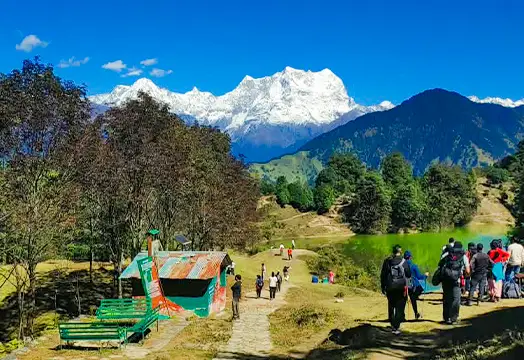
21 Oct 2026

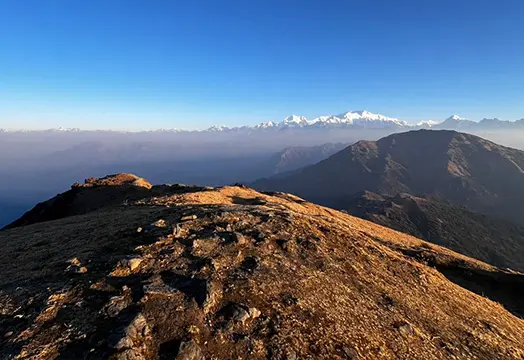
19 Oct 2026
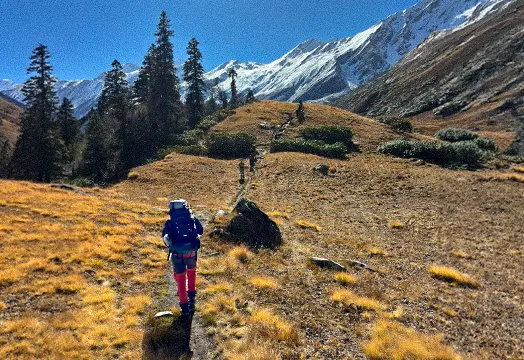
18 Oct 2026
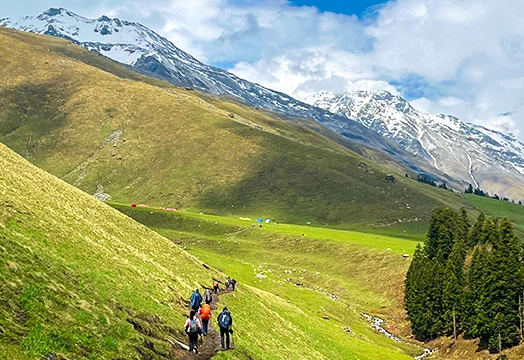
17 Oct 2026
16 Oct 2026
15 Oct 2026
14 Oct 2026
13 Oct 2026
12 Oct 2026
11 Oct 2026
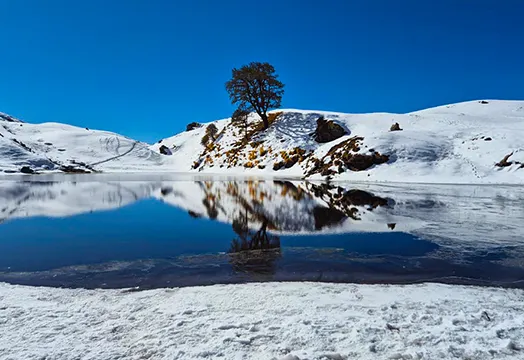
Winter is almost here, and you're still planning on following the same routine. Sitting in a blanket, sipping on hot tea, and binge-watching your favorite movies.
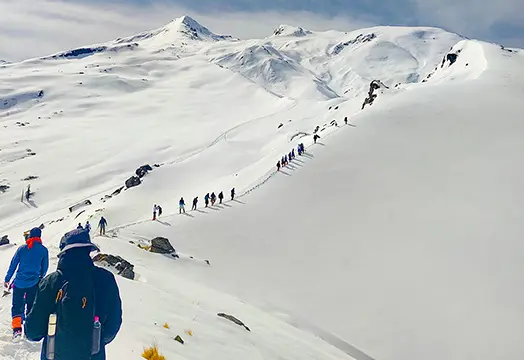
Every season in the Himalayas has its own way of showing off the mountains, but winter reveals a different side of them, one that feels like a whole new world.
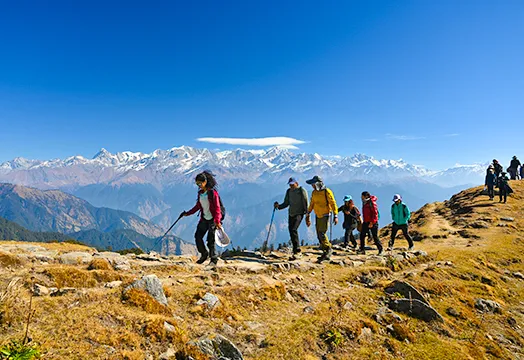
As monsoon season comes to an end, it washes away all the dust and haze that remains in the valleys throughout the summer, and then?
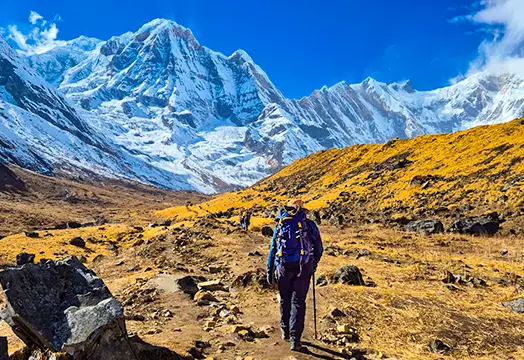
Located in north-central Nepal's Gandaki Province, Annapurna is the world's 10th highest and one of the most challenging mountains on the planet. Its height rises to 26,545 feet. Yet reaching Annapurna base camp is a far more accessible adventure, drawing trekkers from around the world every single season.
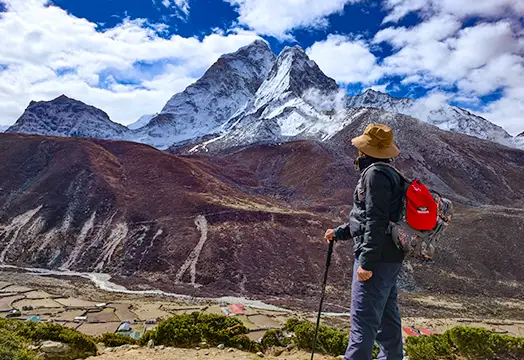
What does it feel like to stand on a trail where the mountain before you is worshipped as a goddess? For most of us, it's an adventure. But for the local communities who live in its shadow, it's something closer to faith. That mountain is Everest.

Over the last few decades, trekking has driven a profound shift: rural economies and local communities are reaping direct and indirect benefits.

Hiking teaches you to fall in love with the outdoors. Trekking teaches you to endure it. Mountaineering teaches you to respect it completely.

There are only a handful of Himalayan regions that hold profound spiritual significance as well as immense natural beauty. The Gaumukh Tapovan trek is one such destination that wonderfully combines adventure, divinity, and extraordinary Himalayan beauty.

What if a trek could leave you with more questions than answers? What if, after days of trekking, you reach a lake filled with centuries-old human skeletons?

Every year, every season reveals a new side of the Himalayan range. Be it trails covered in colourful rhododendrons or trails transformed into a lush green paradise, each season offers some of the most mesmerizing views of the Himalayas.