
16 February 2026

If you want to embark on a remote, thrilling, and high-altitude Himalayan journey that offers raw and untouched natural beauty, Chandratal Baralachala Trek seems to stand out. In other words, it is a destination that carries numerous elements in one trek.
Nestled deep in the wilderness of the Himalayan region, the Chandratal Baralachala Trek is located in the Lahaul and Spiti District of Himachal Pradesh, India. The two prominent highlights of this trek are: Chandratal Lake – a crescent-shaped water reservoir, popularly known as “Moon Lake” around the region, and it sits at about 4,300 meters (14,100 ft); and Baralachala Pass – a stunning high-altitude pass that has risen to 4,890 meters (16,040 ft).
This mesmerizing route takes you along the places that were once parts of ancient trade routes between Himachal, Zanskar and Ladakh. Due to its remoteness and isolation, this trek is considered medium to difficult. The trail involves river crossings, rugged paths, rocky patches, and snowy terrains.
The history of Chandratal and Baralachala is an intriguing blend of ancient nomadic trade and mythological folklore. For centuries, this region served as a crucial intersection of trade routes. Nomads, traders and merchants used this passage to trade goods like wool, salt, and spices, navigating through the challenging terrain.
From a mythological perspective, an interesting story is popular in the local folklore. According to the legend, once there were two lovers – Chandra (daughter of the Moon God) and Bhaga (son of the Sun God). They wanted to get married but their kins/families were against their union; so, they decided to elope and meet at Baralachala and tie the knot. After wandering a lot around Kunzum Pass, they finally met at Tandi.
According to another folklore, Chandratal was believed to be the exact same place where Lord Indra, the deity of thunder, picked up Yudhishthira, the eldest of the Pandavas, in his mortal form to take him to heaven in his chariot.
Day 1: Manali to Chandratal Lake
On Day-1 of your trekking journey, you will have to drive from the beautiful hill station, Manali to Chandratal. It’s an extremely scenic drive through the famous Rohtang Pass. You’ll be stunned by some of the region’s most spectacular views of Spiti’s cold desert and sharp turning roads.
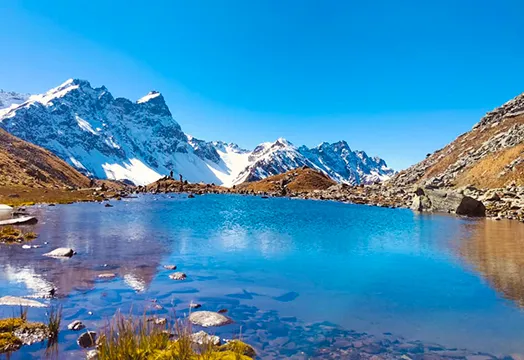
After reaching the Chandratal Lake in the afternoon, the reflection from the sky makes it look turquoise. In the early evening, you can take a short 1 to 2 km acclimatization walk around the lake. It also offers a marvelous view for sunset photography. Camping by the lake is a breathtaking experience and you can indulge in stargazing as well.
Day 2: Chandratal to Tokpo Gongma
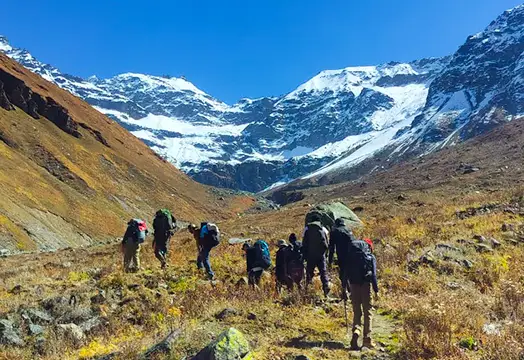
The second day of the trek starts early from Chandratal, and the morning air feels very thin. As the sun slowly peaks over the barren hills, the path diverts from the territory of the lake and plunges down into the huge valley of the Chandra River. The landscape changes instantly and the place turns into a blend of loose stones, sandy areas, and glacial streams to be crossed properly.
Following this rugged trail, trekkers face several water passages that are icy cold in the initial hour. It feels truly thrilling and refreshing to take off the boots and stick your feet into the cold, crystalline ice waters of glaciers. These water streams need very patient and careful strides because the current of the river continuously wash the rocks, which are underneath and turn very slippery. After crossing a stream, the road goes along the right embankment of the river. After moving forward a few meters, you’ll land directly above the flowing river, giving panoramic views of the Spiti Valley with its rough and rugged landscape.
The valley creates a mesmerizing effect of being untouched and vast - and rightly so. It is bounded by the brown and steeply rising rocky mountain patches on both the sides, forming a dramatic passageway. The natural interrupters of this passage happen to be the wind and the sounding water at a short distance away. Even patches of green grass are to be found once in a while, where shepherd camps are built in the distance. The ascent from here is gradual but not too steep, which enables trekkers to have a steady rhythm.
After having a snack break and relaxing for a while, you can start the trek later in the day. Some trekkers might face the final challenge in this section of the trail, and it is a powerful stream close to Tokpo Gongma. The crossing here can serve as a snow bridge or a guiding track, depending on the weather of the season. On crossing it safely, you need to walk on an elevated land - a smooth, open hillock, by the side of the river. From here, several mountains seem to loom in the horizon and a wide sky can be seen in Tokpo Gongma. Thus, it is an isolated and serene journey with a day of hard labor, though highly rewarding.
Day 3: Tokpo Gongma to Tokpo Yongma
The morning of Tokpo Gongma starts with the sound of the wind blowing in the valley that keeps bouncing around in the area. However, soon the day poses its first challenge, which is two major river crossings that will have to be crossed early, when the water level is quite low. Glacial streams are very broad and quick. The turbulent flow under your feet demands great precaution in terms of crossing and footing. These intersections establish the fact that this is going to be a challenging yet exciting day.
Beyond the streams, the trail opens out and leads to the meadows. The landscape is split between rocky tracks and soft grassy hills, which form an unusual yet gorgeous landscape at the top. The higher the elevation, the thinner the air becomes, and the trekkers learn to walk at their own speed to save energy.
The ascent to Tokpo Yongma is gradual but consistent. The scenery is expansive and pristine, and the vast stretch of wilderness is interrupted only by footsteps and the intense, distant calling of birds in the mountains. Shepherd trails sometimes cross the road, and there are signs that people lived seasonally in this otherwise quite barren area.
The hike becomes a lot easier by afternoon, and the campsite is revealed in a sheltered meadow that is bordered by huge ridges. Tokpo Yongma provides the feeling of relaxation after a hard-working day. The mountainous scenery and the peaceful environment make it a perfect place to rest and acclimatize, and enable the trekkers to reflect more on the journey into the Himalayan wilderness.
Day 4: Tokpo Yongma to Baralacha La
The last day starts with great excitement, where trekkers are ready to climb to Baralacha La. The path slowly ascends over barren land, and the panoramic scenery of jagged Himalayan mountain ranges and peaks extends in all directions. The route is not too difficult but the thin air makes every single step more challenging.
On the way to the campsite, a snowy stretch has to be crossed, which at last separates the campsite from the boundaries of the pass. After crossing the stretch, the route ascends and descends alternately through the slopes of the rocks and smooth ridges. As the trail winds through the landscape, the view is turned more dramatic; high desert lands with wide areas become one, inscribed in snowy horizons.
When Baralacha La is seen around the corner, the vibrant prayer flags also appear waving on the mountain-like background that is bare white. When you arrive at the pass, it is an extremely rewarding scene. The sweeping panoramas expose a huge pattern of saddles and mountains, which once again reiterate how mighty the Himalayas are.
The trail is slowly transformed into a highway, thus marking the end of the trek after spending time at the pass. The expedition ends with an overwhelming feeling of accomplishment and lasting memories. You will be forced to continuously think of inaccessible valleys, frozen streams, and all the beauty of high-altitude wilderness.
The favorite time to visit Chandratal Lake and Baralachala Pass is from June to September. The winter season is not usually considered as the ideal time to plan your journey to this trek as roads are blocked with snow. The snow only gets completely cleared by the end of May. So from June to September, the road remains open and the weather is pleasant.
There are two basic routes from Delhi to Chandratal Lake through road. The first one goes through Manali, while the other one passes through Shimla. But both the roads lead you to the Spiti Valley.
Note: To move from Manali to Chandratal, there are two buses that travel between Manali and Kaza, which start around 4:30 AM in the morning. Now, to move from Shimla to Chandratal, there are two non-AC buses that run from Shimla to Reckong Peo. From here, you can board a 7:00 AM HRTC bus to reach Kaza.
The Chandratal Baralachala Trek is located in the Lahaul and Spiti District of Himachal Pradesh, India. The Chandratal Lake is located at an elevation of 14,100 ft; while the Baralacha La Pass is located at an altitude of 16,040 Ft.
The Chandratal Baralachala Trek is considered a medium to difficult trek due to challenging navigation, rocky trails, and snowy terrains.
The bare necessities that you have to carry on this trek include: Trekking shoes, backpack (40-60 ltr), warm layer clothing, sunglasses, sun cap, balaclava, headlamp, trekking pole, first-aid kit, sunscreen, moisturizer.
There are two basic routes from Delhi to Chandratal Lake through road. The first one goes through Manali, while the other one passes through Shimla. The Himachal Roadways bus runs from Kashmiri Gate, Delhi to Shimla as well as Manali. Both the routes are very frequent, so one shouldn’t have any difficulty in catching the bus. From Manali, there are two buses that go to Chandratal early in the morning. From Shimla also, there are two buses that go to Chandratal.
The best time to visit Chandratal Baralachala Trek is from June to September as during the rest of the year, you might witness either snow or rain.
Chandratal Lake is famous for its amazing crescent shape (therefore the name “Moon Lake”) and its enchanting turquoise waters that change color.
16 February 2026

Trek updates, stories & mountain insights.
Tips and insights for every trekker.
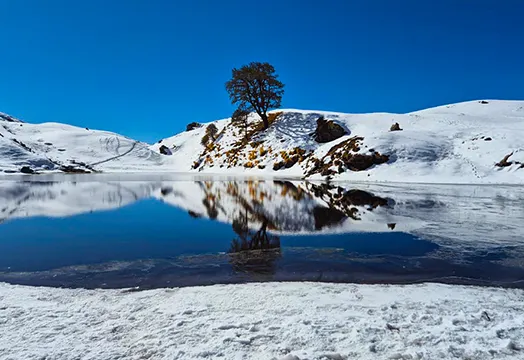

Winter is almost here, and you're still planning on following the same routine. Sitting in a blanket, sipping on hot tea, and binge-watching your favorite movies.
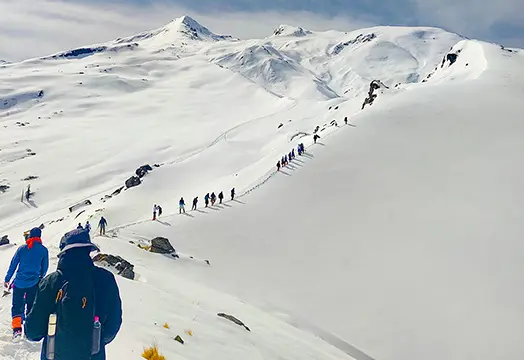
Every season in the Himalayas has its own way of showing off the mountains, but winter reveals a different side of them, one that feels like a whole new world.
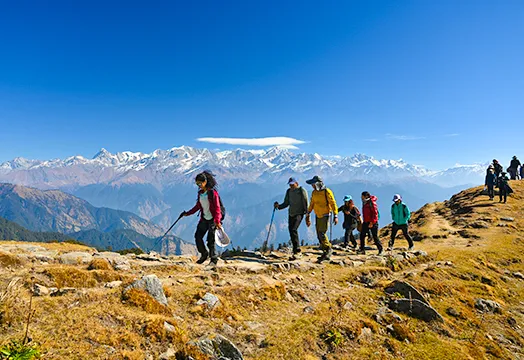
As monsoon season comes to an end, it washes away all the dust and haze that remains in the valleys throughout the summer, and then?
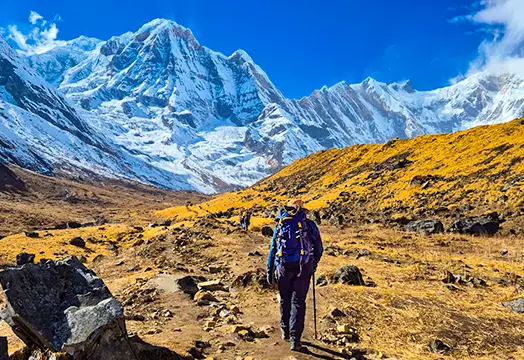
Located in north-central Nepal's Gandaki Province, Annapurna is the world's 10th highest and one of the most challenging mountains on the planet. Its height rises to 26,545 feet. Yet reaching Annapurna base camp is a far more accessible adventure, drawing trekkers from around the world every single season.
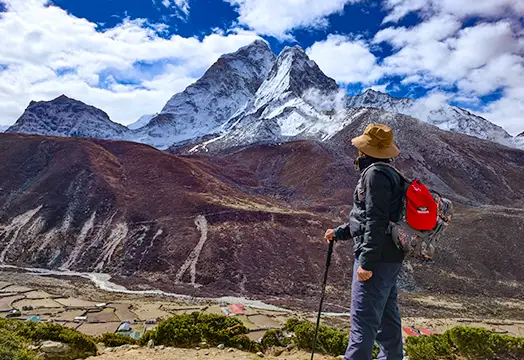
What does it feel like to stand on a trail where the mountain before you is worshipped as a goddess? For most of us, it's an adventure. But for the local communities who live in its shadow, it's something closer to faith. That mountain is Everest.

Over the last few decades, trekking has driven a profound shift: rural economies and local communities are reaping direct and indirect benefits.

Hiking teaches you to fall in love with the outdoors. Trekking teaches you to endure it. Mountaineering teaches you to respect it completely.

There are only a handful of Himalayan regions that hold profound spiritual significance as well as immense natural beauty. The Gaumukh Tapovan trek is one such destination that wonderfully combines adventure, divinity, and extraordinary Himalayan beauty.

What if a trek could leave you with more questions than answers? What if, after days of trekking, you reach a lake filled with centuries-old human skeletons?

Every year, every season reveals a new side of the Himalayan range. Be it trails covered in colourful rhododendrons or trails transformed into a lush green paradise, each season offers some of the most mesmerizing views of the Himalayas.
21 Oct 2026
19 Oct 2026
18 Oct 2026
17 Oct 2026
16 Oct 2026
15 Oct 2026
14 Oct 2026
13 Oct 2026
12 Oct 2026
11 Oct 2026