What Do These Trekking Terms Mean?
Every field has its own so-called technical or standard terms. These terms make it easy to communicate overcoming the barriers of language. Trekking has become a whole new field of adventure world. This activity also has some idioms, which every trekker must be aware of. We have listed some commonly used trekking terms, they are...
Firstly let's break the myth that hiking is the same as trekking or even trekking the same as mountaineering. This is the common misunderstanding, although the common thing amongst all is walking in nature.
- Hiking: This is the least dangerous form of walking in the mountains involving 3-4 hours of day-long activity. Usually being referred to as one-day hikes, the trail might not be difficult and it does not require the use of any technical equipment.
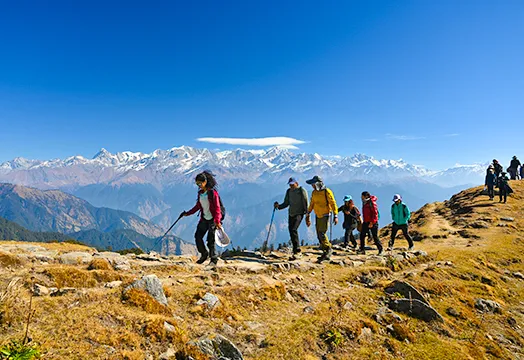
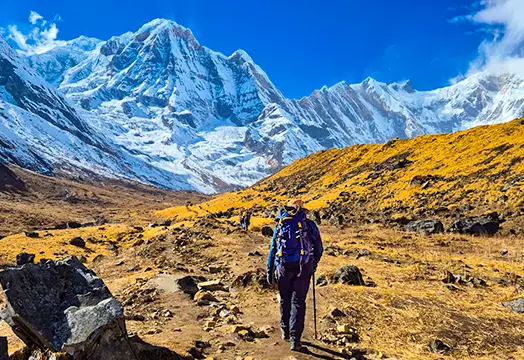
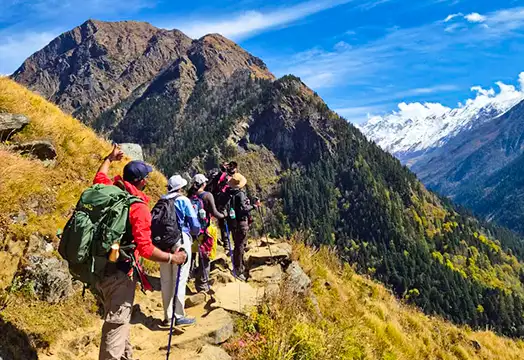
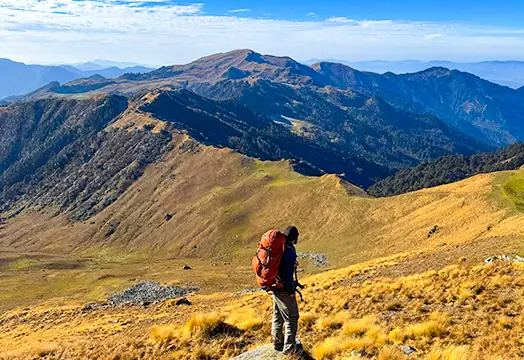
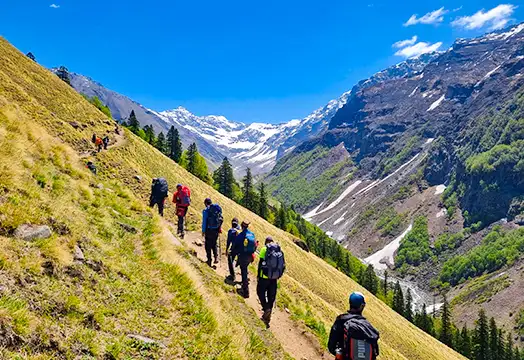
- Trekking: This is more difficult or dangerous than hiking as it involves staying in the mountains for 2 or more days. Typically, trekkers halt at night and continue walking the next, until they reach the top and then back.
- Mountaineering: It usually begins where the trekking ends, to climb really high peaks involving technical climbs and equipment. It is the most dangerous of all the 3 activities. Skills and prior technical knowledge are required.
Now, that we are clear about what is trekking, let's see what the terminologies of the trekking world are. For better understanding, we have divided them into categories of where on the trek one can encounter them.
Trek Clothing

- Balaclava/Buff/Neck Gaiter: It is like a mask that has an opening for the eyes, nose, and mouth. It is worn like a monkey cap coving your face, ears, and neck. It is worn to prevent harsh sun and cold. Buff / Neck gaiter is a multipurpose clothing gear that can be used in a number of styles to cover your head, face, neck, and ears. It is like a big round band. They come in both woolen and normal styles.
- Thermal: They form the innermost layer that is made of woolen and synthetic material. They are close to the body and prevent the body heat from being out.
- Dry Fit Clothes: These are a line of clothing that is light and dry quickly when wet due to sweat, snow, or rain. They are preferred over cotton clothes that do not dry quickly and get heavier when wet.
- Fleece: It is mid layer worn over your clothes and under other thick layers of warm jackets. They are known for being light weight and compact.
- Windproof: As the name suggests they prevent the wind-chill factor when winds blow. They are lightweight just like a rain jacket. They act as outermost clothing most of the time. They are also called the Soft-shell of clothing.
- Waterproof: As the name suggests it is the outermost layer when it is raining or snowing. It is lightweight and serves only the purpose of preventing getting wet. They are also called hard shells of clothing.
- Poncho: It is a piece of clothing that is used to cover ourselves in rain. It is worn over the head that covers the backpack and is long till the knee.
- Down Jacket: It is a jacket made with feathers for extreme cold weather. They are mainly used for winter treks, where the temperatures are negative. It acts as the outermost layer of your clothing (without a windcheater or waterproof layer)
- Gloves: They are worn on hands to protect from sun or cold. Waterproof gloves are used in snow or in rain. Gloves with fleece are used in low temperatures.
- Hand/Foot Warmers: They are lined with boots or gloves to keep your hands and feet warmer for long hours. They are used in extreme cold conditions, preferably for winter treks.
Other Basic Gear

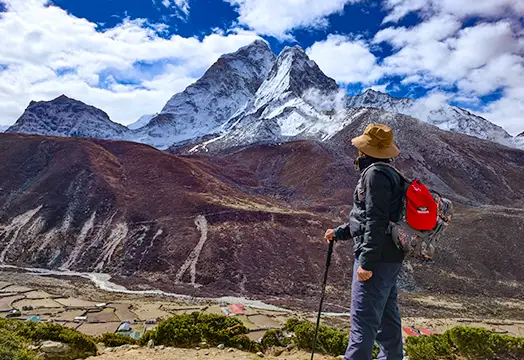
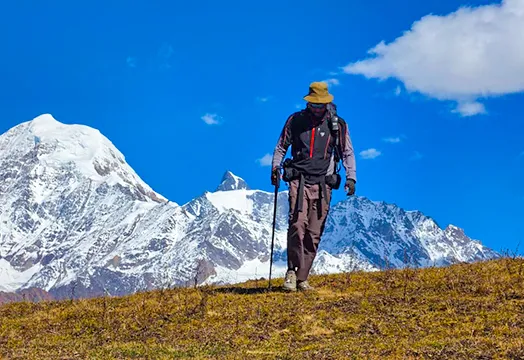
- Trekking pole/Hiking pole: It is an adjustable, shock-absorbent stick to assist while walking on rough terrain. It can be used in snow, ice, or muddy trails.
- Backpack: It is a bag meant for carrying heavy weight and for long hours on the back. It has straps, and padding for the shoulder and back and comes in various sizes.
- Head Torch: Quite clearly from its name, It is like a headlight worn on the forehead at night.
- Garbage bag: A small hand purse like a bag that is used to collect all your garbage.
- Hydration Bag: Or camel water bag, is a foldable pouch with a long pipe that runs from your backpack to your mouth. It allows drinking water without the need to remove the bottle from your bag.
- Hiking boots/Hiking shoes: These are shoes made specially to serve the purpose of long day walking in rough terrain. They are high ankle, waterproof/water-resistant, with great grip, and hard soles to protect your foot while trekking.
Advanced Equipment For Safety

- Crampons: It is a device that is worn on shoes to increase grip on hard snow or ice while walking. It has spikes that fix in the snow with body weight.
- Micro spike: It is also similar to crampons only difference is that they are used for loose snow.
- Gumboots: They are leather boots to the knee to protect your leg from freezing due to cold water. They are mostly used in Chadar trek where there is a possibility that Chadar might break and your leg will be in the icy water.
- Gaiter: It is worn when there is enough snow to prevent the snow particles from entering your shoes. When used along with crampons they prevent getting hurt from the spikes of another leg.
- Rope up: It is a technique where 3-4 trekkers are attached to the rope while crossing over risky patches. It helps to secure the fall of a member. If one member falls other members will stop that fall.
- Seat Harness: It is an item that is used for safety where a rope is passed through it. While roping up every trekker wears a harness and then the rope is passed through it.
- Carabiner: It is safety equipment that acts as a lock so that the rope and the harness are locked together. It is also called a Connector because it connects many components.
- Ice Axe: It is an axe used by climbers/trekkers/mountaineers. It is used by the route openers, to break the ice into a trail, so that foot gets a proper grip. During our treks, local guides or Trek Leaders break the ice and trekkers follow the same route.
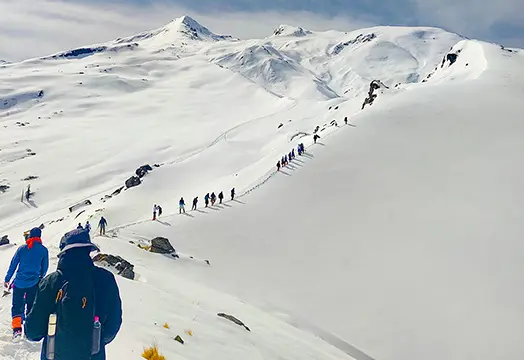
Rope up technique is usually used on snow ridges (Pangarchulla trek) or walking on glaciers (Stok Kangri, Kang Yatse II)
Camping Site

These are some terms you hear when you are on the camping site of a trek,
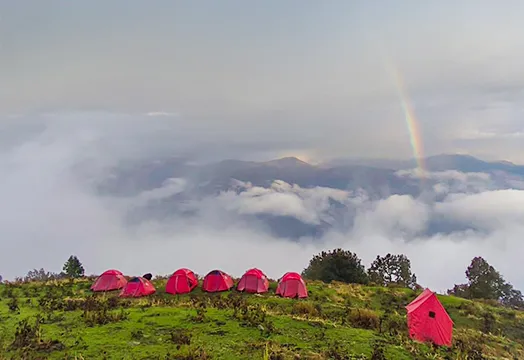
- Tents: As we know it is a temporary shelter used for a few days halt. Tents are lightweight, made of waterproof material, and easy to set up. They come in various sizes from single men to big tents for 20-25 people. Typically, on a Himalayan trek, you can find these type of tents,
- Kitchen tent: It is a tent made of a thicker outer cover, where the cook prepares delicious food for us. It can occupy 4-5 people.
- Dining tent: Much bigger than kitchen tent, they can 20-30 people at one time. It is a tent where you hang out with others while having food.
- Toilet tent: The smallest in size, which fits only one, standing man. As the name suggests it acts as the luxurious dry toilets of the mountains.
- Sleeping bag: It is a bag that fits a human being, in which one can rest and stay warm. Most of the sleeping bags are 6.5 feet in height. They come in various temperatures to provide warmth for various altitudes.
- Sleeping mat: It is a mat made of foam-like waterproof and lightweight material. It is laid on the tent surface first to act as an insulator and prevent heat loss from the floor/ground.
- Liner: It is made of a fleece material which is lined as the inner layer of the sleeping. It provides extra insulation.
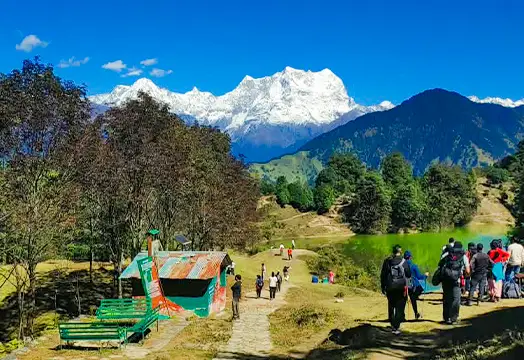
- Base camp: The first campsite or the first halt on the trek is called the base camp. Most of the base camps are the villages where the trekkers arrive first and then start the trek. It is the place where we collect all the things needed for the upcoming trek. It acts as the temporary storage place for everything.
- Summit camp: The last campsite of the trek, which is the closest to the summit is the summit camp. After summit camp, there is no higher camping and you just return from the summit.
- Advanced Base Camp: It is usually the next campsite after the base camp. It acts as a second base where more stuff can be loaded or our team can halt for many days.
Natural Mountain Terms
Enough of the materialistic things now, you will find the following natural formations while you walk through the wonderland.
- Scree: Small, loose, broken rocks, that keep sliding down once you step on them.
- Cairn: It is a man-made structure formed by laying stones one above the other. They are used to mark the route and give directions. These cairns are usually found next to prayer flags in Goechala or Markha valley treks.
- Summit/Tibba: It is the highest point of the mountain. The summit marks the end of the trail and we return from this point.
- Pass (called 'La'): It is a traverse way to get from one mountain to the other. Many of the treks end up at high passes like Goecha La, Rohtang pass, Indrahar pass, etc.
- Col: A gap between two high peaks or a passway that separates two mountains. The most popular col is South Col on the Mt. Everest. It is not the same as the past. It is only a drop point on the big mountain range, which lies between two mountains.
- Ridge: It is a long line extremely pointed (hardly one person can stand on it) that leads to a mountaintop. It is again not same like col, col is not as sharp as the ridge. The ridgeline is the highest line formed by the entire mountain range. For example, crossing the ridge to the Pangarchulla peak on the Pangarchulla trek.
- Massif: Two peaks that do not stand out and are part of one mountain range are called Massif. A great example is Bandarponch massif; the main Bandarpoonch and Kalanag do not stand and separate mountains only their high point is seen.
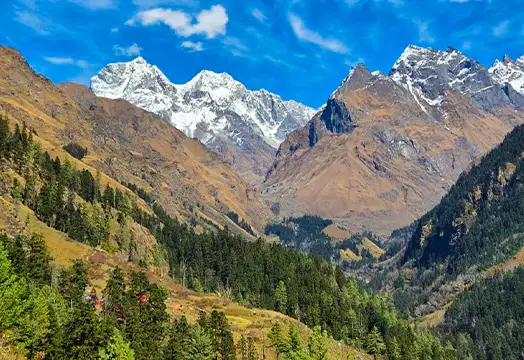
- Tree line: The highest point after which no trees be seen is the tree line. It marks the beginning of the snow region and the end of vegetation on the mountain. Bhojpatra trees usually form the last lining.
- Snowline: It is the height above which the snow remains on the peak for 12 months. The snow does not melt even in summer.
- Glacier: It is the ice in motion, where the ice is flowing down. The ice is formed by the compaction of snow, which is moving downwards about the slope and gravity. Glaciers are seen after the tree line in the mountains.
- Moraines: Loose, small, rocks or boulders that are seen just before the glacier. It is a collection of the entire residue that flows along with glacier and remains back when the glacier melts. It can be seen in all of the glacier treks.
- Glacier Streams: When the glacier melts streams are flown downwards, these are called glacial streams. The names of rivers after the glacier names are the glacial streams, like. Pindari river from Pindari glacier.
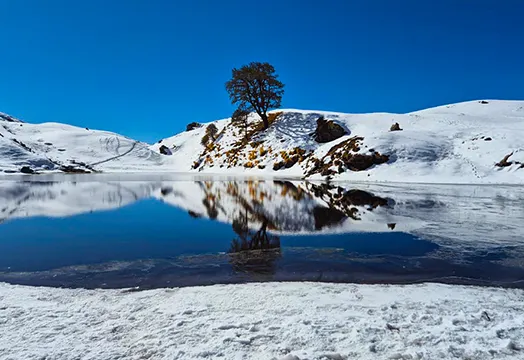
- Glacial lake: Just like rivers the lakes formed due to water from the glacier form glacial lakes. Glacial lakes are located higher up, just below the mountains. For example, Kareri Lake.
- Hanging glacier: The small glaciers which are separated from the main glacier on the mountain slopes.
- Crevasse: Cracks in the glacier are called crevasses. These can be of any width and depth. They keep changing their position depending on the motion of the glacier. Many times they are covered with snow and hence are difficult to locate. Crevasse crossing requires the technique of rope up as mentioned above.
- Cornice: An overhang of ice/snow is called cornice. Walking over a cornice, one has to be extremely careful, the cornice may break and cause an avalanche.
- Verglas: A thin coating of transparent ice on any object is called Verglas. During winter treks you can frequently find stones having lined with ice ie verglas.
- Ice fall: When big lumps of ice keep falling due to changes underneath them is called icefall. The world-famous Khumbu Icefall is the best example. In the icefall, the positions or the pattern of the ice pillars keep changing now and then. Due to constant changes deep inside the layer of ice at the top keeps falling and moving.
- Snow Bridge: It is an ice bridge that is formed on crevasses.
- Avalanche: When huge slabs or amounts of snow slide down a slope causing disasters. Avalanches are extremely dreadful.
- Mules/Porters: Mules are animals that carry loads filled with items required for the trek. Porters are locals or people living at high altitudes who carry loads or backpacks of trekkers.