
27 November 2019
Buran-Ghati - Going up is optional, coming down is mandatory
 Day (-1): Back to basics
The closer you get to the start of vacations, the higher the work load becomes. After a hurried day’s packing of only the bare necessities (forgot the toilet paper, again), I departed Bangalore hoping the flight would not be delayed.
There were numerous reports and articles for the past few weeks about mishaps that had happened on the same trek. Maybe, we might not be able to reach the summit. Maybe, we might not able to proceed even beyond the base camp.
This trip was finalized after multiple, multiple iterations and months of planning put together. There was no stepping back, come what may.

Location: Shimla
Elevation: 7,400 ft
Proceeded to catch a train from Delhi to Kalka. The weather was hot and humid, the landscape bleak. Whatever multiple layers of clothing worn for the trip were quickly shedded and shoved deep into the trek bags.
Kalka is small town on the borders of Harayana and serves as a gateway to the Himalayas. On reaching the train station a little before high noon, we booked a non-ac cab (not a great idea, in retrospect) and started our journey to Shimla.
After 4 hour drive we reached the Queen of Hills just in time to catch the sunset.
Shimla. Was it crowded ? Yes.
More crowded than a regular day on BTM, Bangalore ? No.
Did that make me happy? Extremely.
Home to a number of structure styled in a Neo Gothic architecture dating all the way back to the colonial era, this was somewhat of an eye candy for me. Architecture and mountains hand in hand, it seemed like a nice place to explore if there was more time. After regrouping with another trek mate, we proceeded to the homestay for a much needed nap.

Location: Janglik
Elivation: 9,200ft
We departed the homestay at early hours of the day and met the rest of the group.
23 souls.
The age group ranging from 24 years (your’s truly) to 65 years old.
 Few were first timers (Poncho nahi leke aaya types) . More than a few had done a number of high altitude expeditions.
We were divided into 4 SUV’s and proceeded to Janglik, our first base camp. The road was surprisingly smooth for a large part of the journey, in large contrast to my drives to other base camps. Quite picturesque too.
The drive follows the turquoise waters of the Pabbar river driving past picturesque villages with forest oaks and pine covering the valley. The last few miles to the village was an absolute dirt track and we reached Janglik just before nightfall.
We assembled in the dining room after a quick fresh up. Introductions were shared. Majority were from Maharashtra (no surprises there, almost all my treks were of a similar group; me being the only ‘boy from down south’ running around in places far different from his native conditions).
Our trek leader and the guides gave us the outlook: The weather forecast was bad. If the rains persist, there would be no option but to turn back and return to Janglik. The past few batches were successful in doing the summit so we had some hope that the same would happen for us.
Praying for clear skies for the entire trip, I tucked into the sleeping bag.
P.s: I’m not saying the prayers went unanswered, but the Guy upstairs didn’t exactly make it easy. Bad karma on myu part I guess.
 Day2: From God’s perspective/Bo Burnham
Location: Dayara
Elevation: 11,075 ft.
Clear skies. Sunny day. The birds were chirping and all was happy.
In the distance, we could see small slivers of snow on the peaks.
Breakfast served, bags were packed and we embarked ahead to the first base camp.
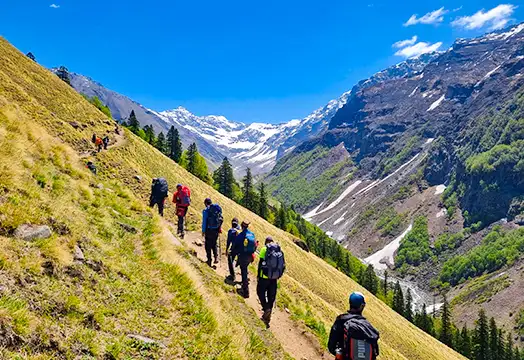
The road was picturesque and scenic. From a few viewpoints, you could see small hamlets nestled in the valley. After around an hour’s walk, a flat landing appeared giving an unobstructed view of the mountains ahead. A solitary tent pitched by a shepherd was the only evidence of a man made settlement in the otherwise untouched realm of peace and tranquil. After a small break, we set upon again under the shade of the forest, babbling streams running around every few minutes.
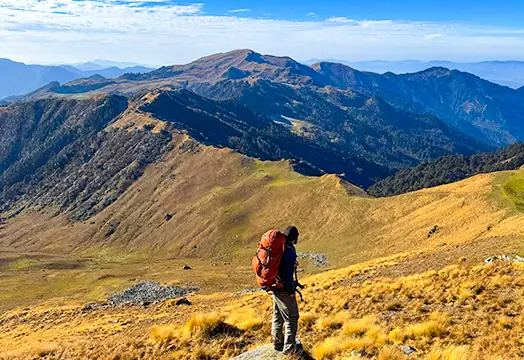
A few rocky patches and a small river crossing later, the landscape expanded from a thin trail to a vast expanse of meadows straight out a Lord of the Rings movie. The change in scenery was stupendous. With small green hillocks on the left and snowy peaks on the right, this was truly a sight to behold.
There was one major difference between this and the other Himalayan treks I had been to. Usually one can see the snowy peaks at a distance…or putting it in simpler terms, you could see around 2-3 peaks at the same time without having the need to turn your head.
Not this place though.
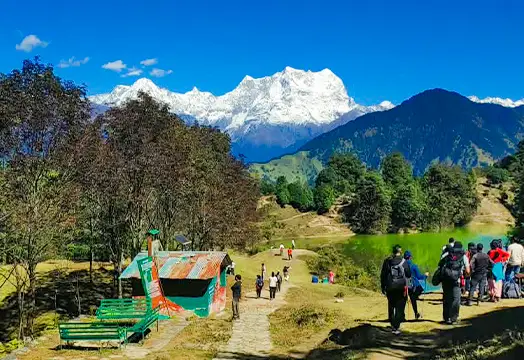
These magnificent summits were so close to us that to see the top required us to tilt our heads backwards.
This is something even if I tried to put into words or a picture, cannot do justice until seen with our own eyes.
 Day 3: Thunder/imagine Dragons
Location: Dayara
Elevation: 11,075 ft.
Rainstorms. And thunder. We usually associate it with power cuts, traffic jams, chai and pakoda.
But that’s the city. When thunder strikes, we are usually cocooned between 4 walls. a nice warm blanket and cup of hot chocolate. Here in the mountains, we were in particular trying our best to keep the water out of our tents.
The day started with the team taking the decision not to go ahead to the next camp due to the haphazard rain showers. So not much activity this day than just exploring the nearby hillocks.
Day 4: Fold or raise?

Location: Lithum
Elevation: 11,800 ft.
The fellowship of Ponchos had disbanded.
Half the group had decided to head back to Janglik. The other half to icy Morodor. Given the weather conditions, we were still in doubt if we would be able to reach the summit.
The rains had made the landscape lush and green. And extremely muddy and slippery. The trail took us through the dark depths of dense pine forests and gushing streams. Our excursion to <b>Chandranahan Lake</b> was cancelled due to the overstay at Dayara Bugyal Trek. Even so, the Lithum camp overlooked astounding views on all the sides.
This was the last time we would be camping on a grass meadow before the summit, so I made best use of the day by being nicely wrapped up like a burrito.
 Day 5: Calm before the storm / Fall out boys
Location: Dhunda
Altitude: 11,737 ft.
Follow the shepherd’s trail. Don’t be the sheep.
The skies were clear and we had the go ahead to proceed. The day started with crossing the Pabbar stream. The trek guides were extremely dexterous in wading the stream and placing rocks for a makeshift bridge to allow the rest of us to cross the same.
After a short while, the green grasslands of Litham slowly receded and we got our first view of the Buran Ghati Trek. The trail slowly turned into a path of hard ice. Joy flashed on the faces for those seeing snow for the first time. After the events of the last few days, glee wasn’t exactly my first reaction. And for good reason too.
The Pabbar river wasn’t the slow bubbling brook we had witnessed in the initial days of the trek. Now as we walked the trail, we could hear the mighty roar of the river on the side an the treeline slowly disappearing as we moved ahead.
After a few hours of trying not to slip while walking, we came to a point where we had to travel progress an ice bridge. An ice bridge is a frozen natural structure of thin ice formed over rivers, seas, bays and lake surfaces. They facilitate migration of animals or people over a water body.
As luck would have it, ten steps on the bridge, a panel of ice breaks and my leg disappears. Not a pleasant feeling. Pulling my leg out, I take a peek inside the hole. Darkness.
Proceeding a few more hours of climb, we finally reached the alpine camp of Dhunda. Snow capped mountains flanked the camp on all the sides. Just an hour post we reached the camp, the weather, already cloudy earlier in the day, took a turn for the worse. Light snowfall was followed by a heavy hail and cold strong winds.
As we sat huddled in the dinner tent, with the howling wind and the hail pelting the sides, a singular thought ran through all our minds: It would be a real shame if we had to head back after coming this far.
Day 6: All in

Location: Buran Pass
Altitude: 15,000 ft
The skies had cleared. The window was open.
Strapping the gaiters and fitting the spikes to the shoes, we assembled.
Around half past two, we began the ascent in moonlight.
Everything earlier to this point seemed like a cakewalk. The gradient was so high that it was impossible to climb straight ahead, rather in a zig-zag manner. We could spot other groups scaling the same peak from different routes. Putting aside the fatigue and drowsiness, this spectacle was gorgeous. Small clusters of lights moving up the mountain, like someone had placed tiny LEDS on a colony of ants climbing a ant hill. Just this one part of the trek will forever be etched in my memories.
Around five, we reached the summit… just when the first rays of sunlight were visible on the horizon. And the first sounds of phone notifications after 4 days.
I made a quick call to parents:
“HOUSTON, SANDMAN HERE, OVER.
BURAN- 11 HAS SUCCESSFULLY SUMMITED, OVER”
In retrospect, that would have been a cool broadcast, but it went more along the lines of:
“hi parents. Still alive, very tired. can’t wait to get back home”
As we gazed down from the summit, we were soon asked to rappel down the 100 m ice wall. As fate loves to make my life difficult, my leg got stuck in the snow half way down. So there I was, hanging at a 90 degree angle. This would have been fine had I not made the mistake of looking down. Just a small peak was enough. Thankfully, one ot the guides below understood and dug out the snow to free my foot.
 After the steep drop, we had to descend through a series of snow slides. We lost about 3000 ft altitude in a matter of 2 hours through this. Finally out of the snow line, we descended into nice lush green valley. At around 4 in the afternoon, we reached the final camp of the trek – Munirang
After more than 12 hours of continuous ascent and descents, absolutely no energy left. Proceeded to pass out in the tent accordingly.
Day 7: Carry you home / James Blunt

Location: Barua
Elevation: 6,700 ft
I had never been so happy to see green again.
The trail was lined with orchards and shrubs. Slowly signs of civilization appeared. A carefully maintained garden here. A solitary wooden house there. Fences and electric poles.
The best part of the descent was the apple trees. Young, slightly ripe fruits hung from the trees. Extremely tasty, even after the trek guide warned us not to pick them in front of the locals. We reached the village just after noon and transport was arranged to Shimla.
Like every other trek, there was a tinge of sadness on leaving this beautiful place. But at that point, I would have killed for a hot water bath and some change of clothes.
Epilogue:
Firstly, thanks to Arathi, Chitra and Sukeerat for your motivation and support both before and after the trek.
Thanks Vivek Potphode for being the best tent roomie till date. without your help, I would have been more than inclined to head back to Janglik on Day 2.
Thanks to summiteers and fellow Mafias: Vivek Pothpode (Mountain Goat), Chitra Chandru (Laughing Riot), Mrunmaij Ghatpande (Truthsayer), Altair Haque, Kumar S, Rinki S, T anusree Sahu, Ekka & Tarun (Changu & Mangu) and Lalita Deshpande.
Thanks to TTH and all the trek leads, guide and m
27 November 2019

Trek updates, stories & mountain insights.
Tips and insights for every trekker.
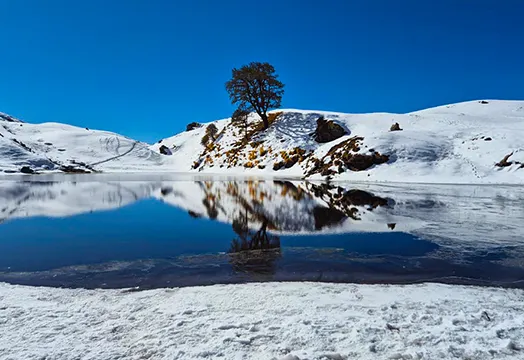

Winter is almost here, and you're still planning on following the same routine. Sitting in a blanket, sipping on hot tea, and binge-watching your favorite movies.
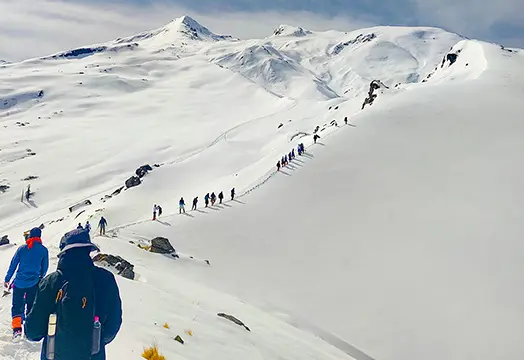
Every season in the Himalayas has its own way of showing off the mountains, but winter reveals a different side of them, one that feels like a whole new world.
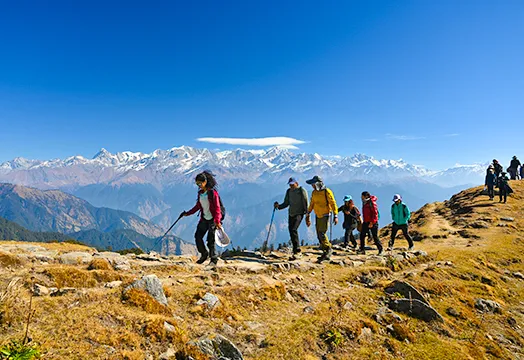
As monsoon season comes to an end, it washes away all the dust and haze that remains in the valleys throughout the summer, and then?
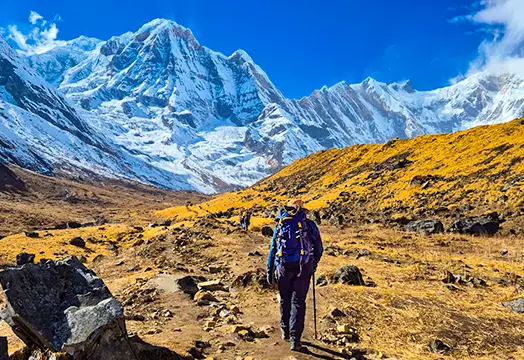
Located in north-central Nepal's Gandaki Province, Annapurna is the world's 10th highest and one of the most challenging mountains on the planet. Its height rises to 26,545 feet. Yet reaching Annapurna base camp is a far more accessible adventure, drawing trekkers from around the world every single season.
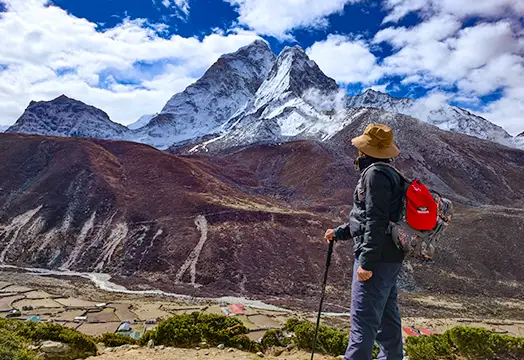
What does it feel like to stand on a trail where the mountain before you is worshipped as a goddess? For most of us, it's an adventure. But for the local communities who live in its shadow, it's something closer to faith. That mountain is Everest.

Over the last few decades, trekking has driven a profound shift: rural economies and local communities are reaping direct and indirect benefits.

Hiking teaches you to fall in love with the outdoors. Trekking teaches you to endure it. Mountaineering teaches you to respect it completely.

There are only a handful of Himalayan regions that hold profound spiritual significance as well as immense natural beauty. The Gaumukh Tapovan trek is one such destination that wonderfully combines adventure, divinity, and extraordinary Himalayan beauty.

What if a trek could leave you with more questions than answers? What if, after days of trekking, you reach a lake filled with centuries-old human skeletons?

Every year, every season reveals a new side of the Himalayan range. Be it trails covered in colourful rhododendrons or trails transformed into a lush green paradise, each season offers some of the most mesmerizing views of the Himalayas.
26 Oct 2026
25 Oct 2026
24 Oct 2026
23 Oct 2026
22 Oct 2026
21 Oct 2026
19 Oct 2026
18 Oct 2026
17 Oct 2026
16 Oct 2026