
7 April 2026

Located deep in the untouched wilderness of the Chamoli district of Uttarakhand, the Chenap Bugyal Trek is an incredible Himalayan adventure for avid trekkers and nature lovers. It’s a 5-day journey and considered a moderate trek, suitable for beginners with basic fitness as well as experienced trekkers.
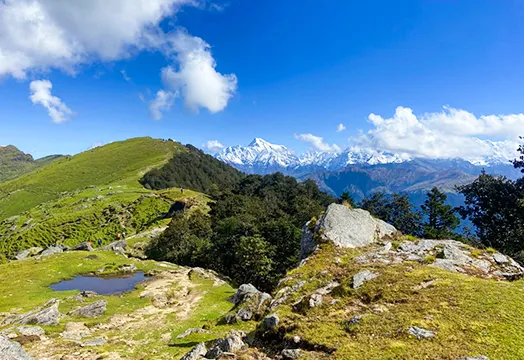
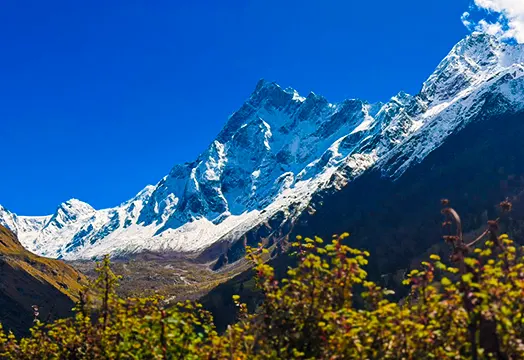
Rising to an elevation of approximately 13,000 feet, Chenap Valley houses stunningly diverse landscapes, including alpine meadows, breathtaking wildflowers, thick forests of oak and rhododendron, and spectacular visuals of surrounding Himalayan peaks.
One of the most prominent highlights of the Chenap Bugyal Trek is its insanely diverse varieties of wild flowers and orchids. Even being rich in vibrant wildflowers, this trek is relatively less explored and largely pristine. Chenap Valley is also referred to as a “mini valley of flowers” because of its brimming wildflower meadows. Its raw beauty and stunningly diverse landscapes make it an ideal destination for photography enthusiasts, birdwatchers, and nature lovers.
The trail winds through enchanting Himalayan villages and breathtaking river valleys in the distance. On this route, you can effortlessly witness local shepherds tend their grazing cattle, while the villagers welcome you with warm hospitality. From golden sunrises lighting up the peaks to quiet, starlit nights in vast alpine meadows, Chenap Valley offers a truly magical escape into nature.
Chenap Bugyal is part of the revered Garhwal Himalayas, a sacred region long considered the abode of the gods (Dev Bhoomi). Its nearby areas are closely associated with Lord Shiva, Lord Vishnu, and the local Goddess Nanda Devi. This makes the entire landscape spiritually significant. It is believed that ancient rishis and sages used remote Himalayan valleys like Chenap for meditation and penance. Even today, the valley seems to reflect that same meditative energy. Furthermore, Chenap Bugyal has been part of ancient Himalayan trade and pilgrimage routes.

Day 1: Joshimath to Thaing Village
The point that leads to the Thaing village is a one-and-a-half-hour drive from Joshimath. This short journey is so exciting that it gives you chills like a roller coaster ride. Just as you cross the Marwari Bridge, the asphalt road ends, and a dry-weather pathway begins. Just take a left turn on this dirt road and cross JP Vishnuprayag hydroelectric power plant. From here, the path narrows dramatically. With steep drops on one side and towering mountains above, the route winds beneath rocky overhangs and scattered boulders. It will remind you of the wavy road between Reckong Peo and Spiti Valley that look like a scalpel was used to carve them on the mountain.
Even this dirt track comes to an end after riding for half an hour. Right then, you’ll come across a small dabha where you can sip a hot cup of tea. Interestingly, from here, two campsites are clearly visible that are situated on top of their respective ridges.
To get on the trekking trail, you have to descend towards an incomplete bridge. From there, the path ascends in a winding fashion. As you move ahead on the trail, you’d feel as if you were embraced from all sides by lush, green, steep mountains. The soothing sound of a jetting mountain stream will unfailingly capture your attention.
Along the way, you may notice smaller trails branching off toward shepherd huts and a village—ignore these and stay on the main trail heading north. In approximately 40 minutes, a water pipe will be available where you can replenish your bottles. Across the valley to your right, snow-laden peaks come into view. Roughly 20 minutes further, you’ll reach a small hut—an ideal place to rest.
Thaing is a small village consisting of 200-240 families, interspersed in four groups along the mountainside. The houses share a similar architectural style, blending seamlessly into the landscape. Get up on any roof, and you have a panoramic view of Nanda Devi majestically standing in the distance. From here, you can also see the trail for the next day’s climb. As evening sets in, the air grows colder, and the winds pick up. Take time to mingle with the people before going to sleep.
Day 2: Thaing to Dhar Khadak
From any house in Thaing village, look toward the mountains ahead and locate the ridge to the northeast—that’s your destination for the day.
Start by walking through the village northwards. For the first 30 minutes, follow a gentle trail that winds upward between houses. Soon, you’ll reach the edge of the village, marked by a small hut often used by locals as a resting point. From here, the trail descends briefly. You will see a metal bridge over a stream as you descend--this leads to the village of Geewani.
One of the perks of trekking through these villages is experiencing the local culture, meeting people, and walking past vibrant fields. You may recognize crops like ramdana (amaranth), rajma, maize, and orchards of apples, oranges, and apricots.
The path leading to the Geewani village climbs through a forested section. In a few minutes, you will come to a small nala (stream). Cross it, and you’ll find two paths—one descending and one ascending. Take the uphill trail. From here, the path becomes cemented and continues in a zigzag climb. After another 15 minutes, you’ll spot the first house of Geewani. Here you can have some rest and replenish your water bottles.
From this house, follow the trail that goes straight up. Soon, the trail turns rocky, with thick bushes on both sides. The path continues with a steep rise for approximately 10 minutes, and when the landscape opens up, you get an expansive view of Thaing and Joshimath on your right. On a clear day, you may even see Nanda Devi standing tall in the distance.
Another 10 minutes ahead, the trail becomes narrower and steeper; at times, you feel like you’re walking along the edge of the mountain. You will find a big boulder on the right after some 15 minutes and take a halt. Dhar Khadak is still one hour away.
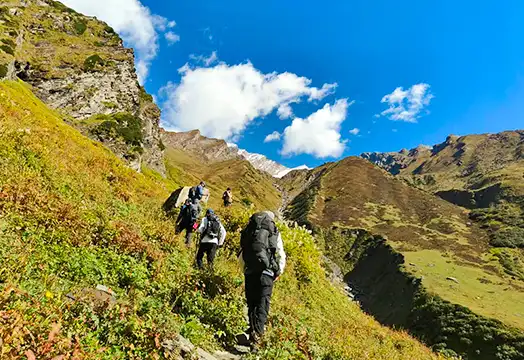
Keep to the same path. Within 10 minutes, the slope steepens further, the ground turns muddier, and the path narrows again. This section of the trek is probably the most challenging 30-minute walk along a majorly barren terrain that also has some unique wild vegetation.
Keep to the same path. Within 10 minutes, the slope steepens further, the ground turns muddier, and the path narrows again. It is a difficult 30-minute walk to a barren area with some wild vegetation. There is a faint path across this patch—keep on it for about 5 minutes, and you come back to the main path.
You’ve now reached the ridge you spotted earlier from Thaing. From here, the trail turns left. After about 10 minutes, you’ll arrive at the beautiful meadow of Dhar Khadak—an open, flower-abundant expanse. The water source, however, lies about 500 meters in the opposite direction. As you settle in, take a moment to appreciate the simple joys—stepping out of your tent to see Nanda Devi peeking through the clouds, framed by a canvas of colorful wildflowers.
Day 3: Dhar Khadak to Chenap Top
The trek today is the most challenging yet equally rewarding one. From Dhar Khadak, you need to walk along the ridge that goes west. This route will take you through dense forests of oak and rhododendron. These woods are so thick that even a sunny day appears like a gloomy evening. In many sections, the forest floor is carpeted with dry leaves and mud, and the trail winds quietly through it with birdsongs echoing in the backdrop.
The trail ascends gradually for the first 20 minutes, then it flattens out, and you’ll walk on this stretch for a few minutes. This ridge has steep drops on both sides. From here, the trail climbs steadily for around half an hour before it descends slightly. This section contains some large boulders, and you’ll have to navigate around them. There are some scenic spots on the way where you can pause and take a breath.
From this place, the climb becomes way steeper. This is somewhat of a shadowy area, and the fusion of mud and dry leaves can make the path slippery, especially after rain. Tread carefully and continue moving towards the west. This part of the trek entails a half-hour hard climb, and then you’ll encounter another cluster of boulders. After pushing through for a few more minutes, you can spot Chenap Top at the altitude. Behind you, the Nanda Devi peak is still shining majestically.
This final ascent is narrower, steeper, and more exposed, and after climbing on this stretch for another 30 minutes, you’ll reach the top of Chenap Bugyal. From here, the trail softens, and the landscape transforms into a vibrant meadow dotted with wildflowers. After walking for another half an hour, the bugyal becomes even more breathtakingly stunning.
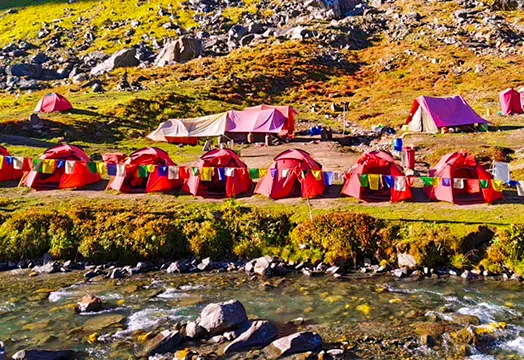
A small ridge from here takes you right into the heart of the meadow. Within almost no time, you are surrounded by beautiful flowers in full bloom. Take a few moments to ingest this incredible scenery and soak in the beauty around you. Since the entire meadow is carpeted by wildflowers, you have to find barren patches to set the tent. Water is available from small streams nearby.
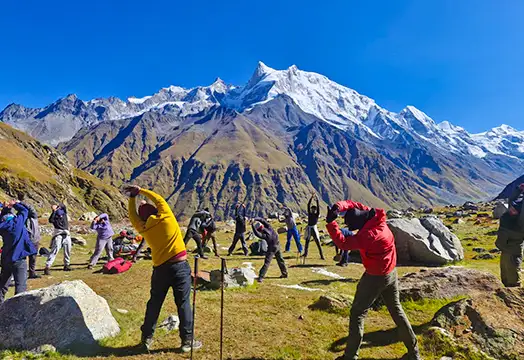
From Chenap Bugyal, you can witness a stunning panorama that includes Hathi Parbat, Nanda Devi, Trishul I, and Nanda Ghunti, all in a single frame. From this spot, the sunrise looks really wonderful – so, don’t miss it. As the first rays of sunlight shower the Nanda Devi peak, the entire horizon glows like gold.
Day 4: Chenap Campsite to Thaing
Today, you’ll retrace your journey back to Thaing village. Starting early from the campsite, the morning is often wrapped in soft clouds drifting across the bugyal, giving the vast alpine meadow a calm, almost dreamlike feel.
As you start to descend, the vast expanse of the grasslands of Chenap Bugyal gradually yields to winding paths that bring you back to the tree line.
As you move towards Thaing village, the trees become less dense, and the traces of civilization gradually come back into view. You will witness fields, wooden houses, and village people indulging in their chores.
Though it is a descent, the journey carries its own charm. Retracing your steps allows you to notice details you may have missed earlier, making the walk from Chenap Bugyal to Thaing not just a return, but a reflective and memorable part of the trek.
Day 5: Thaing to Joshimath
The drive from Thaing village back to Joshimath is the final leg of your Chenap Bugyal trek. On this scenic return, while retracing your steps, you’ll deeply appreciate the landscapes you’ve just explored.
The narrow mountain road takes you through quaint villages and terraced fields, where daily life is going on sluggishly. The familiar route feels different now—what once sparked excitement now carries a quiet sense of reflection on the way back.
Along the way, once again, you come across small streams, pass roadside shrines, and circular bends that reveal stunning views of valleys below. The gentle sound of flowing water and the rhythm of the winding road offer a calming contrast to the effort of the trek you’ve just completed.
As you approach Joshimath, the roads widen and grow busier, and the quiet solitude of the mountains slowly gives way to the lively rhythm of the town. So, carrying these unforgettable memories of the Chenap Bugyak Trek is an incredible experience altogether.

The ideal time to do the Chenap Bugyal Trek is from April to June and September to October. In spring/summer, the weather is relatively stable, with clear skies and moderate temperatures, making trekking conditions comfortable. The meadows seem to awaken with fresh greenery and blooming wildflowers. The remaining snow at higher altitudes adds to the scenic beauty.
After the monsoon season, the landscapes become extremely rewarding. The air becomes crisp and clear, offering stunning views of the surrounding Himalayan peaks. The meadows are still lush while the trails get refreshed. This time is the best for photographers and trekkers seeking uninterrupted mountain views.
The winter months bring heavy snowfall, making the route inaccessible and challenging. So, it is recommended to avoid these months.

To do the Chenap Bugyal Trek, you first need to reach Joshimath, the base camp, which is approximately a 9 to 10-hour drive from Rishikesh. From Joshimath, you’ll take a local vehicle to Thaing village.
Rishikesh has good connectivity with major cities across India. The nearest airport is Jolly Grant Airport, which is around 27 km from Dehradun and 22 km from Rishikesh. The nearest railway station is Haridwar Railway Station.
The nearest airport is Jolly Grant Airport, located near Dehradun. From here, you can hire a taxi or take a shared vehicle to Joshimath, which is about 8–10 hours away by road.
There are different trains that you can board to reach Rishikesh from different parts of the country. The closest major railway station is Rishikesh Railway Station. Another option is Haridwar Railway Station. From either location, you can travel by road to Joshimath via shared jeeps, buses, or private taxis.
Joshimath is well connected by road to cities like Rishikesh, Haridwar, and Dehradun. This drive takes you through towns like Devprayag, Rudraprayag, and Karnaprayag.
Chenap Bugyal is a high-altitude alpine meadow in Uttarakhand, India. It is situated at an altitude of approximately 13,000 feet near Thaing village in the Chamoli district. This trek is known for its blooming wildflowers, lush green grasslands, panoramic Himalayan views, and serene trekking trails.
The best time to visit the Chenap Bugyal Trek is from April to June (pre-monsoon) and September to early November (post-monsoon). This is the time when trails become scenic with fresh greenery, the weather is stable, meadows turn vibrant with wildflowers, and views are crystal clear.
Chenap Bugyal is considered a moderate trek, suitable for beginners with basic fitness as well as experienced trekkers. The trek involves long stretches of steep climbing, and some sections have inclines close to 30 degrees, which can be physically demanding. Certain parts of the trail are narrow, with steep drops on either side.
Packing right for a Himalayan trek can make the difference between a smooth, enjoyable journey and a difficult one.
Clothing (Layering is key): Thermal wear, fleece/light jacket, waterproof jacket, down jacket, quick-dry track pants and t-shirts,
Footwear: Trekking Shoes (High ankle, good grip), camping shoes, woolen & sports socks.
Trekking Gear: Backpack (40–60L), water bottles, trekking pole, headlamp, sunglasses (UV protected), sunscreen & lip balm (SPF 30+), quick-dry towel, toiletries, first-aid kit.
The Chenap Bugyal trek, being moderate, is suitable for older children. However, it also depends on the child’s age, fitness, and prior exposure to trekking. Kids who are physically active and comfortable walking 6-7 hours a day can do this trek. So, with proper preparation and supervision, many children can do the Chenap Bugyal safely and memorably.
You can spot mammals such as langurs, and sometimes musk deer, Himalayan Tahr, and birds like Himalayan monal, koklass pheasant, and Himalayan Griffon, in the forests and meadows. These wildlife sightings are rare and unpredictable. Most animals are shy and avoid humans.
7 April 2026

Trek updates, stories & mountain insights.
Tips and insights for every trekker.
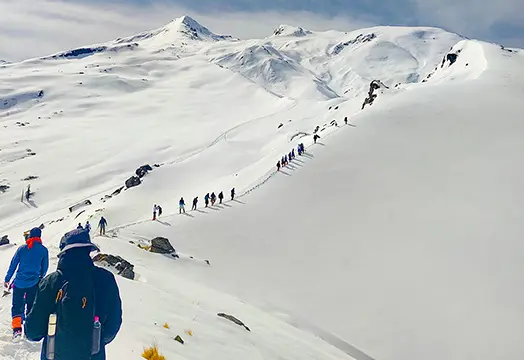

Every season in the Himalayas has its own way of showing off the mountains, but winter reveals a different side of them, one that feels like a whole new world.
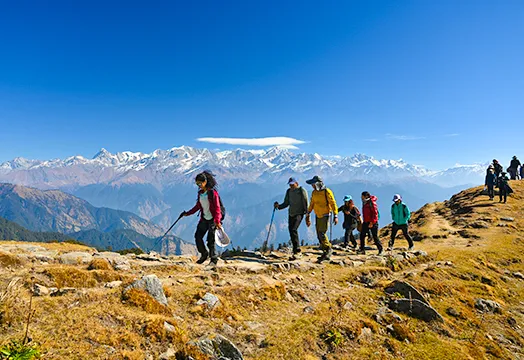
As monsoon season comes to an end, it washes away all the dust and haze that remains in the valleys throughout the summer, and then?
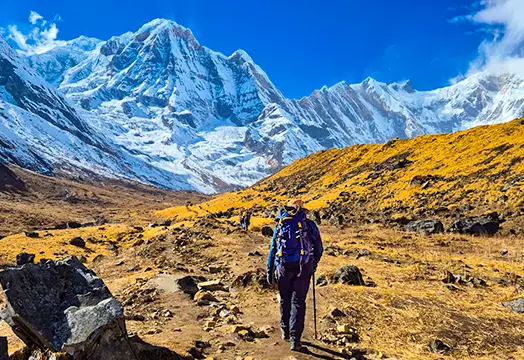
Located in north-central Nepal's Gandaki Province, Annapurna is the world's 10th highest and one of the most challenging mountains on the planet. Its height rises to 26,545 feet. Yet reaching Annapurna base camp is a far more accessible adventure, drawing trekkers from around the world every single season.
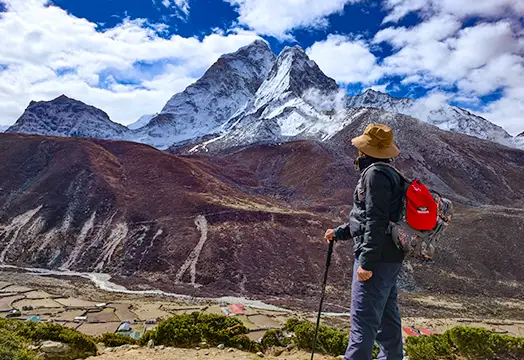
What does it feel like to stand on a trail where the mountain before you is worshipped as a goddess? For most of us, it's an adventure. But for the local communities who live in its shadow, it's something closer to faith. That mountain is Everest.

Over the last few decades, trekking has driven a profound shift: rural economies and local communities are reaping direct and indirect benefits.

Hiking teaches you to fall in love with the outdoors. Trekking teaches you to endure it. Mountaineering teaches you to respect it completely.

There are only a handful of Himalayan regions that hold profound spiritual significance as well as immense natural beauty. The Gaumukh Tapovan trek is one such destination that wonderfully combines adventure, divinity, and extraordinary Himalayan beauty.

What if a trek could leave you with more questions than answers? What if, after days of trekking, you reach a lake filled with centuries-old human skeletons?

Every year, every season reveals a new side of the Himalayan range. Be it trails covered in colourful rhododendrons or trails transformed into a lush green paradise, each season offers some of the most mesmerizing views of the Himalayas.

Altitude sickness is a physical reaction that occurs when you climb faster than what your body can adapt, especially in regions where air pressure and availability of oxygen tends to drop.
08 Oct 2026
07 Oct 2026
06 Oct 2026
05 Oct 2026
04 Oct 2026
03 Oct 2026
01 Oct 2026
30 Sept 2026
29 Sept 2026
28 Sept 2026