
18 March 2026

Charang Ghati (Valley) Trek is one of the most breathtaking and challenging high-altitude passes located in the Kinnaur district of Himachal Pradesh, India. Situated at a height of approximately 17,300 ft, Charang Valley is a relatively lesser-known and offbeat destination, yet it provides an extremely rewarding experience. It’s a part of the Kinnaur Kailash Parikrama Route and offers an incredible blend of spectacular landscapes, ancient villages, cultural immersion, and exciting adventure. Trekkers who are seeking an extraordinary high-altitude journey, Charang Valley stands among the forefront of such treks.
The Charang Ghati Trek has largely a raw and untouched natural beauty. Unlike many popular treks, this region sees fewer visitors, which is why it remains relatively less-explored. The trail takes you through jagged paths, serene valleys, barren landscapes, alpine meadows, and high-altitude passes. The extreme remoteness of this trek creates a sense of solitude, offering you a chance to experience nature in its pristine form.
One of the biggest reasons to visit this trek is its large variety of landscapes that keep changing dramatically as you proceed. In no time, you begin to be stunned by glacier-fed streams, vast meadows, snow-laden peaks, colorful rock formations, and wide-open valleys. Walking along this visual spectacle, you will eventually cross the Charang La Pass at around 5,200 meters (17060 feet), which is one of the highest trekking passes in the region.
The unique culture is another special aspect of this trek as the traditional villages serve as a fascinating blend of Hindu and Tibetan Buddhist customs. Ancient monasteries, traditional wooden houses, and centuries-old temples will take you into the rich history of the region.
In ancient times, Charang Valley was a crucial junction of the Trans-Himalayan trade route that linked the Kinnaur region with Tibet. The Charang La Pass served as a connecting bridge that was used by traders from both the lands to exchange goods such as wool, salt, grains, and herbs. Due to this constant interaction, Tibetan Buddhism had a strong influence on this region, which is reflected through Charang Monastery (also known as Rangrik Tungma Monastery).
Mythologically, the Charang Valley is associated with the sacred mountains of Kailash Kinnaur Range (19850 ft). It is believed that this mountain range is the winter abode of Lord Shiva, and therefore, a divine energy resides in this region. Furthermore, being a sacred land, the Charang Valley is spiritually protected by certain guardian deities. The natives of this area perform traditional rituals and ceremonies to seek their blessings. Thus, the valley carries a deep cultural and spiritual legacy that also enriches the trekking experience of visitors.
Day 1: Reckong Peo (7513 ft) to Shurting (11188 ft) via Thangi and Lambar (9501 ft)
Reckong Peo is located in the remote valleys of Kinnaur and the ideal place to complete all your trek preparations. Here you travel the picturesque 60km road to Lambar. Lambar is a small village of the Pooh Tehsil of Kinnaur district. The drive passes through the Tirung Valley, along the Tirung Nala. Along the road, you get a glimpse of the old Himalayan villages and the peaceful rural ambience of the place.
The actual adventure begins when you arrive at Thangi. Your vehicle will leave you about 2 to 3 km before Lambar which is the last place you can drive to. There you proceed to Shurting. Keep on the left of the river and take the course, kaccha, road.
In approximately 30 minutes of walking, the trail narrows and turns into loose soil and scree. The path gets increasingly narrower over the next 15minutes. Thereafter it rises and falls again 15 more minutes until you get to a riverbed.
Further along, the path leads to the river in a small valley with very limited visuals. There are some boulders on the way. In about 20 minutes, you will be in a huge cave upon the face of the rock that is opposite the river - about 75 100 feet in the air. Prayer flags of various colors are fluttering around the cave giving it a spiritual touch. It is believed that the flags bring happiness, long life and prosperity to the people who put them, and also to people who visit it.
After another five minutes, you come to a bridge over the Tirung Nala. The bridge leads you near the trail leading to Shurting. While crossing it, the deep silence of the valley is broken by the strong rush of the Nala below. Go on to your right of the river after crossing the bridge, and continue over the bushes and the shrubs with the little pink flowers. You will also find wild Himalayan roses – silvery pink flowers that darken with age.
Approximately ten minutes later, the trail will lead to open grasslands at Shurting at 11,188 ft. There are a couple of empty stone shelters on the way to where you are going. They are used by shepherds or owners of horses and mules (khacchar) during the trekking season.
In case you want to see Kunu, continue along the right bank of the river before the bridge. The stream that passes by the Shimdong Pass to Tibet unites with the main stream on its right at Shurting. Shurting also serves as an ITBP (Indo-Tibetan Border Police) checkpost, as the international border lies less than 30 km from here. Kunu is a significant destination as part of the journey on the classic route of the Kinnaur Kailash Parikrama. The walk between Lambar and Shureting is approximately 8 km, which is gradual and normally takes two hours to complete.
Day 2: Trek from Himri to Saaru Tal via Bitri Village
There are two routes that emerge from Shurting. The first one moves along Tirung Nala, which passes through Charang Village. The second one follows a trail right through the ITBP checkpost.
The route that leads straight up the hill is very fragile and unstable. It is subject to frequent landslides, loose scree, and water streams pouring down the cliffs. Better remain on the right bank of the river and take the trail of the Tirung Nala. The old trail, which starts at Shurting, leads slowly towards Charang Village. Opposite the stream on the other side, you will find another track which leads to Kunu Village.
Keep on the path for nearly ten minutes. Cross a broad riverbed where the river splits into other smaller streams. This is a fairly easy walk and allows you to pass the serene environment of the valley. The trail starts to gradually rise after approximately thirty minutes of hiking. With your increased elevation the road ascends over the river, and the valley gradually unfolds, with spectacular sights of the Racho group of peaks. Their highest peak is Rangrik Rang (21,500 ft), the highest peak in the Kinnaur region. Keep on the road on the right-hand side of the valley going towards Charang Village.
About an hour later you come to the beautiful white stupa of Rangrik Monastery which appears on your left. Rangrik monastery is regarded as one of the holiest monasteries in the Kinnaur region. A little further along the trail is the Charang Guest House, where the trekkers take a brief rest. It is an excellent spot to grab a quick bite and re-fill your water bottles because you may not come across water in the next four or five hours. Charang is also the final village on this path and beyond this hamlet, the journey proceeds in absolute solitude. You can buy some of the essential things that you need but not so many.
Starting at the guest house, maintain the path to your right and continue on it to the right and pass the village of Charang. It takes approximately ten minutes to reach the top. On your right you can see the guest house again. The trail then starts another gradual rise. In half an hour you will come to a couple of incomplete stone shelters which look like four sides of a little hut. Shepherds use these structures as makeshift shelters. Hold on to the shelters on your left and climb another forty-five minutes to reach the ridge when the valley will have a dramatic opening. At this spot you will see beautiful scenes of the terrain around it and the great snow-covered mountains, with Rangrik Rang Peak on the left.
Keep on walking thirty more minutes, and you will find Lalanti La in front of you. The pass is easily identified by the massive stone constructions and colorful Buddhist prayer flags as they blow in the wind. The ascent of Lalanti Pass is not steep, but the distance is long and takes approximately two to three kilometres. It generally takes two and a half to three hours to get to the summit. Lalanti La is in the upper part of the Shurting Valley, and its elevation is approximately 14,764 feet. On the pass take the trail off to the left and continue down into the valley. The road twists off to the downward side, and finally reaches a little stream, an out-branch of the Tirung Nala, which comes down out of Shurting.
Further down to the stream the trail narrows. After fifteen or so, the trail grows very narrow and very slippery with mud, and one must walk very cautiously. The trail has been destroyed by landslides in a few areas, which slow down navigation.
After an hour or so of the descent, the trail has a short rise and then falls sharply through a very narrow gully between the rocky walls. Go on down another 30 minutes or so until you are only a few metres above the bed of the river.
The trail starts to ascend here more gently and passes the green meadows. You will take a walk through these meadows, about half an hour, till you come to a little stream running down out of the hills above. There are some stone shelters constructed by shepherds here, which are temporary resting places.
You may use this place as a campsite here, or proceed to Lalanti campsite just two to three kilometers away that can be reached in about one hour. It generally takes three or four hours to walk to Camp I at Lalanti Pass, and six to walk to Charang Village.
Day 3: Camp-I to Camp-II
The trail today is not very steep, and is not too long, either. This will give you ample time to look around and enjoy the views of this stunning route. Follow the left side of the river and keep on the trail. You will pass through grass and bushes with red stems and yellow flowers. Watch out for colorful butterflies and Himalayan exotic birds.
After half an hour or so, you will reach a little stream, leading to the river below. Cross the stream, and continue. You will shortly encounter a little pasture, with knee-high shrubs and boulders here and there. The trail ascends gradually over a period of 30 minutes. It ascends and descends slightly, then opens into a broad valley. Take a moment to look at the snow-capped mountains on both sides: Saro at 19,997 ft to the right and an unnamed mountain at 20,500 ft.
Follow the trail back down to the riverbed, jumping over little boulders. There is a stone marker, 2 feet in height, on the farther bank. That is an indication of the approaching Lalanti campsite. When pilgrims visit this campsite, there is a tin shed that houses them. It is on a flat meadow slightly above the river, and yaks are usually seen grazing on elevated slopes. Proceed another 30 minutes until you come to the stream at the location of the campsite. The water splits into a few smaller streams; take that which is the shallowest.
After crossing, proceed on the right bank and go along the trail, bypassing the camping area. The path then ascends gradually after approximately 20 minutes. You will come to a second stone marker, which is the next part of the path. At that point, go along the path, which leads to a meadow. Approximately 30 minutes of gentle walking, the trail takes you through gorgeous meadows of grass interspersed with little yellow flowers near the stream. Follow the road through loose rocks.
The first half hour will be hiking up steadily, and the next half hour will be walking horizontally. After a series of gradual ascents and descents, you will arrive at a meadow marked by stone cairns about 5 feet tall. Here you will find big, flat boulders scattered with colorful flowers--just the perfect place to camp overnight. The campsite has panoramic views of snow-covered mountains on either side of the valley. Acclimatize by spending some time in the surrounding area, where birdwatchers should be able to see numerous species of birds in the Himalayas.
Day 4: Camp-II to Charang La Base
Today's trek is easy and you will be able to take your time and enjoy the view. Begin with a pleasant, even walk down the stream, keeping on the right side. Around 30 minutes later, the stream widened. This is where you will come to a shallow part which you must cross with bare feet.
The trail rises gradually beyond the crossing and the flat plains are replaced by a rocky landscape. In a period of about 15 minutes, you will notice two stone markers which indicate the right path. Then the path cuts through loose rocks, where the slopes are uphill as well as downhill. In this section, you can easily lose the trail, so you must follow the valley on the left side. After twenty minutes, the landscape changes and gets tougher. Scattered boulders and loose rocks make the climb even more challenging.
After an hour of walking, you will be able to see Charang La Pass. It resembles a muddy depression, bordered on one side by a ridge of snow and on the other a ridge of rock. Continue walking another 20 minutes, and the landscape changes into glacier moraine. Continue another hour along the moraine on fairly even terrain, and then start a little ascent up the ridge. There will be stone cairns on the ridge to identify the route.
Here, the path becomes very smooth, and you will come to a small pond after some 15 minutes. Continue through easy ups and downs for another 30 minutes until the valley is blended in a larger terrain. Here you will have the spectacular scenes of snow-white mountains and clear skies. The surface is predominantly grey and brown with some occasional green bushes and yellow flowers. Even here in this elevation, you might see butterflies and some beautiful Himalaya birds.
Since today’s trek is not very long, you can now take a lot of photographs and admire the landscape. Keep on another 30 minutes up the moraine of the glacier till you pass a field of great boulders and a small pond flowing with the meltwater. The path cuts across the rocks, while cairns made of stone are positioned to show the way to the trekkers.
After some 30 minutes on the boulder trail, you will find a giant boulder of approximately 25 feet in height, with stones and a red flag. The flag indicates that you are near the Charang La Base Camp, and it is at the top of the rock, which you can see. Here you will be able to have sweeping views of snow-draped ranges, on each side of the valley. On the left ridge, you can see an overhanging snow formation known as a cornice, while the right ridge features a sharp, needle-like peak rising dramatically into the sky.
Another 30-minute walk brings you to a big glacial lake. Close to the lake are two huge boulders, each measuring approximately 30 feet in height. There is a small stone temple in front of the boulders adorned with Trishuls. Trishul is the divine weapon of Lord Shiva, which is a symbol of power and defense. Devotees of the Kinnaur Kailash Parikrama usually pause at this point to offer prayers and seek Lord Shiva’s blessings. This is a beautiful camping area around the lake and the boulders.
Day 5 : Charang La base to to Charang La to Chitkul
This is probably the most challenging day in the trek. You will go through the Charang La Pass and then go down all the way to Chitkul. The pass is indicated by a muddy patch at the campsite of the previous day. This phase involves a large uphill climb, followed by a long and slow downhill ride, and thus is the most difficult one in the journey.
The path traverses along glacier moraine, thin snow bridges, rocky sections, and big boulders. Go slowly and keep up with your guide. Begin by going up the left bank of the valley, in a direction parallel to the snow ridge. The trail is blanketed with snow patches in numerous places.
After a little more than 15 minutes, the trail comes to a snow bridge. It can be tricky on the snow here, which is thin in certain areas. There is a stone cairn pointing to the safest crossing immediately beyond the bridge. This is also the last dependable water source that you will find before the pass, so fill up your bottles. There will be no water until the next five or six hours.
After the crossing, the track leads north of Charang La, circling giant rocks and solid snowfields. About 45 minutes of boulder-hopping, the trail will carry you to the snow slope beneath the muddy patch, at the end of which you will ascend to the pass. The slope of snow is extremely steep, approximately 60-70 degrees. Even the seasoned trekkers may require technical equipment. Ropes and an ice axe are highly recommended, particularly to the less experienced high-altitude hikers.
Through the zig-zag path up the slope, around an hour and a half is generally required to reach the muddy part beside the pass. You get a fabulous bird-eye view of the valley right out of this. The slope is bare and challenging, so select your points of halt wisely. One slip and you are sliding down to the glacial stream way down below, so be careful. The remaining 150 metres to the pass are loose rock and scree. Use a safe distance among the trekkers to prevent the dislodging of the stones.
In approximately 30 minutes you arrive at Charang La Pass. There are fantastic panoramic views, and we can see massive mountain ranges on all the sides. Have a brief pause to eat snacks, chocolates, and dry fruit, but do not stay long, as a long descent still awaits. Descent to Chitkul, the route between Charang La and Chitkul is lengthy and challenging. You will lose approximately 5,578 feet in 6-7 km, and an average of six hours is required.
Initially, the path winds to the right of the valley. You have to descend for around 45 minutes along rocky and loose boulder paths and by stone cairns which mark the path. Continue for another one hour on the right-hand side until you come to a wide snow-covered plain. Go across the hard patch of snow, on the right side of the valley. The landscape alternates between snowfields and rocky sections.
Stay along the apparent trail some one hour, until the plains become level and the path makes another sharp descent. In another hour of winding down rocky roads you will come to a mountain stream. At that point the path is curved softly on the right, traversing fields of grass and bushes. Continue moving in the widening trail approximately 30 minutes and Chitkul village will be on the left side of the valley. At this point the path becomes visible.
About 45 minutes you will be on lower plains which are distinctively greener. The path is bordered with colourful flowers and bushes, which provides a refreshing outlook after the hours of snowfields and boulder-covered landscape. Another 30-minute walk across the plains takes you directly to Chitkul village, which is the last populated village in Baspa Valley. This path runs over meadows and along ancient lanes, and eventually enters the midst of this beautiful village in the Himalayas.
The best time or the most enjoyable trekking season to Chirang Valley is summer and early autumn. These months are: May and June; and September to mid-October. During this period, the weather is relatively stable, temperatures are pleasant, the trails are accessible, and the high mountain passes such as Charang La Pass are usually free from heavy snow.
This is the ideal time because snow starts melting on high passes and day temperatures (8°C to 15°C) are extremely comfortable for trekking. Meadows and valleys turn lush green and glacial streams flow noisily and forcefully, making the natural beauty more scenic.
For many trekkers, the month of September proves to be the best time for Charang Ghati. During this time, you witness clear skies and excellent mountain views. The weather is stable with very little rainfall and trails become drier and safer. It is absolutely remarkable for trekkers seeking clear views, stable weather, and photography opportunities.
To go to Chirang Ghati, you first need to travel to Kinnaur region of Himachal Pradesh. The trek typically starts from Reckong Peo village and ends at Chitkul.
Most journeys to the Charang Ghati Trek begin from Shimla.
The nearest airport is Shimla Airport (Jubbarhatti Airport), about 22 km from Shimla. However, flights are limited. Many trekkers instead fly to Chandigarh and then travel by road to Shimla.
The nearest broad-gauge railway station is Kalka. From there, you can take the famous Kalka–Shimla Railway, a scenic narrow-gauge train route to Shimla.
Regular buses and taxis connect Delhi, Chandigarh, and nearby cities to Shimla.
Charang Ghati (Valley) Trek is one of the most beautiful and challenging high-altitude treks located in the Kinnaur district of Himachal Pradesh, India. It connects Thangi village in Kinnaur with Chitkul in the Baspa Valley. The trek crosses the dramatic Charang La Pass, offering spectacular landscapes.
The trek is considered difficult and challenging. Trekkers have to walk on glacier moraine, steep snow slopes, and loose rocky terrain while gaining significant altitude. This trek is recommended for experienced trekkers or physically fit beginners.
The best time to do this trek is May – June, and September – October. During these months, the trail is accessible, weather conditions are relatively stable, and high passes such as Charang La are usually free of heavy snow.
Yes. Since the trek goes to high altitudes above 5,000 meters, trekkers may experience symptoms of acute mountain sickness (AMS). Thus, proper acclimatization, hydration, and gradual ascent are essential to reduce the risk.
One of the key features of this trek is its diverse landscapes. Here, you will experience: alpine meadows, glacier moraine, snow bridges, rocky mountain passes, and high-altitude lakes and rivers.
18 March 2026

Trek updates, stories & mountain insights.
Tips and insights for every trekker.
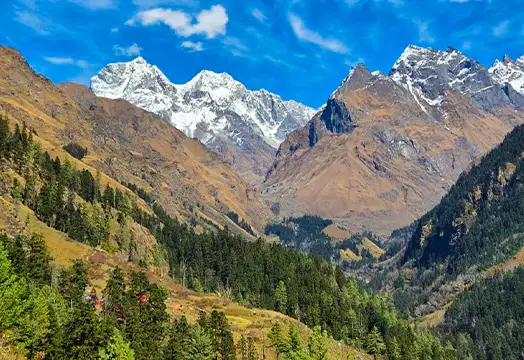
27 Oct 2026

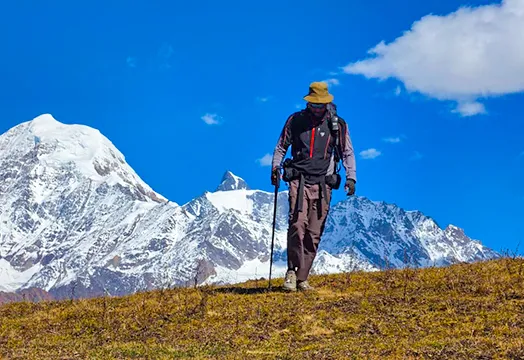
26 Oct 2026
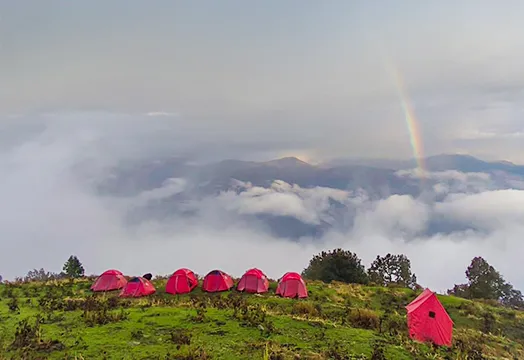
25 Oct 2026
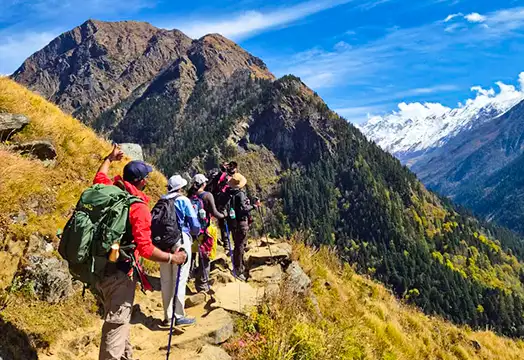
24 Oct 2026
23 Oct 2026
22 Oct 2026
21 Oct 2026
19 Oct 2026
18 Oct 2026
17 Oct 2026
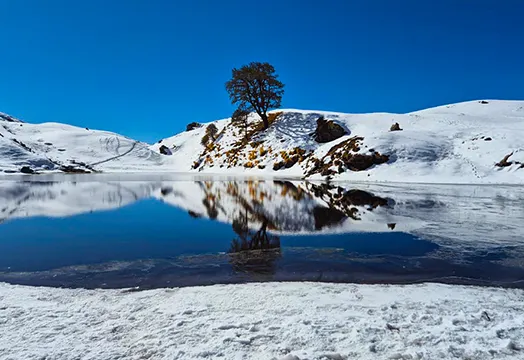
Winter is almost here, and you're still planning on following the same routine. Sitting in a blanket, sipping on hot tea, and binge-watching your favorite movies.
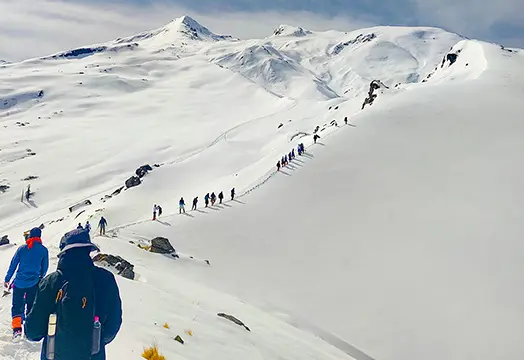
Every season in the Himalayas has its own way of showing off the mountains, but winter reveals a different side of them, one that feels like a whole new world.
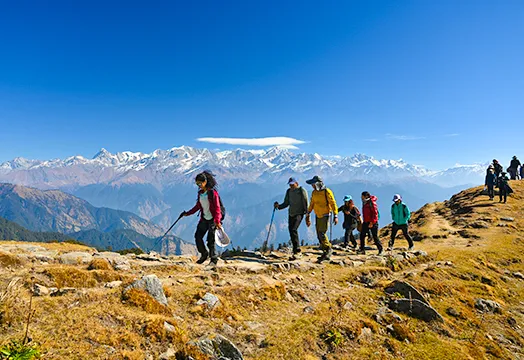
As monsoon season comes to an end, it washes away all the dust and haze that remains in the valleys throughout the summer, and then?
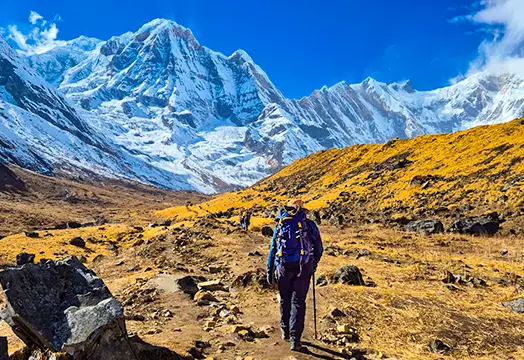
Located in north-central Nepal's Gandaki Province, Annapurna is the world's 10th highest and one of the most challenging mountains on the planet. Its height rises to 26,545 feet. Yet reaching Annapurna base camp is a far more accessible adventure, drawing trekkers from around the world every single season.
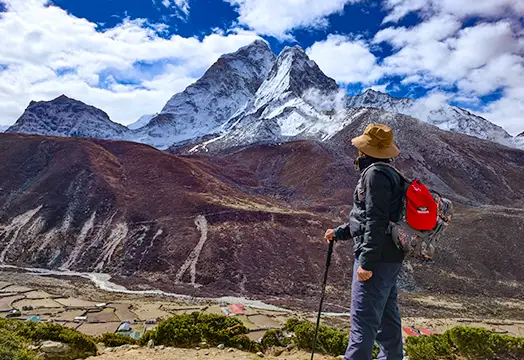
What does it feel like to stand on a trail where the mountain before you is worshipped as a goddess? For most of us, it's an adventure. But for the local communities who live in its shadow, it's something closer to faith. That mountain is Everest.

Over the last few decades, trekking has driven a profound shift: rural economies and local communities are reaping direct and indirect benefits.

Hiking teaches you to fall in love with the outdoors. Trekking teaches you to endure it. Mountaineering teaches you to respect it completely.

There are only a handful of Himalayan regions that hold profound spiritual significance as well as immense natural beauty. The Gaumukh Tapovan trek is one such destination that wonderfully combines adventure, divinity, and extraordinary Himalayan beauty.

What if a trek could leave you with more questions than answers? What if, after days of trekking, you reach a lake filled with centuries-old human skeletons?

Every year, every season reveals a new side of the Himalayan range. Be it trails covered in colourful rhododendrons or trails transformed into a lush green paradise, each season offers some of the most mesmerizing views of the Himalayas.